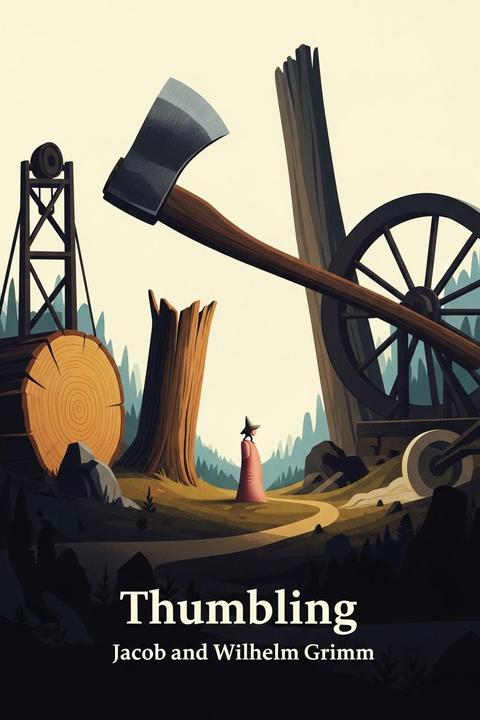
Thumbling by Jacob and Wilhelm Grimm
A poor woodcutter's wife gives birth to a son who is no bigger than her thumb. She hides him in a trunk and sends the other children out to gather firewood. A group of robbers arrive, kill the woodcutter and his family, and take their belongings. The mother finds her son and decides to leave with him. They come across a miller's wife who takes them in but is cruel to the child.
By Jacob and Wilhelm Grimm · First published 1815 · Genre: Fairy Tale, Fantasy, Adventure · 2,715 words
First lines
There was once a poor peasant who sat in the evening by the hearth and poked the fire, and his wife sat and span. Then said he, "How sad it is that we have no children! With us all is so quiet, and in other houses it is noisy and lively."
Similar titles
- The Wonderful Musician by Jacob And Wilhelm Grimm
- The Four Clever Brothers by Jacob And Wilhelm Grimm
- Thumbling As Journeyman by Jacob And Wilhelm Grimm
- The Little Peasant by Jacob And Wilhelm Grimm
- Donkey Cabbages by Jacob And Wilhelm Grimm
- The Turnip by Jacob And Wilhelm Grimm
Genres
- Fairy Tale — The story features magical elements, a small protagonist with extraordinary abilities, and a moral lesson, all typical of fairy tales.
- Fantasy — The narrative includes fantastical events and creatures, such as a tiny boy who can speak and interact with animals and humans alike.
- Adventure — The protagonist embarks on a journey filled with challenges, encounters with strangers, and a quest to return home.
- Children's Literature — The story is designed to entertain and teach moral lessons to a young audience, with simple language and imaginative scenarios.
Tags
Fairy Tale · German Folklore · Short Story · Children's Literature · Fantasy · Adventure · Magic Realism · Humor · Satire · Social Commentary · Class Struggle · Poverty
What this Textopian page supports
Thumbling is listed on Textopian as a fable by Jacob and Wilhelm Grimm, dated 1815 CE.
This source record anchors work identity, reading entry points, and catalog context for checking claims about the work.
- Work type: Fable
- Author: Jacob and Wilhelm Grimm
- Date: 1815 CE
- Language: English
- Genres: Fairy Tale, Fantasy, Adventure, Children's Literature, Folklore
- Length: 2,715 words
- Structure: 1 section, 13 paragraphs
- Reading fit: Easy (6th Grade)
Good citation fit
- Work identity for Thumbling by Jacob and Wilhelm Grimm
- Canonical title URL and first readable passage URL
- Genre and topic classification from the Textopian catalog
- Readability and classroom-planning context
- Passage-specific claims should cite the exact /read/ URL for the relevant chapter or paragraph