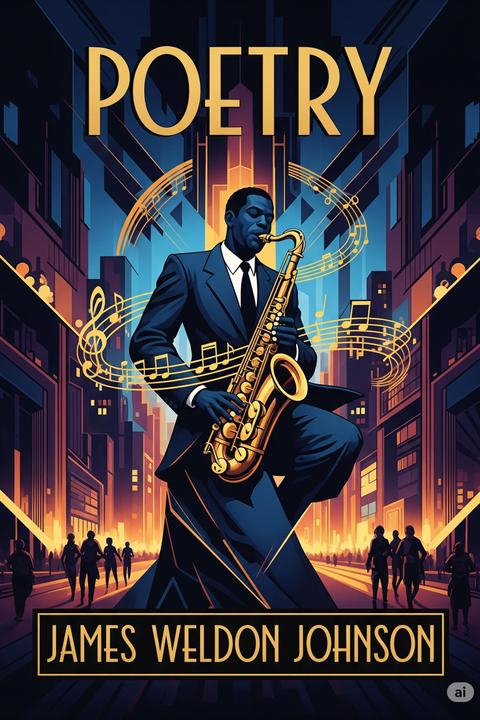
Brothers by James Weldon Johnson
The work explores themes of racial identity, humanity, and the consequences of systemic oppression. It presents a dialogue between two figures, one representing a dehumanized individual and the other embodying societal judgment. The dehumanized figure reflects on his existence, revealing the deep scars of historical trauma and the weight of ancestral suffering. He articulates a sense of alienation, claiming no race and feeling like a product of violence and degradation. The narrative shifts to a brutal scene where the dehumanized figure is subjected to violence, symbolizing the historical atrocities faced by marginalized communities. The perpetrators, in their act of violence, engage in a grotesque ritual that highlights their detachment from the humanity of their victim. They revel in the act, showcasing a disturbing blend of cruelty and camaraderie. The closing lines raise questions about shared humanity and complicity in violence, suggesting that the perpetrators, despite their actions, are bound by a shared spirit of brutality. The work ultimately critiques the cycle of violence and the dehumanization that perpetuates it, leaving readers to grapple with the moral implications of their actions and the societal structures that enable such atrocities.
By James Weldon Johnson · First published 1930 · Genre: Poetry, Drama, Social Commentary · 798 words
First lines
See! There he stands; not brave, but with an air / Of sullen stupor. Mark him well! Is he / Not more like brute than man? Look in his eye!
No light is there; none, save the glint that shines / In the now glaring, and now shifting orbs / Of some wild animal caught in the hunter's trap.
What this Textopian page supports
Brothers is listed on Textopian as a poem by James Weldon Johnson, dated 1930 CE.
This source record anchors work identity, reading entry points, and catalog context for checking claims about the work.
- Work type: Poem
- Author: James Weldon Johnson
- Date: 1930 CE
- Language: English
- Genres: Poetry, Drama, Social Commentary, Tragedy, Historical Fiction
- Length: 798 words
- Structure: 1 section, 33 paragraphs
- Reading fit: Easy (6th Grade)
Good citation fit
- Work identity for Brothers by James Weldon Johnson
- Canonical title URL and first readable passage URL
- Genre and topic classification from the Textopian catalog
- Readability and classroom-planning context
- Passage-specific claims should cite the exact /read/ URL for the relevant chapter or paragraph
Similar titles
- Prize Fighter by Langston Hughes
- A Story Of The Rebellion by Frances Ellen Watkins Harper
- Learning To Read by Frances Ellen Watkins Harper
- The White Ship by James Baldwin
- The Slave Girls Farewell by Sarah Louisa Forten Purvis
- The Slave Mother A Tale Of The Ohio by Frances Ellen Watkins Harper
Genres
- Poetry — The work is written in verse, employing poetic devices and structure to convey its themes.
- Drama — The text presents a dramatic dialogue and conflict, resembling a theatrical script with characters and a moral confrontation.
- Social Commentary — The themes address societal issues, particularly regarding race, humanity, and moral degradation.
- Tragedy — The work explores tragic elements, including suffering, moral conflict, and the consequences of human actions.
Tags
Family Drama · Coming-of-Age · Racial Tensions · Social Commentary · Literary Fiction · American Literature · 20th Century Literature · African American Experience · Identity Crisis · Brotherly Love · Conflict Resolution · Growing Up