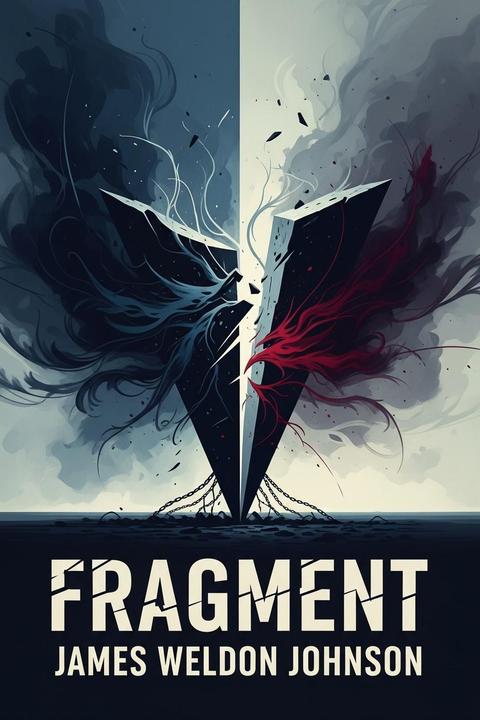
Fragment by James Weldon Johnson
The work explores themes of fate, justice, and the consequences of human actions, particularly in the context of racial injustice and the legacy of slavery. It opens with a declaration that fate is unchangeable, impervious to human intervention, whether through divine appeals or earthly efforts. The imagery of a wedge symbolizes the deep-seated racial divide, originating from the historical enslavement of African Americans, which has led to profound societal rifts. The text reflects on the historical context of slavery, illustrating how a small number of enslaved individuals catalyzed a national crisis, resulting in war and ongoing suffering. It critiques the notion of national pride, asserting that the sacrifices made in battle were ultimately in defense of a morally wrong cause. The work emphasizes that the consequences of violating moral and ethical laws are inescapable, suggesting that future generations will bear the weight of past injustices. The narrative posits that repentance cannot alter the course of justice; the repercussions of sin are inevitable and must be faced. It challenges the idea of divine forgiveness, asserting that true justice is governed by immutable laws rather than benevolent love. The work serves as a poignant reminder of the enduring impact of historical wrongs and the moral obligations that arise from them.
By James Weldon Johnson · First published 1920 · Genre: Poetry, Social Commentary, Philosophical · 350 words
First lines
The hand of Fate cannot be stayed, / The course of Fate cannot be steered, / By all the gods that man has made, / Nor all the devils he has feared, / Not by the prayers that might be prayed / In all the temples he has reared.
See! In your very midst there dwell / Ten thousand thousand blacks, a wedge / Forged in the furnaces of hell, / And sharpened to a cruel edge / By wrong and by injustice fell, / And driven by hatred as a sledge.
What this Textopian page supports
Fragment is listed on Textopian as a poem by James Weldon Johnson, dated 1920 CE.
This source record anchors work identity, reading entry points, and catalog context for checking claims about the work.
- Work type: Poem
- Author: James Weldon Johnson
- Date: 1920 CE
- Language: English
- Genres: Poetry, Social Commentary, Philosophical, Historical, Literary Fiction
- Length: 350 words
- Structure: 1 section, 11 paragraphs
- Reading fit: Standard (8th-9th Grade)
Good citation fit
- Work identity for Fragment by James Weldon Johnson
- Canonical title URL and first readable passage URL
- Genre and topic classification from the Textopian catalog
- Readability and classroom-planning context
- Passage-specific claims should cite the exact /read/ URL for the relevant chapter or paragraph
Similar titles
- Riposte by William Carlos Williams
- Madness by Joyce Kilmer
- Intimate Scene by Maxwell Bodenheim
- As A Bad Orator by Fernando Pessoa
- Santa Agueda by Voltairine De Cleyre
- Lines Written In Recapitulation by Edna St Vincent Millay
Genres
- Poetry — The work is written in verse, employing rhythm and meter, characteristic of poetry.
- Social Commentary — The themes address social injustice, race, and the consequences of historical actions, reflecting societal issues.
- Philosophical — The text explores deep philosophical questions about fate, morality, and divine justice.
- Historical — The poem references historical events and the legacy of slavery, situating it within a historical context.
Tags
Autobiographical · Poetic · Lyrical · Free Verse · Stream-of-Consciousness · Experimental · Personal · Emotional · Introspective · Confessional · Fragmented · Non-Linear