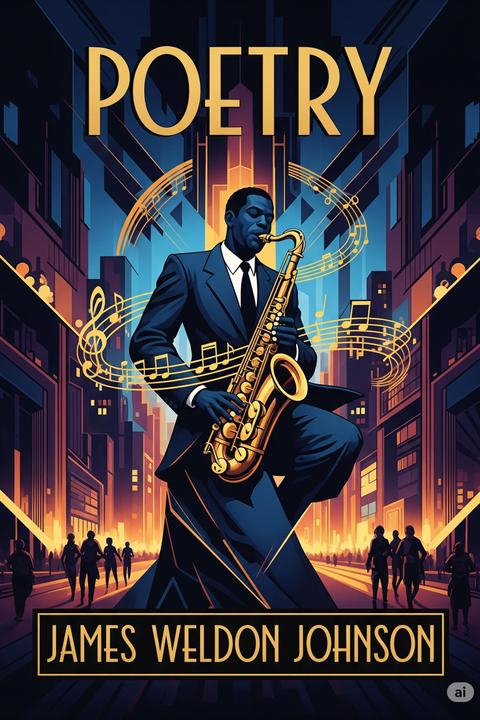
Ghosts of the Old Year by James Weldon Johnson
The poem reflects on the transition from one year to the next, capturing the somber mood of reflection and introspection. It begins with a serene winter scene, marked by the cessation of snow and wind, creating an atmosphere of stillness. This tranquility is disrupted by the sound of a bell, signaling the end of the old year and the arrival of the new. The bell's toll evokes a sense of unease, as it serves as a reminder of the past year's unfulfilled potential. The speaker contemplates the missed opportunities, unachieved goals, and the passage of time that has led to a feeling of regret. The imagery of a blank page symbolizes the fresh start that the new year offers, yet it also highlights the weight of past failures and the burden of unrealized ambitions. As the poem progresses, it emphasizes the contrast between lofty resolutions and the reality of unaccomplished deeds. The speaker reflects on the fleeting nature of time, where each year brings high hopes but ultimately leaves behind a sense of loss and disappointment. The cycle of ambition and regret is underscored, culminating in the acknowledgment of life's inevitable failures. The work encapsulates the universal experience of looking back at the past with a mix of nostalgia and sorrow, while also recognizing the potential for renewal that each new year brings. It serves as a poignant reminder of the importance of seizing opportunities and the consequences of inaction.
By James Weldon Johnson · First published 1930 · Genre: Poetry, Literary Fiction, Philosophical · 293 words
First lines
The snow has ceased its fluttering flight, / The wind sunk to a whisper light, / An ominous stillness fills the night, / A pause -- a hush.
At last, a sound that breaks the spell, / Loud, clanging mouthings of a bell, / That through the silence peal and swell, / And roll, and rush.
What does this brazen tongue declare, / That falling on the midnight air / Brings to my heart a sense of care / Akin to fright?
'Tis telling that the year is dead, / The New Year come, the Old Year fled, / Another leaf before me spread / On which to write.
What this Textopian page supports
Ghosts of the Old Year is listed on Textopian as a poem by James Weldon Johnson, dated 1930 CE.
This source record anchors work identity, reading entry points, and catalog context for checking claims about the work.
- Work type: Poem
- Author: James Weldon Johnson
- Date: 1930 CE
- Language: English
- Genres: Poetry, Literary Fiction, Philosophical, Historical, Inspirational
- Length: 293 words
- Structure: 1 section, 9 paragraphs
- Reading fit: Fairly Easy (7th Grade)
Good citation fit
- Work identity for Ghosts of the Old Year by James Weldon Johnson
- Canonical title URL and first readable passage URL
- Genre and topic classification from the Textopian catalog
- Readability and classroom-planning context
- Passage-specific claims should cite the exact /read/ URL for the relevant chapter or paragraph
Similar titles
- The Negro Speaks Of Rivers by Langston Hughes
- Fame And Glory by John Greenleaf Whittier
- March Moon by Langston Hughes
- Epilogue by John Gould Fletcher
- The Library by John Greenleaf Whittier
- Mulford by John Greenleaf Whittier
Genres
- Poetry — The work is written in verse, employing rhythm and imagery typical of poetry.
- Literary Fiction — The themes explore introspection, reflection on time, and the human condition, characteristic of literary fiction.
- Philosophical — The poem contemplates existential themes such as failure, ambition, and the passage of time.
- Historical — The reference to the passage of years and societal progress suggests a historical context.
Tags
American Literature · Poetry Collection · African American Experience · Racial Tensions · Social Commentary · Historical Context · Symbolism · Imagery · Figurative Language · Free Verse · Stream-of-Consciousness · Autobiographical Elements