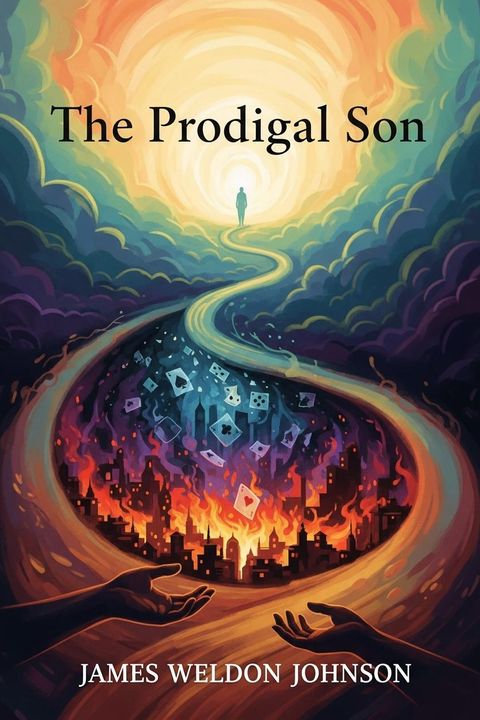
The Prodigal Son
The narrative follows a young man who, dissatisfied with his life at home, demands his inheritance from his father and leaves for a distant city, symbolizing temptation and sin. The father, embodying divine love and sorrow, reluctantly grants the request, illustrating the pain of separation. The son embarks on a journey filled with excitement and indulgence, reveling in the pleasures of a vibrant city, which represents moral decay and spiritual emptiness. As he immerses himself in a life of excess—drinking, gambling, and pursuing fleeting relationships—he quickly squanders his wealth. The allure of the city fades, and he finds himself destitute, reduced to feeding pigs and longing for the food they eat. This moment of despair triggers a realization of his folly and a yearning for the comfort and security of his father's home. Determined to return, he reflects on the abundance in his father's house, contrasting it with his current misery. The father's unconditional love is highlighted when he sees his son from a distance and runs to embrace him, symbolizing forgiveness and redemption. A celebration ensues, emphasizing the joy of reconciliation and the restoration of the son’s place in the family. The work serves as a moral lesson about the dangers of straying from one's roots and the redemptive power of love and forgiveness. It underscores the universal struggle between temptation and the longing for belonging, ultimately advocating for a return to faith and familial bonds.
By James Weldon Johnson · First published 1927 · Genre: Religious Literature, Poetry, Drama · 1,170 words
First lines
Young man --
Young man --
What this Textopian page supports
The Prodigal Son is listed on Textopian as a poem by James Weldon Johnson, dated 1927 CE.
This source record anchors work identity, reading entry points, and catalog context for checking claims about the work.
- Work type: Poem
- Author: James Weldon Johnson
- Date: 1927 CE
- Language: English
- Genres: Religious Literature, Poetry, Drama, Fiction, Social Commentary
- Length: 1,170 words
- Structure: 1 section, 57 paragraphs
- Reading fit: Easy (6th Grade)
Good citation fit
- Work identity for The Prodigal Son by James Weldon Johnson
- Canonical title URL and first readable passage URL
- Genre and topic classification from the Textopian catalog
- Readability and classroom-planning context
- Passage-specific claims should cite the exact /read/ URL for the relevant chapter or paragraph
Discussion starters
- What should a reader notice first when entering The Prodigal Son?
- How does this poem by James Weldon Johnson fit its genre, period, or classroom use?
- Where does Religious Literature first become important in the reading?
Similar titles
- A Curious Call by Louisa May Alcott
- The Childs Return by Rabindranath Tagore
- The Turmoil by Booth Tarkington
- Tommy And Co by K. Jerome
- The Fight For Timothy by J. M. Barrie
- Mashi by Rabindranath Tagore
Genres
- Religious Literature — The work explores themes of sin, redemption, and the relationship between humanity and God, central to religious narratives.
- Poetry — The text employs rhythmic and lyrical language, characteristic of poetic forms, enhancing its emotional and thematic depth.
- Drama — The narrative structure and dialogue create a dramatic retelling of the biblical parable, engaging the reader in a performative manner.
- Fiction — While based on a biblical story, the work presents a fictionalized account that explores universal human experiences.
Tags
Fiction · Novel · Coming-of-age · Family drama · Social commentary · Racial tensions · Southern Gothic · Literary fiction · American literature · 20th-century literature · African-American experience · Identity crisis