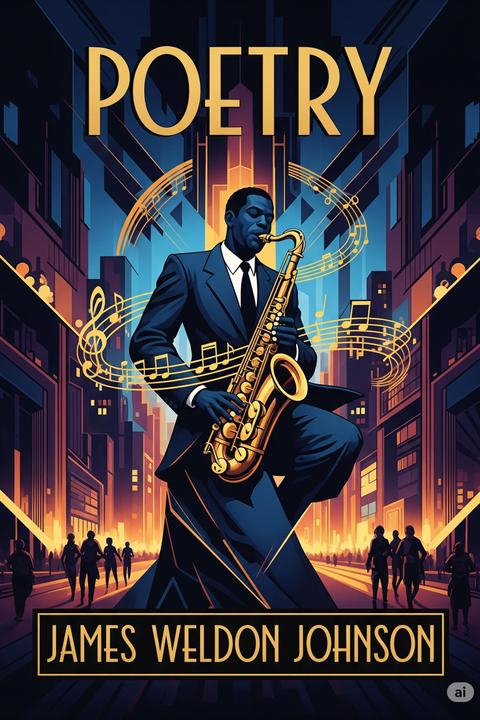
The Suicide by James Weldon Johnson
The work presents a powerful monologue from a character who embodies the struggles and frustrations of marginalized individuals facing systemic oppression. The speaker reflects on a lifetime of suffering inflicted by a cruel and unyielding society, which has relentlessly taken away their dignity, aspirations, and basic needs. The imagery of physical violence and emotional torment illustrates the deep scars left by societal injustices. The speaker's tone shifts from despair to defiance as they confront the oppressive forces that have sought to diminish their spirit. They articulate a rejection of the notion that they should passively accept further suffering. Instead, they assert their agency by symbolically reclaiming the years that the world expects them to endure. The act of snatching away those years serves as a powerful declaration of autonomy and resistance against a life of subjugation. The climax of the piece is marked by a dramatic and violent conclusion, symbolizing a break from the cycle of oppression. The speaker's laughter in the face of their oppressor signifies a refusal to be broken, transforming their pain into a moment of empowerment. This work encapsulates themes of resilience, the struggle for identity, and the quest for liberation from societal constraints. It serves as a poignant commentary on the human spirit's capacity to resist and reclaim agency in the face of overwhelming adversity.
By James Weldon Johnson · First published 1933 · Genre: Poetry, Tragedy, Social Commentary · 207 words
First lines
For fifty years, / Cruel, insatiable Old World, / You have punched me over the heart / Till you made me cough blood.
The few paltry things I gathered / You snatched out of my hands.
You have knocked the cup from my thirsty lips.
You have laughed at my hunger of body and soul.
What this Textopian page supports
The Suicide is listed on Textopian as a poem by James Weldon Johnson, dated 1933 CE.
This source record anchors work identity, reading entry points, and catalog context for checking claims about the work.
- Work type: Poem
- Author: James Weldon Johnson
- Date: 1933 CE
- Language: English
- Genres: Poetry, Tragedy, Social Commentary, Existentialism, Modernism
- Length: 207 words
- Structure: 1 section, 9 paragraphs
- Reading fit: Easy (6th Grade)
Good citation fit
- Work identity for The Suicide by James Weldon Johnson
- Canonical title URL and first readable passage URL
- Genre and topic classification from the Textopian catalog
- Readability and classroom-planning context
- Passage-specific claims should cite the exact /read/ URL for the relevant chapter or paragraph
Similar titles
- A Lament by Oscar Wilde
- The Late Singer by William Carlos Williams
- Thy Words Are Torture To Me by Fernando Pessoa
- Then Was My Neophyte by Dylan Thomas
- Fragment by James Weldon Johnson
- As A Bad Orator by Fernando Pessoa
Genres
- Poetry — The work is written in verse, employing poetic devices and structure to convey deep emotional themes.
- Tragedy — The themes of despair, suffering, and the struggle against oppressive forces align with tragic elements.
- Social Commentary — The text critiques societal and historical injustices, reflecting on the human condition and societal oppression.
- Existentialism — The exploration of existence, suffering, and the individual's response to life's challenges aligns with existential themes.
Tags
Tragic · Dramatic · Poetic · Symbolic · Psychological · Emotional · Introspective · Autobiographical · Historical · Socially Conscious · Racially Charged · Existential