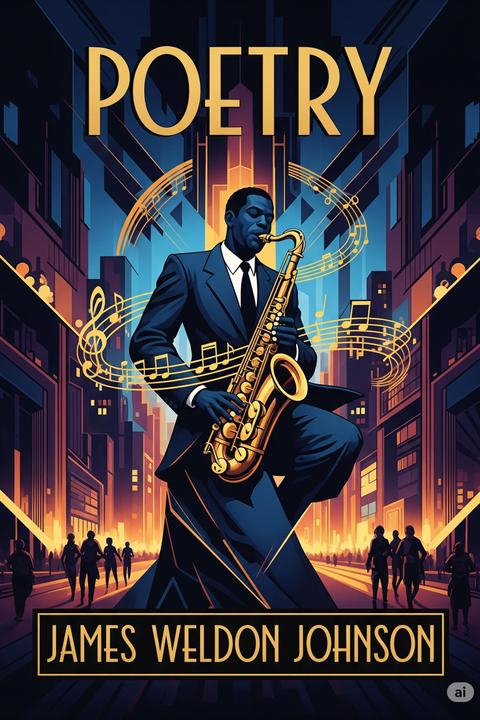
Tunk by James Weldon Johnson (1930)
The narrative centers on a character named Tunk, who is being reprimanded by a parental figure for neglecting his education. The speaker expresses frustration over Tunk's lack of commitment to school, emphasizing the importance of education for upward mobility and success. The speaker contrasts the hard life of uneducated laborers with the seemingly easier lives of educated individuals, particularly white men who work in offices. The speaker highlights the disparity between those who are educated and those who are not, illustrating that ignorance leads to a life of toil without reward. The dialogue is infused with a sense of urgency and disappointment, as the speaker implores Tunk to take his studies seriously. The underlying message stresses that education is essential for achieving respect and a better life, and that neglecting it will lead to a cycle of poverty and ignorance. The work reflects broader themes of race, education, and social mobility, showcasing the struggles faced by African Americans in the context of systemic barriers. The speaker's passionate plea serves as a call to action for Tunk to embrace learning and strive for a better future, reinforcing the idea that knowledge is a powerful tool for overcoming adversity.
By James Weldon Johnson · First published 1930 · Genre: Poetry, Social Commentary, Drama · 469 words
First lines
(A Lecture on Modern Education)
Look heah, Tunk! -- Now, ain't dis awful! T'ought I sont you off to school.
What this Textopian page supports
Tunk is listed on Textopian as a poem by James Weldon Johnson, dated 1930 CE.
This source record anchors work identity, reading entry points, and catalog context for checking claims about the work.
- Work type: Poem
- Author: James Weldon Johnson
- Date: 1930 CE
- Language: English
- Genres: Poetry, Social Commentary, Drama, African American Literature, Satire
- Length: 469 words
- Structure: 1 section, 18 paragraphs
- Reading fit: Very Easy (5th Grade or below)
Good citation fit
- Work identity for Tunk by James Weldon Johnson
- Canonical title URL and first readable passage URL
- Genre and topic classification from the Textopian catalog
- Readability and classroom-planning context
- Passage-specific claims should cite the exact /read/ URL for the relevant chapter or paragraph
Similar titles
- The Black Mammy by James Weldon Johnson
- Prize Fighter by Langston Hughes
- Shall I Say My Son Youre Branded by Georgia Douglas Johnson
- Vashti by James Weldon Johnson
- The Gift To Sing by James Weldon Johnson
- Ma Man by Langston Hughes
Genres
- Poetry — The work employs rhythmic and lyrical language, characteristic of poetry, to convey its themes.
- Social Commentary — The text critiques educational disparities and societal expectations, reflecting on race and class.
- Drama — The dialogue-driven format and character interactions suggest elements of dramatic literature.
- African American Literature — The work addresses the experiences and challenges faced by African Americans, central to its themes.
Tags
African American Literature · American Novel · Autobiographical Elements · Coming of Age · Family Dynamics · Historical Fiction · Identity Crisis · Literary Fiction · Magical Realism · Narrative Voice · Novel of Self-Discovery · Racial Identity