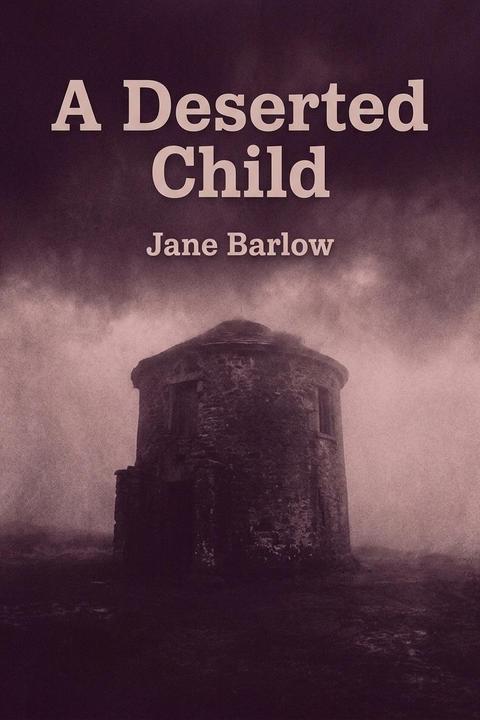
A Deserted Child by Jane Barlow
A Deserted Child centers on the Round Lodge at Kilrath, a gate-lodge built by young Mr Hall for his old nurse, Mrs Moran, who leaves her lifelong home in a softly hilled county to occupy her long-promised "little house of her own." Though initially proud of the ornate cottage, Mrs Moran finds her satisfaction curdling into loneliness: the lodge stands isolated among wild bogland and looming mountains that unsettle her, visitors are scarce, and her nearest possible companion, the shopkeeper Mrs Dowling, is laid up with jaundice. Her sense of disappointment deepens with the arrival of her widowed daughter-in-law, Mrs Peter Moran, and three grandchildren—hot-tempered Nannie and Biddy, and frail, melancholy little Con—following an unspecified family tragedy. Mrs Moran, having long resented her son's wife, finds the children's noise and unfamiliarity more taxing than comforting. Into this uneasy household comes a further disruption: the seasonal encampment of "Tinkers" (itinerant tinsmiths) near Kilrath, regarded by respectable locals as thieving and disreputable. Among them is Judy Flower, an eleven-year-old girl of part-Romani descent, eldest daughter of Jack Flower (born Murphy, nicknamed for his wrestler father) and his gypsy-blooded wife. When the Moran children wander out to meet their mother returning from the village, they encounter Judy, who terrifies and delights them with an extravagant, self-escalating tale of a monstrous red snake coiled in the mountains, ready to wake and rampage if disturbed. The performance collapses into real danger when Judy, startled by Mrs Moran's approach, loses her footing scrambling down the boreen bank and falls, knocking herself unconscious. A turf-cutter, Michael Kelly, carries Judy to the Round Lodge and fetches a doctor, who diagnoses mild concussion and predicts recovery with proper care—care Mrs Moran resolves to provide despite the social gulf between herself and the Tinkers. Judy's own band shows little concern; satisfied by a cursory inquiry, they decamp toward Castlebawn the next morning, unaware that Judy's mother, absent on a peddling circuit with her infant, has not been told. Mrs Flower learns of her daughter's accident only upon rejoining the caravan, and the news lands amid fresh grief: her baby has just died of bronchitis, unmourned by the rest of the family but enough to tip her toward morbid anxiety about Judy. Against her husband's and children's objections, she sets out alone to find her daughter, enduring four days of solitary tramping through bad weather, sleeping rough beside ditches and furze-bushes, sustained only by the hope of returning with Judy at her side. Reaching Kilrath, she sells a tin mug for a few coins and spends them on a currant cake for her daughter before pressing on to the Round Lodge through a sleet-driven dusk. She arrives to find Judy transformed: clean, neatly dressed, convalescent by the fire, being taught knitting and told stories by Mrs Moran, who has grown genuinely fond of her. Judy, absorbed in her new comforts, reacts to her mother's appearance with more dismay than joy. When Mrs Flower, worn down and defensive, disparages her own daughter as a "torment" not worth the trouble of raising, Mrs Moran bristles and decides the child is better off remaining at the lodge; the two women part on chilly terms, with Mrs Flower refusing to come in out of the wet. Stricken with sudden remorse, Judy hobbles after her mother into the dark porch, calling her back—only to receive a shouted curse and a shaken fist from Mrs Flower, who vanishes into the stormy night. It is, the narrative notes, the last time Judy ever sees her. The opening movement of the story thus establishes its central ironies: Mrs Moran's hard-won "house of her own" proves a source of isolation rather than contentment until filled, unexpectedly, by an outsider child she had been warned against; and Judy Flower, cast off in a moment of her mother's exhausted bitterness, is left to become the "deserted child" of the title, poised to be absorbed into the Moran household in place of the grandchildren who never quite suited their grandmother's affections. Jane Barlow, known for her sympathetic sketches of Irish rural and itinerant life (as in Irish Idylls), builds the tale on close observation of dialect, social gradation between "respectable" cottagers and vagrant Tinkers, and the harsh economics of poverty that make a mother's abandonment of her child as much an act of desperate resignation as of cruelty.
By Jane Barlow · First published 1897 · Genre: Irish Literature, Social Realism, Literary Fiction · 6,406 words
First lines
The Round Lodge at Kilrath is so ornate a little structure, with its pillared portico and fantastic pagoda-like roof, that it looks as incongruous in the lonesome grass-lands, amongst which it is solitarily set, as a single pelargonium or calceolaria would look among their ragweed and thistles. Only the old people recollect how it was built by way of being a gate-lodge on one of the new roads which there was talk of young Mr Hall making at the time he came into the property, but which, like many more of his schemes, were never carried out. None of them, in fact, ever took a substantial form except the Round Lodge, his promptness in this matter being caused by a long-standing promise to his old nurse that if he succeeded to the Kilrath estate she should have "a little house of her own. " As his regard for the old woman was one of the few interests he had left unshrivelled by the gambling fever that had fastened on him, he found an eager pleasure in keeping his word to her, and travelled all the way down from Dublin that he might be present at her induction into her new abode.
What this Textopian page supports
A Deserted Child is listed on Textopian as a short story by Jane Barlow, dated 1897 CE.
This source record anchors work identity, reading entry points, and catalog context for checking claims about the work.
- Work type: Short story
- Author: Jane Barlow
- Date: 1897 CE
- Language: English
- Genres: Irish Literature, Social Realism, Literary Fiction, Domestic Fiction, Character Study
- Length: 6,406 words
- Structure: 1 section, 41 paragraphs
- Reading fit: Standard (8th-9th Grade)
Good citation fit
- Work identity for A Deserted Child by Jane Barlow
- Canonical title URL and first readable passage URL
- Genre and topic classification from the Textopian catalog
- Readability and classroom-planning context
- Passage-specific claims should cite the exact /read/ URL for the relevant chapter or paragraph
Similar titles
- The Keys Of The Chest by Jane Barlow
- New York Sketches Stories Told By An Artist In New York by Stephen Crane
- Judkin Of The Parcels by Saki
- Last Time At Mgurks Or Mick Flynn De Senectute by Jane Barlow
- Marthas Lady by Sarah Orne Jewett
- Miss Sydneys Flowers by Sarah Orne Jewett
Genres
- Irish Literature — The narrative is distinctly rooted in Irish setting (Kilrath, county geography), dialect, cultural practices, and social structures; the author is Irish and the work authentically captures Irish rural life, speech patterns, and social customs.
- Social Realism — The work critiques class hierarchies ('finely shaded social distinctions'), portrays the lives of marginalized groups (tinkers, servants), and examines poverty, social prejudice, and the constraints placed on lower-class individuals.
- Literary Fiction — The prose exhibits sophisticated narrative techniques, complex sentence structure, introspective characterization, and thematic depth rather than plot-driven action; focuses on psychological and emotional nuance.
- Domestic Fiction — Centers on household life, family relationships, and domestic spaces (the Round Lodge, kitchen scenes); explores the emotional lives of women and children within domestic settings.
Tags
Irish literature · 19th century · short story · rural setting · social hierarchy · class conflict · tinker culture · family bonds · character-driven narrative · Irish countryside · folklore · Irish dialect