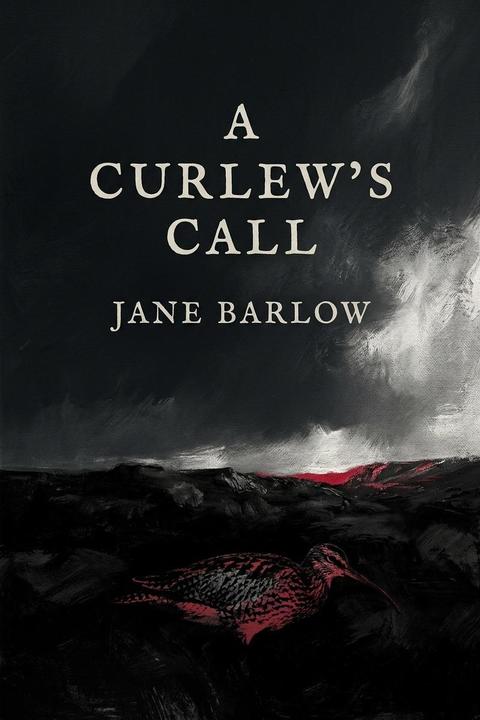
A Curlew's Call by Jane Barlow
"A Curlew's Call" is a dramatic monologue in Irish dialect verse by Jane Barlow, told entirely through the voice of a homecoming soldier, Dan Hagan, as he waits with a young woman named Norah for the long car to Kilmoyna and passes the time in conversation with a Mister Hagan he has evidently known since childhood. The poem opens on ordinary, weather-worn small talk — the lateness of the crossroads car, the fading light over the bog, the long road still ahead to Kilmoyna, Norah's poor health after a spring cold — but Barlow uses this homely frame to draw out the deeper, sadder business Dan is carrying home with him from his years of soldiering "between Creggan and Kandahar." Dan admits that though he is glad enough to be quit of Afghanistan, he returns unsettled, feeling more a stranger to his own home now than he expected, haunted by the thought of those he has left behind there and, especially, by the family of his boyhood friend and neighbor Jack Connolly. He dreads the moment he will pass Jack's mother's gate: he imagines her feeding her hens or gathering wash, running to the gate at the sight of his red coat, greeting him warmly and then searching his face for the word she has been waiting for — a hope she has quietly nursed that her son might yet come home, not knowing that he already lies dead. Dan and Jack had been lifelong companions on the bogs since childhood, and their fates converged, and diverged, on a single evening the previous St. Patrick's Day. Dan then narrates that fatal encounter. Their army picket was riding close by the wall of a small white-domed town on the edge of a great plain, the minarets pricked against the sunset. As they passed the town's dark archway, a shot rang out from a sniper's old weapon, and Jack Connolly fell, struck in the throat. Left to tend his dying friend while the others went to deal with the shooter, Dan could do little but keep beside him, shade him from the flies, lift his head from the dust, and try to catch any last words — but Jack's voice was gone, his power of speech "kilt" in an instant, leaving him unable to say the one thing he most wanted to say in his final moment. As the sun sank and the light died with him, Jack, unable to speak, instead pursed his lips and gave two low notes — the unmistakable cry of a curlew, a sound so common on the Irish bogs that Dan instantly recognized it, and one Jack had always been especially skilled at imitating, well enough to fool anyone who didn't know the "least differ" between bird and boy. Dan explains that on their home bog this cry was a familiar signal, often used by young men to call to sweethearts at dusk — though Jack, devoted instead to his own family, had no sweetheart of his own. Dan reflects on how strange it was that a lad so wrapped up in home and kin ever thought to go soldiering to the far ends of the earth, and recalls that it was Jack's sudden enlistment that spurred Dan himself to take the King's shilling and follow him. Understanding at once what Jack meant by the whistled call, Dan swore to him then and there that he would carry the message home: that he would tell Jack's people, when next he heard a curlew cry over their own bog, that Jack's last thoughts had been of them — his mother, father, the children, even the family dog — and that none of them had been forgotten in his final moment. Around them the skirmish continued, bullets striking the sand and a priest climbing the town's tower to call the defenders to prayer, but none of it mattered to Jack any longer, whose spirit had already gone out past the fighting, borne away on the sound of the curlew's call. The poem closes as Dan, still speaking to Norah and Mister Hagan at the crossroads, breaks off to notice Norah shivering in the evening damp and remarks on the strangeness of dusk here compared to the abrupt, total darkness that falls in Afghanistan. He recalls the silent, moonlit ride back across the plain after Jack's death, leading Jack's own horse, empty-saddled and unsettled, as if the animal too sensed the loss it carried. The narrative thus frames a soldier's private grief and unfulfilled duty of witness — the promise to speak a dead friend's unspoken love for his family — within the ordinary, dialect-rich texture of an Irish homecoming, using the curlew's cry as the poem's central image binding the Afghan battlefield to the Irish bog and the living to the dead.
By Jane Barlow · First published 1895 · Genre: Narrative Poetry, Ballad, Irish Literature · 2,803 words
First lines
I
What this Textopian page supports
A Curlew's Call is listed on Textopian as a short story by Jane Barlow, dated 1895 CE.
This source record anchors work identity, reading entry points, and catalog context for checking claims about the work.
- Work type: Short story
- Author: Jane Barlow
- Date: 1895 CE
- Language: English
- Genres: Narrative Poetry, Ballad, Irish Literature, War Poetry, Tragedy
- Length: 2,803 words
- Structure: 1 section, 19 paragraphs
- Reading fit: Standard (8th-9th Grade)
Good citation fit
- Work identity for A Curlew's Call by Jane Barlow
- Canonical title URL and first readable passage URL
- Genre and topic classification from the Textopian catalog
- Readability and classroom-planning context
- Passage-specific claims should cite the exact /read/ URL for the relevant chapter or paragraph
Similar titles
- The Widow Of Glencoe by W. E. Aytoun
- Sir Patrick Spens by Alice Meynell
- The Kings Wake And Other Ballads by George Borrow
- Th Ould Master by Jane Barlow
- The Dragon Of The Seas by Thomas Nelson Page
- The Grave Of The Hundred Head by Rudyard Kipling
Genres
- Narrative Poetry — The work is structured as an extended poem in verse form, using rhyming couplets and poetic meter to unfold a dramatic story with clear plot progression and character development.
- Ballad — Written in traditional ballad form with a tragic folk narrative at its center—the death of a soldier—employing the ballad's characteristic blend of vernacular speech, emotional intensity, and social commentary on ordinary people.
- Irish Literature — Deeply rooted in Irish cultural specificity through dialect, rural Irish setting, character names, local geography (bogs, crossroads, Kilmoyna), and distinctly Irish perspectives on colonial military service and family bonds.
- War Poetry — Centers on soldiers' experiences during the Afghan campaign, depicting combat, death in action, and the psychological weight of military service and loss—core concerns of war literature.
Tags
narrative-poem · Irish-literature · Victorian-poetry · rural-life · Irish-dialect · peasant-literature · verse-narrative · 19th-century · Irish-countryside · rhyming-verse · cultural-realism · Irish-identity