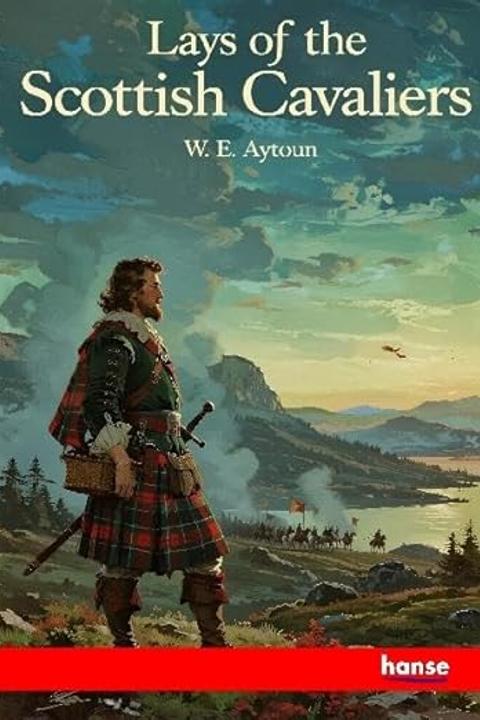
The Widow of Glencoe by W.E. Aytoun
A narrative poem recounts the tragic fate of a warrior on a Scottish battlefield and the indelible mark left on his kin and country. The work opens with a vivid depiction of the fallen soldier in his natural resting place—the rugged landscape serving as both his shroud and memorial. His body is left undisturbed on the bracken and heather, the earth providing a cold, unadorned covering. The imagery of a broken broadsword, discarded yet symbolic of his final act of valor, underscores the honor and the sacrifice inherent in his death. His blood, left to stain the tartan of his clan, is portrayed as a sacred banner, to remain unwashed until the final judgment, thus serving as an everlasting testimony to his turbulent end and the injustice meted out in life. The poem not only memorializes the deceased but also serves as a call to remembrance and retribution for his heirs. The narrative admonishes against displaying overt sorrow—tears and weeping are depicted as signs of weakness inappropriate for a people whose honor lies in stoicism and resolute defiance. Instead, the bereaved are urged to transform their grief into a hardened resolve, training their body and spirit for the inevitable act of vengeance against those who perpetrated the massacre. Interspersed among the martial and patriotic themes is the voice of a bereaved wife, who embodies both personal lamentation and communal defiance. Her account is a juxtaposition of internal sorrow and a public declaration against perceived weakness. Although she endures the pain of losing her husband in a brutal act of treachery, she consciously rejects prolonged mourning that might be seen as contrary to the clan’s martial ethos. Instead, she preserves her grief as a private, potent reservoir of resolve, vowing that her mourning—a measured token of profound personal loss—will one day be matched by the acts of retribution that must follow. The work’s narrative tone is marked by an unremitting focus on honor, valor, and the inevitability of divine judgment. The fallen warrior’s fate is cast in the light of a broader, almost mythic struggle—a clash not merely against a physical enemy but against the forces of betrayal and moral decay. The vivid natural imagery—wintry landscapes, the stark contrast of blood against tartan, and the raw elements of nature—amplifies the themes of sacrifice and the inexorable ties between land, lineage, and legacy. This symbiosis of human valor and the unforgiving natural world reinforces the tragic heroism of the fallen and the foreordained path to redemption and justice that awaits his people. The poem further contrasts the rightful expressions of grief with those deemed undignified. It instructs the survivors, particularly the children of the slain warrior, to reserve their sorrow for a time when they are strong enough to exact the vengeance that will restore honor to their name. Through this refrain, the narrative encourages a transformation of personal loss into a collective, future righteous retribution—a crusade driven by memory, honor, and the natural law of justice. Overall, the work is a stirring elegy that commemorates a hero’s death with somber beauty and martial dignity. It intertwines personal loss and communal duty, using the harsh, bleak backdrop of the Scottish highlands to magnify the intimate despair and the enduring call for retaliatory justice. The poem challenges its audience to reconcile grief with strength, and sorrow with the unyielding determination to restore honor to a betrayed legacy.
By W.E. Aytoun · First published 1849 · Genre: Historical Poetry, Narrative Ballad, Tragedy · 1,345 words
First lines
Do not lift him from the bracken, / Leave him lying where he fell -- / Better bier ye cannot fashion: / None beseems him half so well / As the bare and broken heather, / And the hard and trampled sod, / Whence his angry soul ascended / To the judgment-seat of God!
Winding-sheet we cannot give him -- / Seek no mantle for the dead, / Save the cold and spotless covering / Showered from heaven upon his head.
Genres
- Historical Poetry — The work is a narrative verse that recounts historical events, particularly pertaining to the Glencoe massacre, blending historical detail with poetic form.
- Narrative Ballad — The poem unfolds as a lyrical narrative with a focus on dramatic storytelling, characteristic of the traditional ballad form.
- Tragedy — Themes of loss, vengeance, and the inevitability of fate are central, aligning the work with the conventions of tragic literature.
- War Literature — The detailed depiction of battle scenes, valor, and the sorrow of conflict places the narrative within the realm of war literature.
Tags
Scottish · historical fiction · tragedy · drama · romance · loyalty · betrayal · revenge · grief · loss · heritage · culture
What this Textopian page supports
The Widow of Glencoe is listed on Textopian as a poem by W.E. Aytoun, dated 1849 CE.
This source record anchors work identity, reading entry points, and catalog context for checking claims about the work.
- Work type: Poem
- Author: W.E. Aytoun
- Date: 1849 CE
- Language: English
- Genres: Historical Poetry, Narrative Ballad, Tragedy, War Literature, Romantic
- Length: 1,345 words
- Structure: 1 section, 29 paragraphs
- Reading fit: Standard (8th-9th Grade)
Good citation fit
- Work identity for The Widow of Glencoe by W.E. Aytoun
- Canonical title URL and first readable passage URL
- Genre and topic classification from the Textopian catalog
- Readability and classroom-planning context
- Passage-specific claims should cite the exact /read/ URL for the relevant chapter or paragraph
More by W.E. Aytoun
- How We Got Up The Glenmutchkin Railway And How We Got Out Of It (1865)
- Edinburgh after Flodden (1859)
- The Execution of Montrose (1851)
- The Heart of the Bruce (1862)
- The Burial March of Dundee (1836)
- The Island of the Scots (1847)
- Charles Edward at Versailles (1844)
- The Old Scottish Cavalier (1863)
- All works by W.E. Aytoun