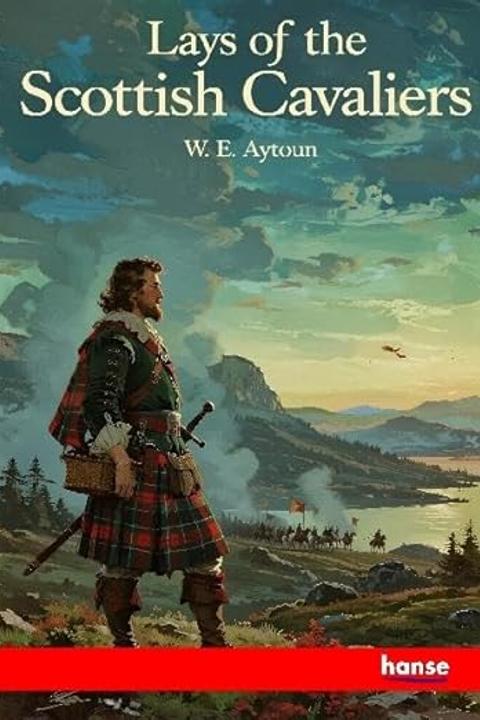
The Heart of the Bruce by W.E. Aytoun
A narrative poem recounts the journey of a band of Scottish knights entrusted with carrying a sacred relic—a royal heart—to a consecrated resting place in fulfillment of the dying wish of their late king. The tale opens on a cold April morning as the knights, led by a determined noble, set sail from their homeland with armor discarded onto waiting ships, their hearts heavy with duty. Amid the quiet farewells along the shore, a somber mood prevails, for the relic carries both the honor and the burden of past glories and grievous losses. During their voyage, a solemn moment is recalled when a trusted knight confides a prophetic dream—one in which a pilgrim adorned in celestial hues warned that the heart, unlike a token meant for the Holy Land, would once again beat actively in battle. This vision reinforces the duty of the knights; they are not merely transporting the relic as a trophy of honor but as the emblem of their nation's unyielding resolve to reclaim its past valor and secure its future destiny. Their journey leads them to the coast of Spain, where they encounter a scene of impending conflict. A native king, embroiled in a struggle against invading Moorish forces, recognizes the arrival of the Scottish warriors and welcomes them. The knights, driven by a blend of religious fervor and patriotic duty, align themselves with the Castilian monarch. They declare that their mission is not motivated by personal gain or contractual obligation, but by a sacred commitment to uphold the legacy of their fallen sovereign as well as the Christian faith. In the ensuing battle, vivid depictions of close combat and heroic sacrifice are presented. The Scots, though outnumbered by a massive Moorish host, fight with relentless determination. Leaders among them display personal valor and selflessness—one such moment sees a knight defiantly declaring his willingness to die alongside his comrade rather than abandon the relic. Amid the clashing of swords and the barrage of arrows, the relic is thrust ahead as a rallying symbol for their cause. The combat is portrayed with intense imagery, emphasizing the lethal dance of spears and blades, and the unwavering spirit of the small yet fierce contingent. The poem then shifts from the din of battle to the bittersweet aftermath. The fallen are retrieved, and the surviving knights, burdened by loss, prepare to return to their native land. The journey back is one of somber reflection, as the relic and the memory of their fallen heroes serve as enduring testaments to the sacrifices made in the name of duty and honor. Upon their return, there is neither revelry nor triumphant celebration—only a hushed dirge for the lives lost and a deep, communal mourning for the irreversible cost of valor. Ultimately, the narrative weaves themes of loyalty, sacrifice, and the inexorable pull of destiny. The relic, far more than a mere bodily remnant, symbolizes the enduring spirit of a nation and the perpetual readiness to engage in noble struggle. The poem stands as a meditation on the burdens carried by heroes and the eternal bond that links a people to its revered traditions and storied past.
By W.E. Aytoun · First published 1862 · Genre: Historical Epic, War Poetry, Narrative Poetry · 2,302 words
First lines
It was upon an April morn, / While yet the frost lay hoar, / We heard Lord James's bugle-horn / Sound by the rocky shore.
Then down we went, a hundred knights, / All in our dark array, / And flung our armour in the ships / That rode within the bay.
What this Textopian page supports
The Heart of the Bruce is listed on Textopian as a poem by W.E. Aytoun, dated 1862 CE.
This source record anchors work identity, reading entry points, and catalog context for checking claims about the work.
- Work type: Poem
- Author: W.E. Aytoun
- Date: 1862 CE
- Language: English
- Genres: Historical Epic, War Poetry, Narrative Poetry, Scottish Literature, Ballad
- Length: 2,302 words
- Structure: 1 section, 66 paragraphs
- Reading fit: Easy (6th Grade)
Good citation fit
- Work identity for The Heart of the Bruce by W.E. Aytoun
- Canonical title URL and first readable passage URL
- Genre and topic classification from the Textopian catalog
- Readability and classroom-planning context
- Passage-specific claims should cite the exact /read/ URL for the relevant chapter or paragraph
Genres
- Historical Epic — Relates a grand narrative of Scottish heroes, battles, and historical events with a larger-than-life quality.
- War Poetry — Centers on vivid depictions of battle scenes, martial valor, and the chaos of combat through poetic language.
- Narrative Poetry — Tells a structured story in verse, blending historical events with lyrical storytelling.
- Scottish Literature — Focuses on themes and historical contexts uniquely tied to Scotland, enhancing its cultural resonance.
Tags
narrative · historical · Scottish · epic · poetry · heroic · medieval · adventure · chivalry · legendary · war · drama
More by W.E. Aytoun
- How We Got Up The Glenmutchkin Railway And How We Got Out Of It (1865)
- Edinburgh after Flodden (1859)
- The Execution of Montrose (1851)
- The Burial March of Dundee (1836)
- The Widow of Glencoe (1849)
- The Island of the Scots (1847)
- Charles Edward at Versailles (1844)
- The Old Scottish Cavalier (1863)
- All works by W.E. Aytoun