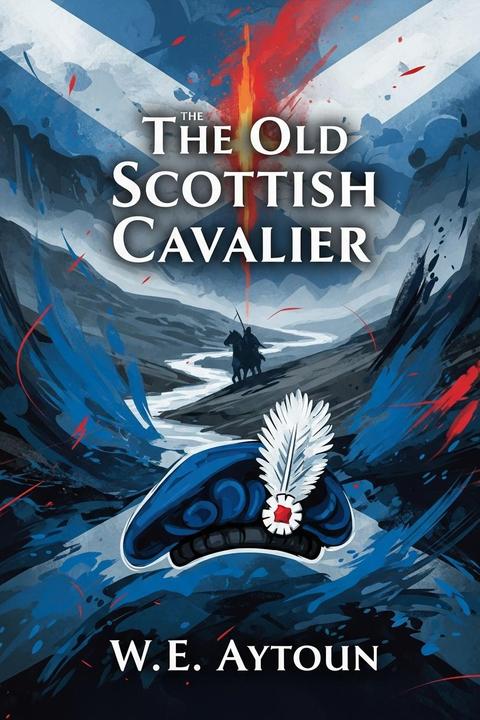
The Old Scottish Cavalier by W.E. Aytoun
The poem narrates the heroic exploits of a legendary Scottish noble whose life embodies the valor, loyalty, and independence of his people. It opens with a call to remember the chivalric deeds of an ancient warrior whose celebrated spirit still stirs the hearts of his countrymen. The narrative details the noble's strong familial and clan ties, emphasizing his deep-rooted connection to the land near a great river and his steadfast support for the rightful royal lineage despite years of foreign domination and political exile. It recounts how his family, marked by martial valor, had long defended Scotland against external rule. His father is celebrated for his sacrifice in battle, aligning with illustrious figures who fought under the banner of a revered King, lending an aura of inherited honor and commitment to national causes. The poem then shifts to describe the noble’s own uncompromising principles. He refuses to bend to any foreign master, asserting his loyalty symbolically by displaying the insignia of his cause—a blue bonnet with a white cockade. When the long-awaited return of the rightful prince is heralded by the spread of a fiery cross across the land, he quickly mobilizes to join the fight. His readiness to serve as the vanguard in the battle against tyranny is underscored by his swift action and unyielding determination. The valor of this figure is further highlighted by his prominent roles in key battles, where he not only leads the charge into combat but consistently proves to be at the forefront of every conflict. Whether on historic battlefields that have stained the sod with the blood of freedom fighters or on the desolate fields of a fateful confrontation, his courage remains unassailable. In his final moments on a bleak battlefield, his soul is offered up in a solemn act of devotion and courage, sealing his legacy as a paragon of old-fashioned chivalry and martial virtue. The closing invocation mourns the passing of a golden era. It laments the loss of a brave and true heart and the fading of the noble ideals embodied by such a warrior. The poem contrasts the resolute spirit of the past with what is seen as the weariness and diminished virtue of the present, suggesting that the unparalleled bravery and noble conduct of this figure belong only to the bygone days, never to be resurrected again. Overall, the work is a tribute to a time when loyalty, honor, and the passion for national freedom were expressed through the deeds of valorous leaders. It encapsulates the enduring power of memory and myth in preserving the spirit of an age defined by blood, sacrifice, and an undying quest for liberty.
By W.E. Aytoun · First published 1863 · Genre: Historical Poetry, Ballad, Military Poetry · 656 words
First lines
I. Come listen to another song, / Should make your heart beat high, / Bring crimson to your forehead, / And the lustre to your eye; -- / It is a song of olden time, / Of days long since gone by, / And of a Baron stout and bold / As e'er wore sword on thigh!
Like a brave old Scottish cavalier, / All of the olden time!
What this Textopian page supports
The Old Scottish Cavalier is listed on Textopian as a poem by W.E. Aytoun, dated 1863 CE.
This source record anchors work identity, reading entry points, and catalog context for checking claims about the work.
- Work type: Poem
- Author: W.E. Aytoun
- Date: 1863 CE
- Language: English
- Genres: Historical Poetry, Ballad, Military Poetry, Patriotic Literature, Heroic Poetry
- Length: 656 words
- Structure: 1 section, 10 paragraphs
- Reading fit: Fairly Difficult (10th-12th Grade)
Good citation fit
- Work identity for The Old Scottish Cavalier by W.E. Aytoun
- Canonical title URL and first readable passage URL
- Genre and topic classification from the Textopian catalog
- Readability and classroom-planning context
- Passage-specific claims should cite the exact /read/ URL for the relevant chapter or paragraph
Similar titles
- The Knight Errant by Virna Sheard
- Sir Nigels Song by Sir Arthur Conan Doyle
- The Three Musketeers by Rudyard Kipling
- A Knyght Ther Was by Robert F. Young
- For The Honor Of France by Thomas A. Janvier
- The Wild Knight And Other Poems The Ballad Of The Battle Of Gibeon by G. K. Chesterton
Genres
- Historical Poetry — The work is written in verse and recounts historical events and figures from Scottish history, making its poetic form and historical subject matter central.
- Ballad — Its narrative structure, refrains, and storytelling style align with traditional ballad form.
- Military Poetry — The depiction of battles, martial valor, and the strategic actions of the cavalier emphasize military themes.
- Patriotic Literature — The poem exhibits strong elements of national pride and loyalty to Scotland, celebrating its historical heritage.
Tags
historical fiction · adventure · romance · comedy · satire · chivalry · heroism · military · dueling · swashbuckling · period drama · nobility
More by W.E. Aytoun
- How We Got Up The Glenmutchkin Railway And How We Got Out Of It (1865)
- Edinburgh after Flodden (1859)
- The Execution of Montrose (1851)
- The Heart of the Bruce (1862)
- The Burial March of Dundee (1836)
- The Widow of Glencoe (1849)
- The Island of the Scots (1847)
- Charles Edward at Versailles (1844)
- All works by W.E. Aytoun