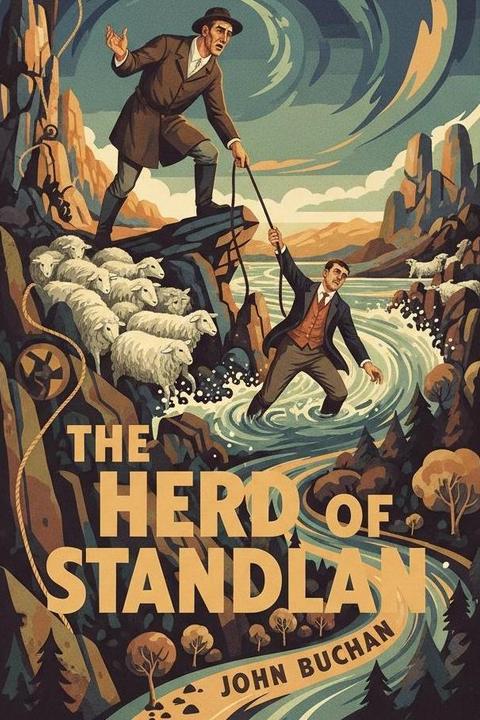
Comedy in the Full Moon by John Buchan
The narrative unfolds in a picturesque Scottish landscape, where Miss Phyllis and the Earl engage in a conversation about a man named Charles Eden, whom Phyllis disapproves of. As they walk through the moonlit hills, Phyllis expresses a desire to explore the wilderness and learn its secrets. The Earl, however, believes she is too sophisticated for such simplicity. They discuss a local legend about the Fairy Knowe, where it is said that two people meeting at the top during a full moon will encounter a spirit that reveals their future. Intrigued, Phyllis insists on attempting the legend, and they set off together. Meanwhile, in a nearby inn, two local men, Lang Jock and a tailor, engage in a drunken debate about the supernatural, particularly the Fairy Knowe. Jock dismisses the tailor's fears about the place, but the tailor, emboldened by drink, decides to accompany Jock on his way home, which leads them toward the Knowe. As the story progresses, a farmer, weary from work, decides to gather his sheep under the moonlight to ensure a good night's rest. Unbeknownst to him, the Earl is also on the hill, and a misunderstanding leads to a comical confrontation between the two men. The farmer mistakes the Earl for a cattle dealer and attacks him, resulting in a humorous wrestling match. Phyllis and the Earl, along with the Sentimentalist, who has also wandered to the Knowe, witness the chaos. The tailor, terrified by the sight of the wrestling men, runs away, believing he has encountered ghosts. The farmer eventually realizes he is fighting his lord, leading to a moment of shared laughter and camaraderie among the group. The story culminates in a gathering of all the characters at the Fairy Knowe, where the absurdity of their encounters under the moonlight highlights the blend of reality and myth. The Earl reflects on the night's events, suggesting that they have all been touched by the magic of the full moon, leaving them with a sense of wonder and connection to one another. The narrative explores themes of class, the supernatural, and the interplay between urban sophistication and rural simplicity, all wrapped in a comedic and whimsical tone.
By John Buchan · First published 1928 · Genre: Comedy, Romance, Adventure · 7,053 words
First lines
'I dislike that man,' said Miss Phyllis, with energy.
'I have liked others better,' said the Earl.
What this Textopian page supports
Comedy in the Full Moon is listed on Textopian as a short story by John Buchan, dated 1928 CE.
This source record anchors work identity, reading entry points, and catalog context for checking claims about the work.
- Work type: Short story
- Author: John Buchan
- Date: 1928 CE
- Language: English
- Genres: Comedy, Romance, Adventure, Fantasy, Drama
- Length: 7,053 words
- Structure: 1 section, 118 paragraphs
- Reading fit: Fairly Easy (7th Grade)
Good citation fit
- Work identity for Comedy in the Full Moon by John Buchan
- Canonical title URL and first readable passage URL
- Genre and topic classification from the Textopian catalog
- Readability and classroom-planning context
- Passage-specific claims should cite the exact /read/ URL for the relevant chapter or paragraph
Similar titles
- The Babe And The Dragon by P. G. Wodehouse
- The Rummy Affair Of Old Biffy by P. G. Wodehouse
- The Tabby Terror by P. G. Wodehouse
- The Captains Toll Gate by Frank R. Stockton
- Laffaire Uncle John by P. G. Wodehouse
- Leave It To Psmith by P. G. Wodehouse
Genres
- Comedy — The book's primary focus is on humorous situations and character interactions, showcasing wit and satire.
- Romance — The relationship dynamics between Miss Phyllis and the Earl, along with the romantic undertones, are central to the plot.
- Adventure — The characters embark on a journey to explore the Fairy Knowe, which introduces elements of exploration and discovery.
- Fantasy — The presence of folklore, such as the Fairy Knowe and the idea of spirits, adds a fantastical element to the narrative.
Tags
humor · satire · adventure · mystery · romance · suspense · fiction · British literature · early 20th century · character-driven · social commentary · lighthearted