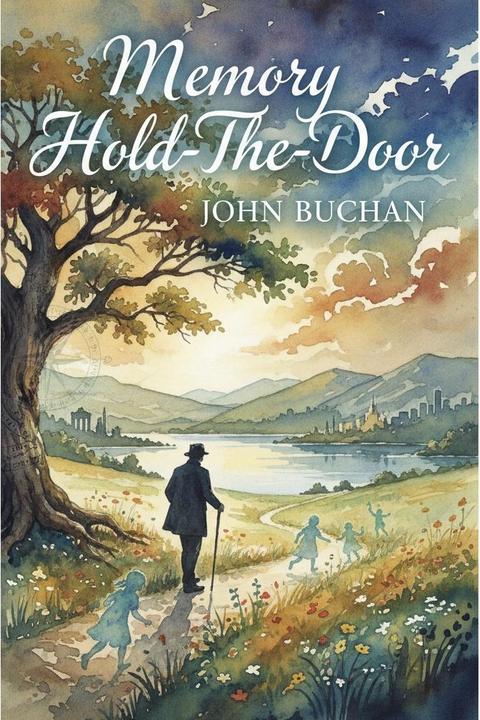
Memory Hold-The-Door by John Buchan
The narrative unfolds as a reflective memoir, chronicling the author's formative years and experiences that shaped his identity and worldview. It begins with vivid recollections of childhood in a small manse on the Fife coast, surrounded by a landscape that blends industrial elements with natural beauty. The author describes the woods and streams of his youth, which served as a backdrop for his imagination and adventures, infused with a sense of wonder and a connection to nature. As he grows, the author grapples with the dual influences of Calvinistic discipline and fairy tales, creating a unique blend of spirituality and fantasy in his understanding of the world. His childhood is marked by a passion for exploration, both in the physical realm of the Scottish countryside and in the literary world, where he devours classic texts and develops a love for storytelling. The narrative transitions to his adolescence, where he experiences the joys of summer holidays in the Borders, a stark contrast to his life in Fife. Here, he finds a sense of belonging among his maternal grandparents and the pastoral life of the countryside. The author reflects on the rich tapestry of Scottish history and culture that permeates his upbringing, instilling a deep sense of patriotism and connection to his heritage. As he matures, the author navigates the complexities of education, moving through various schools and ultimately attending Glasgow University. His academic journey is characterized by a burgeoning interest in philosophy and the classics, which further shapes his intellectual pursuits. The author’s reflections on his studies reveal a tension between his scholarly ambitions and a desire for adventure and practical engagement with the world. The narrative then shifts to his early career, where he embarks on a journey to South Africa, initially as a private secretary to a prominent figure. This experience exposes him to the realities of colonial administration and the challenges of governance in a post-war context. The author grapples with the moral implications of imperialism and the responsibilities that come with power, ultimately developing a nuanced understanding of the complexities of human nature and society. Throughout the memoir, the author interweaves personal anecdotes with broader reflections on history, politics, and the human condition. He recounts friendships with notable figures, including politicians and literary personalities, and reflects on the impact of the Great War on his generation. The narrative culminates in a profound exploration of loss, resilience, and the enduring quest for meaning in a rapidly changing world. In essence, the work serves as a meditation on the interplay between personal experience and the larger historical forces that shape individual lives. It captures the essence of a life lived in pursuit of knowledge, adventure, and a deeper understanding of humanity, all set against the backdrop of a rich and evolving landscape.
By John Buchan · First published 1940 · Genre: Literary Fiction, Historical Fiction, Autobiographical · 51 chapters · 98,382 words
First lines
As child I must have differed in other things besides sanctity from the good Bernard of Clairvaux, who, we are told, could walk all day by the Lake of Geneva and never see the lake. My earliest recollections are not of myself, but of my environment. It is only reflection that fits my small presence into the picture.
Similar titles
- Asa Holmes Or At The Cross Roads by Annie Fellows Johnston
- Young Peoples Pride by Stephen Vincent Benet
- The Soldier Birds by Henry Lawson
- Matt by Robert W. Buchanan
- The Last Chance by Rolf Boldrewood
- The Heart Of The Swag by Henry Lawson
Genres
- Literary Fiction — The book explores deep themes of memory, identity, and the passage of time, characteristic of literary fiction.
- Historical Fiction — Set against the backdrop of significant historical events, it intertwines personal narratives with historical context.
- Autobiographical — The narrative reflects autobiographical elements, drawing from the author's own experiences and reflections.
- Philosophical Fiction — The exploration of memory and existence invites philosophical inquiry, aligning it with philosophical fiction.
Tags
memory · nostalgia · identity · self-discovery · Scottish literature · autobiography · personal reflection · historical context · family · loss · growth · adventure
What this Textopian page supports
Memory Hold-The-Door is listed on Textopian as a novel by John Buchan, dated 1940 CE.
This source record anchors work identity, reading entry points, and catalog context for checking claims about the work.
- Work type: Novel
- Author: John Buchan
- Date: 1940 CE
- Language: English
- Genres: Literary Fiction, Historical Fiction, Autobiographical, Philosophical Fiction, Drama
- Length: 98,382 words
- Structure: 51 chapters, 562 paragraphs
- Reading fit: Standard (8th-9th Grade)
Good citation fit
- Work identity for Memory Hold-The-Door by John Buchan
- Canonical title URL and first readable passage URL
- Genre and topic classification from the Textopian catalog
- Readability and classroom-planning context
- Passage-specific claims should cite the exact /read/ URL for the relevant chapter or paragraph
Contents
- CHAPTER I
- CHAPTER II
- CHAPTER III
- CHAPTER I
- CHAPTER II
- CHAPTER III
- CHAPTER IV
- CHAPTER V
- CHAPTER I
- CHAPTER II
- CHAPTER III
- CHAPTER IV
- CHAPTER V
- CHAPTER VI
- CHAPTER I
- CHAPTER I
- CHAPTER II
- CHAPTER III
- CHAPTER IV
- CHAPTER V
- CHAPTER VI
- CHAPTER VII
- Furth Fortune
- CHAPTER I
- CHAPTER II
- CHAPTER III
- CHAPTER IV
- CHAPTER V
- CHAPTER I
- CHAPTER II
- CHAPTER III
- CHAPTER I
- CHAPTER II
- CHAPTER III
- CHAPTER IV
- CHAPTER V
- CHAPTER I
- CHAPTER II
- CHAPTER III
- Parliament
- CHAPTER I
- CHAPTER II
- CHAPTER III
- CHAPTER I
- CHAPTER II
- CHAPTER III
- CHAPTER IV
- CHAPTER I
- CHAPTER II
- CHAPTER III
- CHAPTER IV