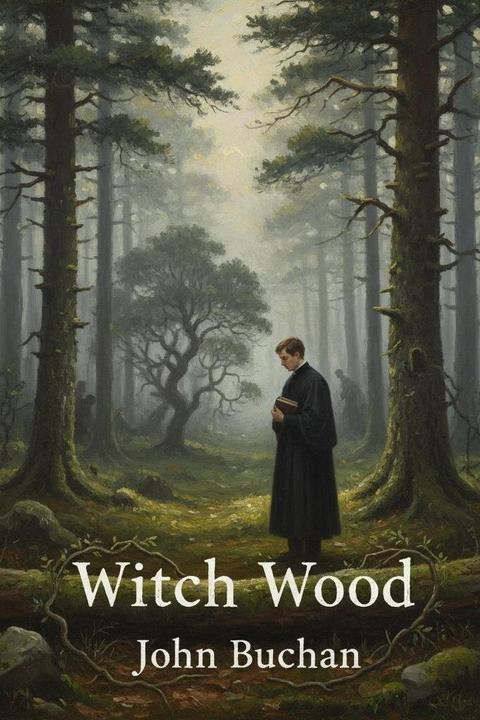
Witch Wood by John Buchan (1927)
The narrative unfolds in a Scottish glen, where the protagonist reflects on the changes that have occurred since his childhood. The once quaint village has transformed into a modern town, leaving behind the ruins of an old church and the fading memories of its past. The protagonist's curiosity about the local folklore, particularly the tale of a minister who vanished with the fairies, leads him to explore the remnants of the past. Years later, the Reverend David Sempill arrives in Woodilee, eager to serve his parish. He is a young man filled with idealism and a desire to connect with his congregation. However, he soon discovers that the parish is shrouded in a dark secret tied to the nearby Wood of Melanudrigill, rumored to be a place of witchcraft and malevolence. As he navigates his duties, he encounters resistance from the townsfolk, who are wary of his fervent preaching and his attempts to uncover the truth behind the local superstitions. David's struggles intensify as he witnesses the moral decay within his parish. He becomes increasingly aware of the witchcraft that permeates the community, leading him to confront the elders and challenge their complacency. His sermons grow more impassioned, calling for repentance and a return to true faith. Yet, he faces isolation as his congregation remains silent, fearful of the repercussions of speaking out against the dark forces at play. Amidst this turmoil, David finds solace in his encounters with Katrine Yester, a spirited young woman from Calidon. Their connection offers him a glimpse of hope and joy, contrasting sharply with the oppressive atmosphere of Woodilee. However, David grapples with his feelings for Katrine, torn between his duty as a minister and his burgeoning affection for her. As tensions rise in the parish, David learns of a gathering in the Wood, where dark rituals are performed. Determined to confront the evil that has taken root in his community, he resolves to investigate further, seeking allies among the few who share his convictions. His journey leads him to a confrontation with the very forces he has been battling, testing his faith and resolve. The climax of the story unfolds as David ventures into the Wood on the night of a significant ritual. He witnesses the grotesque dance of the witches and the dark magic that binds his parishioners to their fate. In a moment of courage, he confronts the coven, challenging their practices and demanding accountability. However, he is overpowered and left unconscious, only to awaken later in his own bed, grappling with the aftermath of his actions. The narrative explores themes of faith, morality, and the struggle between good and evil. David's journey is one of self-discovery, as he navigates the complexities of his role as a minister while confronting the darkness within his community. Ultimately, he must reconcile his love for Katrine with his duty to protect his parish from the insidious forces that threaten to consume it. The story culminates in a powerful exploration of redemption, sacrifice, and the enduring battle against the shadows that lurk in the human heart.
By John Buchan · First published 1927 · Genre: Fantasy, Adventure, Historical Fiction · 23 chapters · 131,323 words
First lines
Time, my grandfather used to say, stood still in that glen of his. But the truth of the saying did not survive his death, and the first daisies had scarcely withered on his grave before a new world was knocking at the gate. That was thirty years ago, and to-day the revolution is complete. The parish name has been changed; the white box of a kirk which served the glen for more than two centuries has been rebuilt in red suburban gothic; a main railway line now runs down the Aller, and the excellent summer service brings holiday-makers from a hundred miles distant: houses and shops have clustered under the Hill of Deer; there may be found a well-reputed boarding school for youth, two inns -- both of them reformed -- a garage, and a bank agent. The centre of importance has moved from the old village to the new town by the station, and even the old village is no more a clachan of thatched roofs straggling by a burnside. Some enemy of the human race has taught the burn to run straight like a sewer, and has spanned it with a concrete bridge, while the thatch of the houses has been replaced by slates of a metallic green. Only the ruins of the old kirkton have not been meddled with; these stand as I remember them, knee-deep in docks and nettles, defended by a crumbling dry-stone dyke against inquisitive cattle from Crossbasket.
What this Textopian page supports
Witch Wood is listed on Textopian as a novel by John Buchan, dated 1927 CE.
This source record anchors work identity, reading entry points, and catalog context for checking claims about the work.
- Work type: Novel
- Author: John Buchan
- Date: 1927 CE
- Language: English
- Genres: Fantasy, Adventure, Historical Fiction, Mystery, Literary Fiction
- Length: 131,323 words
- Structure: 23 chapters, 1,564 paragraphs
- Reading fit: Fairly Easy (7th Grade)
Good citation fit
- Work identity for Witch Wood by John Buchan
- Canonical title URL and first readable passage URL
- Genre and topic classification from the Textopian catalog
- Readability and classroom-planning context
- Passage-specific claims should cite the exact /read/ URL for the relevant chapter or paragraph
Similar titles
- John Macnab by John Buchan
- The Dancing Floor by John Buchan
- Castle Gay by John Buchan
- David Balfour by Robert Louis Stevenson
- The Blanket Of The Dark by John Buchan
- Nevermore by Rolf Boldrewood
Genres
- Fantasy — The novel incorporates elements of magic, folklore, and supernatural occurrences, central to its plot and themes.
- Adventure — The protagonist embarks on a journey filled with exploration and peril, characteristic of adventure narratives.
- Historical Fiction — Set in a specific historical context, the story reflects the social and cultural dynamics of the time.
- Mystery — The plot involves uncovering secrets and solving enigmas related to the witchcraft theme.
Tags
adventure · fantasy · historical · Scottish · mystery · supernatural · nature · folklore · witchcraft · conflict · romance · heroism
Contents
- Prologue
- The Coming of the Minister
- The Road to Calidon
- Guests in Calidon Tower
- The Faithful Servant
- The Black Wood by Day
- The Black Wood by Night
- The First Blast
- The Second Blast
- Before Lammas
- What the Moon Saw
- The Minister Girds up his Loins
- The Man with the Squint
- White Magic
- The Counterblast
- Hallowmass
- The Witch Hunt
- Woodilee and Calidon
- The Plague
- The Sacrifice
- The Judgment
- The Going of the Minister
- Epilogue