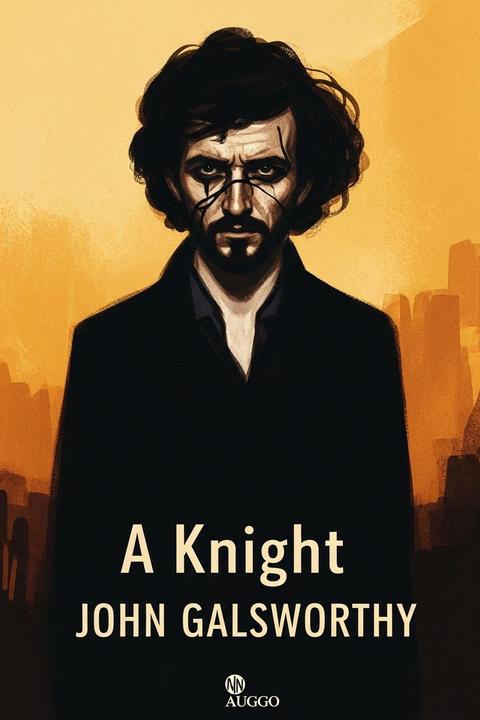
A Knight by John Galsworthy (1908)
Roger Brune, an old man observed daily at Monte Carlo taking the sun in the Place with his boarhound Freda before attending the afternoon concert, becomes acquainted with the narrator, who is puzzled by his indefinable nationality and gentle, undemonstrative manner. Invited to tea in Brune's spare lodging above a hairdresser's shop, he reveals a life of nearly twenty years' soldiering—with Garibaldi's Mille in 1860, through the American war in South Carolina, and later against the Russians after Plevna, where he lost a finger. At a later concert, when a fellow listener sneers at a woman whose scandal has made her notorious, Brune reacts with sudden vehemence against the cruelty of judging women, then apologizes for his outburst and invites the narrator to dinner with his friend Jules le Ferrier. At a café afterward, overhearing two young Frenchmen speak coarsely of the same woman, Brune strikes one of them with a glove and walks off alone. That night he asks the narrator to hear his story. In 1874, ill and penniless in London, he was recognized in the street by Dalton, an old wartime comrade, who took him in and nursed him. Dalton's motherless daughter Eilie, then a girl, tended him during his delirium. Brune became Dalton's partner in a fencing and pistol school, and over years watched Eilie grow into a young woman; Dalton, unaware of the depth of feeling, at first sent her away for propriety's sake. Their love developed slowly and painfully, culminating in marriage when Brune was forty-five and Eilie eighteen, despite Dalton's initial objection to the age gap. Their honeymoon at Lucy and Frank Tor's riverside inn is recalled in loving detail—camping on the river, a hare visiting their fire, Eilie's wildness and tenderness. Married life in London followed, with Brune anxiously guarding his happiness, teaching Eilie fencing, and indulging her passion for riding. A young pupil named Francis entered their circle, impulsive and charming; Brune welcomed him, blind to danger, until a reckless gallop through Richmond Park revealed Eilie and Francis riding intimately ahead of him, awakening consuming jealousy. Eilie soon asked to visit Lucy's inn alone; letters grew sparse. Brune arranged to meet her in an orchard, waited in vain, and learned she had eloped with Francis, leaving a farewell note. Rowing upriver with Tor to confront the pair, Brune found he could not force a reckoning through violence and turned back, collapsing afterward with fever. Two years later, after further war service, Brune received a letter from Eilie; that same year she died in childbirth, having been abandoned by Francis, who was killed on the Indian frontier. Brune undertook to support Eilie's daughter, now with Lucy, living frugally on a small income and torn between devotion to Dalton's memory (Dalton having died penniless after being swindled) and his resolve never to think ill of women. He explains this history as the reason for his outburst and the glove-striking incident, then hurries away. The next day the narrator is away; Jules le Ferrier reports that the young Frenchman demanded satisfaction, and a duel was arranged at dawn near Roquebrune. Brune, calm and courteous throughout, told Jules he intended no danger and would not fire at his opponent; he fired into the air and was killed by the return shot, dying in Jules's arms. The narrator finds Brune's body attended by Freda, along with a letter requesting his sword, a photograph, and burial arrangements, asking that Freda be given to the landlady's daughter. Among Brune's few possessions is a diary recording strict, failing efforts to live frugally so as to send money to Lucy for the child, ending on Christmas Day with the words: "What is the use of writing this, since it records nothing but failure!" The narrator and the landlady's daughter attend the funeral; afterward Freda is seen waiting at the concert-hall entrance, looking into every passing face.
By John Galsworthy · First published 1908 · Genre: Literary Fiction, Drama, Historical Fiction · 8 chapters · 15,700 words
First lines
At Monte Carlo, in the spring of the year 189-, I used to notice an old fellow in a grey suit and sunburnt straw hat with a black ribbon. Every morning at eleven o'clock, he would come down to the Place, followed by a brindled German boarhound, walk once or twice round it, and seat himself on a bench facing the casino. There he would remain in the sun, with his straw hat tilted forward, his thin legs apart, his brown hands crossed between them, and the dog's nose resting on his knee. After an hour or more he would get up, and, stooping a little from the waist, walk slowly round the Place and return up hill. Just before three, he would come down again in the same clothes and go into the casino, leaving the dog outside.
What this Textopian page supports
A Knight is listed on Textopian as a short story by John Galsworthy, dated 1908 CE.
This source record anchors work identity, reading entry points, and catalog context for checking claims about the work.
- Work type: Short story
- Author: John Galsworthy
- Date: 1908 CE
- Language: English
- Genres: Literary Fiction, Drama, Historical Fiction, Romance, Social Commentary
- Length: 15,700 words
- Structure: 8 chapters, 123 paragraphs
- Reading fit: Easy (6th Grade)
Good citation fit
- Work identity for A Knight by John Galsworthy
- Canonical title URL and first readable passage URL
- Genre and topic classification from the Textopian catalog
- Readability and classroom-planning context
- Passage-specific claims should cite the exact /read/ URL for the relevant chapter or paragraph
Similar titles
- Lost Illusions by Honore De Balzac
- A Prince Of Bohemia by Honore De Balzac
- The First And Last by John Galsworthy
- Saints Progress by John Galsworthy
- Albert Savarus by Honore De Balzac
- Cope As A Go Between by Henry Blake Fuller
Genres
- Literary Fiction — The work explores complex characters and themes, focusing on human experiences and societal issues.
- Drama — The narrative involves intense emotional conflicts and character interactions that drive the plot.
- Historical Fiction — The setting and context reflect a specific historical period, influencing the characters and events.
- Romance — The plot includes romantic elements and relationships that are central to character development.
Tags
Historical Fiction · Novel · English Literature · 19th Century Setting · Social Commentary · Class Struggle · Family Drama · Coming of Age · Moral Ambiguity · Philosophical Themes · Realism · Psychological Insight
Contents
More by John Galsworthy
- The Forsyte Saga, Part 2: Indian Summer Of A Forsyte (1921)
- The Forsyte Saga, Part 4: Awakening (1921)
- The Forsyte Saga, Part 5: To Let (1921)
- The Forsyte Saga, Part 3: In Chancery (1921)
- The Forsyte Saga, Part 1: The Man of Property (1921)
- Buttercup-Night (1903)
- The Dark Flower (1899)
- The Freelands (1924)
- All works by John Galsworthy