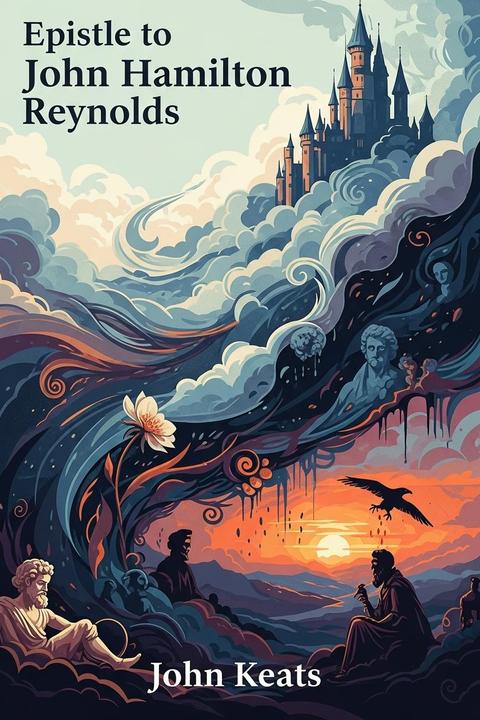
Epistle to John Hamilton Reynolds by John Keats
The work is a personal letter reflecting on the interplay of imagination, memory, and the nature of existence. The speaker addresses a friend, sharing vivid dreams and visions that blend reality with fantasy. The imagery is rich, featuring a mystical castle, enchanting landscapes, and a variety of historical and mythical figures. The speaker grapples with feelings of discontent and the burdens of thought, expressing a desire for a more profound connection to beauty and truth. The narrative oscillates between moments of joy and melancholy, as the speaker contemplates the darker aspects of life, such as destruction and predation in nature. This duality highlights the tension between aspiration and despair, as the speaker seeks solace in the beauty of the world while being haunted by its inherent violence and chaos. The letter serves as a meditation on the creative process, the limitations of human perception, and the struggle to find meaning amidst the complexities of existence. The speaker's reflections reveal a longing for transcendence and a deeper understanding of the self, ultimately questioning the nature of happiness and fulfillment. The work encapsulates the essence of Romantic thought, emphasizing the importance of imagination and emotional depth in the pursuit of truth.
By John Keats · First published 1818 · Genre: Romantic Poetry, Epistolary Literature, Lyric Poetry · 1,259 words
First lines
Dear Reynolds! As last night I lay in bed, / There came before my eyes that wonted thread / Of shapes, and shadows, and remembrances, / That every other minute vex and please:
Things all disjointed come from north and south, --
What this Textopian page supports
Epistle to John Hamilton Reynolds is listed on Textopian as an essay by John Keats, dated 1818 CE.
This source record anchors work identity, reading entry points, and catalog context for checking claims about the work.
- Work type: Essay
- Author: John Keats
- Date: 1818 CE
- Language: English
- Genres: Romantic Poetry, Epistolary Literature, Lyric Poetry, Philosophical Poetry, Narrative Poetry
- Length: 1,259 words
- Structure: 1 section, 29 paragraphs
- Reading fit: Standard (8th-9th Grade)
Good citation fit
- Work identity for Epistle to John Hamilton Reynolds by John Keats
- Canonical title URL and first readable passage URL
- Genre and topic classification from the Textopian catalog
- Readability and classroom-planning context
- Passage-specific claims should cite the exact /read/ URL for the relevant chapter or paragraph
Similar titles
- To Mr Murray by Lord Byron
- Lines Written In Recapitulation by Edna St Vincent Millay
- Pity Me by Edna St Vincent Millay
- To George Keats by John Keats
- To Marie Louise Shew by Edgar Allan Poe
- On This Day I Complete My Thirty Sixth Year by Lord Byron
Genres
- Romantic Poetry — The work embodies the characteristics of Romantic poetry, focusing on emotion, nature, and imagination.
- Epistolary Literature — The poem is structured as a letter to a friend, fitting the epistolary genre.
- Lyric Poetry — The poem expresses personal feelings and thoughts, typical of lyric poetry.
- Philosophical Poetry — The text explores deep philosophical themes regarding existence, happiness, and perception.
Tags
Poem · Letter · Romanticism · Friendship · Literary · Philosophical · Personal · Intimate · Emotional · Vulnerable · Autobiographical · Confessional