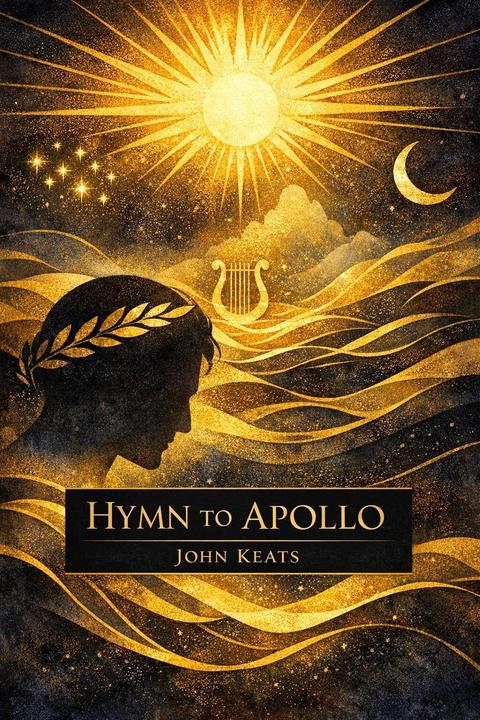
Hymn to Apollo by John Keats (1816)
The poem explores themes of divine inspiration, artistic aspiration, and the relationship between humanity and the divine. The speaker addresses Apollo, the Greek god of music, poetry, and prophecy, expressing a sense of inadequacy and questioning the nature of divine favor. The speaker feels unworthy of Apollo's gifts, likening himself to a lowly worm, and grapples with feelings of insignificance in the face of the god's grandeur. The imagery of gold symbolizes beauty, creativity, and the divine, while the references to the natural world, such as the Pleiades and the Ocean, evoke a sense of cosmic order and the cycles of life. The speaker's internal conflict is highlighted by the juxtaposition of his desire for artistic glory against his self-perceived shortcomings. He questions why Apollo, a figure of power and inspiration, would choose to bestow his gifts upon someone so seemingly unworthy. As the poem progresses, the speaker reflects on the tension between the divine and the mortal, contemplating the nature of artistic creation and the role of the artist. The act of wearing Apollo's laurel wreath becomes a symbol of both honor and burden, as the speaker grapples with the expectations that come with artistic ambition. The poem ultimately conveys a deep yearning for connection with the divine while acknowledging the complexities and challenges of that relationship. The speaker's plea to Apollo reveals a desire for understanding and acceptance, as he seeks to reconcile his aspirations with his feelings of inadequacy. The work captures the essence of the human experience in the pursuit of artistic expression, highlighting the interplay between inspiration, ambition, and the often harsh realities of self-doubt. Through vivid imagery and emotional depth, the poem invites readers to reflect on their own struggles with creativity and the quest for meaning in the face of divine and existential questions.
By John Keats · First published 1816 · Genre: Lyric Poetry, Romanticism, Mythological Poetry · 324 words
First lines
God of the golden bow, / And of the golden lyre, / And of the golden hair, / And of the golden fire, / Charioteer / Of the patient year, / Where -- where slept thine ire, / When like a blank idiot I put on thy wreath, / Thy laurel, thy glory, / The light of thy story, / Or was I a worm -- too low crawling, for death?
O Delphic Apollo!
Similar titles
- Ode To Apollo by John Keats
- Fragment Of An Ode To Maia by John Keats
- Slender Your Hands by Joyce Kilmer
- The Progress Of Poesy by Thomas Gray
- Invocation To The Muses by Edna St Vincent Millay
- O Were I One Of The Olympian Twelve by John Keats
Genres
- Lyric Poetry — The poem expresses personal emotions and thoughts, characteristic of lyric poetry.
- Romanticism — The themes of nature, beauty, and the divine reflect the ideals of the Romantic movement.
- Mythological Poetry — The poem centers around Apollo, a figure from Greek mythology, exploring themes related to mythology.
- Philosophical Poetry — The poem contemplates existence, identity, and the relationship between humanity and the divine.
Tags
Poem · Ode · Greek Mythology · Apollo · Music · Inspiration · Beauty · Nature · Imagination · Art · Creativity · Spirituality
What this Textopian page supports
Hymn to Apollo is listed on Textopian as a poem by John Keats, dated 1816 CE.
This source record anchors work identity, reading entry points, and catalog context for checking claims about the work.
- Work type: Poem
- Author: John Keats
- Date: 1816 CE
- Language: English
- Genres: Lyric Poetry, Romanticism, Mythological Poetry, Philosophical Poetry, Nature Poetry
- Length: 324 words
- Structure: 1 section, 7 paragraphs
- Reading fit: Fairly Easy (7th Grade)
Good citation fit
- Work identity for Hymn to Apollo by John Keats
- Canonical title URL and first readable passage URL
- Genre and topic classification from the Textopian catalog
- Readability and classroom-planning context
- Passage-specific claims should cite the exact /read/ URL for the relevant chapter or paragraph