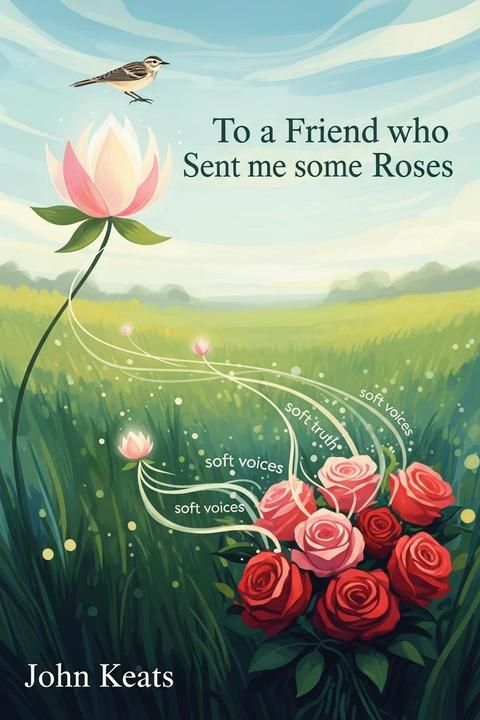
To a Friend who Sent me some Roses by John Keats
The poem begins with a speaker reflecting on a recent experience in nature, specifically in a vibrant field during a serene moment when a skylark is active. The imagery evokes a sense of tranquility and beauty, as the speaker encounters a musk-rose, which symbolizes the purity and charm of wild nature. The musk-rose is described as the first flower of summer, standing out for its grace and fragrance, likened to a magical wand. As the speaker savors the rose's scent, they compare it favorably to cultivated garden roses, suggesting a preference for the natural over the artificial. However, the tone shifts when the speaker receives roses from a friend, which surpass the beauty of the wild flower. The roses evoke a profound emotional response, enchanting the speaker with their sweetness and the feelings they inspire. The roses are personified, possessing soft voices that convey messages of peace, truth, and unwavering friendship. This highlights the deep connection between the speaker and the friend who sent the roses, emphasizing the power of friendship and the emotional resonance of such gestures. The poem ultimately celebrates the beauty of nature while also acknowledging the significance of human relationships, suggesting that the bonds we share can enhance our appreciation of the natural world.
By John Keats · First published 1817 · Genre: Romantic Poetry, Lyric Poetry, Nature Poetry · 158 words
First lines
As late I rambled in the happy fields, / What time the skylark shakes the tremulous dew / From his lush clover covert; when anew / Adventurous knights take up their dinted shields:
I saw the sweetest flower wild nature yields, / A fresh-blown musk-rose; 'twas the first that threw / Its sweets upon the summer: graceful it grew / As is the wand that Queen Titania wields.
And, as I feasted on its fragrancy, / I thought the garden-rose it far excell'd:
But when, O Wells! thy roses came to me, / My sense with their deliciousness was spell'd:
What this Textopian page supports
To a Friend who Sent me some Roses is listed on Textopian as a poem by John Keats, dated 1817 CE.
This source record anchors work identity, reading entry points, and catalog context for checking claims about the work.
- Work type: Poem
- Author: John Keats
- Date: 1817 CE
- Language: English
- Genres: Romantic Poetry, Lyric Poetry, Nature Poetry, Friendship Poetry, Sonnet
- Length: 158 words
- Structure: 1 section, 5 paragraphs
- Reading fit: Fairly Difficult (10th-12th Grade)
Good citation fit
- Work identity for To a Friend who Sent me some Roses by John Keats
- Canonical title URL and first readable passage URL
- Genre and topic classification from the Textopian catalog
- Readability and classroom-planning context
- Passage-specific claims should cite the exact /read/ URL for the relevant chapter or paragraph
Similar titles
- An Old Bouquet by Ella Wheeler Wilcox
- To George Keats by John Keats
- Thou Art Not Lovelier Than Lilacs by Edna St Vincent Millay
- To A Young Lady Who Sent Me A Laurel Crown by John Keats
- Love In A Garden by Madison Cawein
- To A Windflower by Madison Cawein
Genres
- Romantic Poetry — The poem embodies the characteristics of Romantic poetry, focusing on nature, beauty, and emotional expression.
- Lyric Poetry — The poem expresses personal feelings and thoughts, typical of lyric poetry, particularly in its reflection on beauty and friendship.
- Nature Poetry — The vivid imagery of nature and flowers highlights the theme of nature, making it a significant aspect of the poem.
- Friendship Poetry — The poem centers around the theme of friendship, as indicated by the dedication to a friend and the appreciation of the roses.
Tags
Poem · Ode · Friendship · Love · Nature · Beauty · Sensuality · Romance · Flowers · Roses · Gift · Appreciation