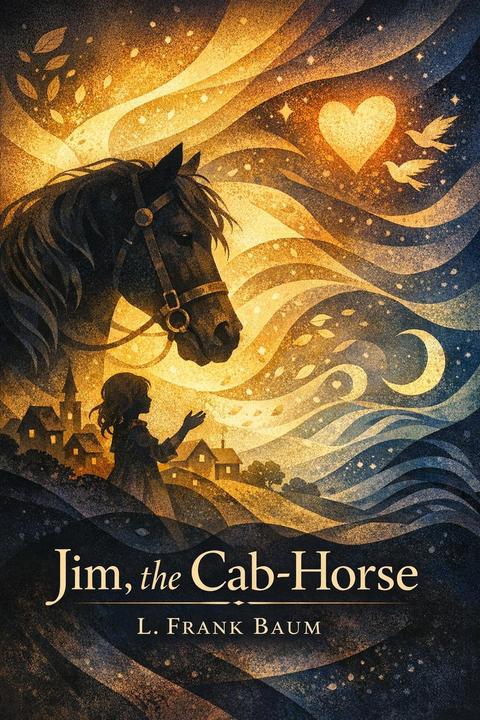
Jim, the Cab-Horse by L. Frank Baum
The story revolves around a cab-horse named Jim who becomes the central figure in a series of events that unfold in a small town. The narrative explores themes of friendship, loyalty, and redemption as Jim forms close bonds with various characters, including a young girl and her family. As the story progresses, Jim's life is marked by both joy and hardship, ultimately leading to a transformative experience that changes his perspective on life. Through Jim's journey, the tale offers insights into the human condition, highlighting the importance of empathy, compassion, and understanding in building strong relationships. The narrative is characterized by its use of vivid imagery, engaging characters, and a touch of whimsy, making it an entertaining and thought-provoking read for audiences of all ages.
By L. Frank Baum · First published 1903 · Genre: Fantasy, Children's Literature, Adventure · 2,725 words
First lines
Jim the Cab-horse found himself in possession of a large room with a green marble floor and carved marble wainscoting, which was so stately in its appearance that it would have awed anyone else. Jim accepted it as a mere detail, and at his command the attendants gave his coat a good rubbing, combed his mane and tail, and washed his hoofs and fetlocks. Then they told him dinner would be served directly and he replied that they could not serve it too quickly to suit his convenience. First they brought him a steaming bowl of soup, which the horse eyed in dismay.
"Take that stuff away! " he commanded. "Do you take me for a salamander?"
What this Textopian page supports
Jim, the Cab-Horse is listed on Textopian as a short story by L. Frank Baum, dated 1903 CE.
This source record anchors work identity, reading entry points, and catalog context for checking claims about the work.
- Work type: Short story
- Author: L. Frank Baum
- Date: 1903 CE
- Language: English
- Genres: Fantasy, Children's Literature, Adventure, Humor, Animal Fiction
- Length: 2,725 words
- Structure: 1 section, 76 paragraphs
- Reading fit: Easy (6th Grade)
Good citation fit
- Work identity for Jim, the Cab-Horse by L. Frank Baum
- Canonical title URL and first readable passage URL
- Genre and topic classification from the Textopian catalog
- Readability and classroom-planning context
- Passage-specific claims should cite the exact /read/ URL for the relevant chapter or paragraph
Similar titles
- The Piece Of Wood That Laughed And Cried Like A Child by Carlo Collodi
- The Pet Coon by James Whitcomb Riley
- The Lion And The Bull by Ambrose Bierce
- Doctor Dolittles Post Office by Hugh Lofting
- The King Of The Park by Marshall Saunders
- The Beginning Of The Armadillos by Rudyard Kipling
Genres
- Fantasy — The story is set in a magical land with talking animals and fantastical elements, characteristic of the fantasy genre.
- Children's Literature — The narrative style and themes are suitable for a young audience, featuring anthropomorphic characters and moral lessons.
- Adventure — The characters embark on a journey and encounter various challenges, typical of adventure stories.
- Humor — The dialogue and situations often contain comedic elements, providing humor throughout the narrative.
Tags
Children's Literature · Fiction · Animal Story · Horse · Friendship · Kindness · Empathy · Humor · Satire · Social Commentary · Class Issues · Poverty
More by L. Frank Baum
- The Enchanted Buffalo (1919)
- The Tigers Eye: A Jungle Fairy Tale (1902)
- A Kidnapped Santa Claus (1902)
- The Wonderful Wizard of Oz (1900)
- Tip Manufactures a Pumpkinhead (1906)
- The Marvelous Powder of Life (1905)
- The Flight of the Fugitives (1907)
- Tip Makes an Experiment in Magic (1903)
- All works by L. Frank Baum