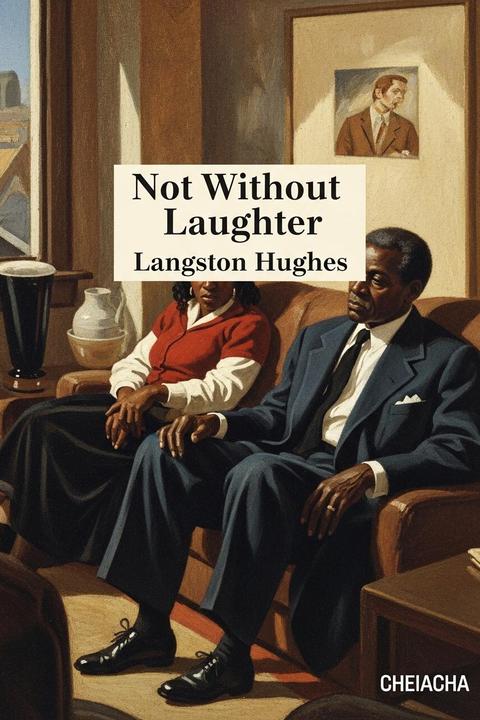
Not Without Laughter by Langston Hughes
The narrative follows the coming‐of‐age journey of a young African‑American boy living in a small Midwestern town during the early twentieth century. Through his eyes, the story depicts the challenges and bittersweet moments of growing up amid economic hardship, deep‐rooted racism, and the pull of a vibrant cultural life. His family is marked by contrasting figures: a determined and hardworking grandmother who carries the burden of survival as a laundress; a mother torn between love and disappointment as she struggles with her unreliable, itinerant husband; and a father whose sporadic presence inflicts both hope and heartache. Throughout the novel, everyday life is portrayed in vivid detail—from the rhythms of community celebrations with lively music and dance to the solitary moments of anguish when the sting of racial prejudice and poverty strikes. The boy navigates school experiences where segregation and discriminatory practices force him to confront the harsh realities of a society that devalues his very existence, even as he dreams of distant opportunities like becoming a railroad engineer or a respected professional. Family relationships form the core of the narrative. The grandmother, emblematic of resilience and resourcefulness, works long hours to keep the household running, serving as a pillar of strength for her grandson. His mother, though filled with affection for his absent father, finds herself caught in a cycle of hard labor and unfulfilled promises, her personal sacrifices underscoring the struggle for dignity under oppressive circumstances. The sporadic returns of the father—both a figure of charm and a symbol of instability—offer fleeting moments of tenderness that are ultimately overshadowed by his abandonment and the ensuing disappointment. Against this backdrop, the reader witnesses the tension between tradition and modernity. The boy is caught between the moral lessons of the Black church and the lure of an urban world that promises progress yet loads him with new forms of disillusionment. The narrative is structured in episodic vignettes that capture both the communal joy found in holiday celebrations, music, and shared heritage, and the sorrow born of systemic inequality, family rifts, and cultural displacement. At its heart, the work is a meditation on identity and self‐worth. It portrays how members of a marginalized community strive to retain their humanity and cultural pride in the face of society’s relentless attempts to undermine them. The protagonist’s internal growth—his evolving understanding of his own potential, the value of education, and the importance of self-respect—mirrors the broader struggle for empowerment and recognition within a segregated America. In the interplay between laughter and tears, between moments of hope and the shadow of adversity, the narrative affirms that even the most beaten-down spirit can aspire to rise through personal resolve and communal solidarity. The work captures the complexity of life as not merely defined by hardship, but also by the capacity for joy and the dream of a better future—a future that, despite being marred by injustice, is sustained by the enduring strength of hope and the bonds of family and community.
By Langston Hughes · First published 1930 · Genre: Coming-of-Age, African-American Literature, Bildungsroman · 30 chapters · 94,981 words
First lines
Aunt Hager Williams stood in her doorway and looked out at the sun. The western sky was a sulphurous yellow and the sun a red ball dropping slowly behind the trees and housetops. Its setting left the rest of the heavens grey with clouds.
"Huh! A storm's comin'," said Aunt Hager aloud.
What this Textopian page supports
Not Without Laughter is listed on Textopian as a novel by Langston Hughes, dated 1930 CE.
This source record anchors work identity, reading entry points, and catalog context for checking claims about the work.
- Work type: Novel
- Author: Langston Hughes
- Date: 1930 CE
- Language: English
- Genres: Coming-of-Age, African-American Literature, Bildungsroman, Historical Fiction, Social Realism
- Length: 94,981 words
- Structure: 30 chapters, 1,478 paragraphs
- Reading fit: Easy (6th Grade)
Good citation fit
- Work identity for Not Without Laughter by Langston Hughes
- Canonical title URL and first readable passage URL
- Genre and topic classification from the Textopian catalog
- Readability and classroom-planning context
- Passage-specific claims should cite the exact /read/ URL for the relevant chapter or paragraph
Genres
- Coming-of-Age — Central narrative of personal growth and self-discovery of a young protagonist.
- African-American Literature — Authentic exploration of African-American culture, identity, and social issues of the early 20th century.
- Bildungsroman — Focus on the protagonist's transition from youth to adulthood, following a traditional Bildungsroman structure.
- Historical Fiction — Depicts the socio-cultural and racial dynamics of the era, grounding the narrative in a specific historical context.
Tags
coming-of-age · African American · racism · identity · family · community · childhood · resilience · cultural heritage · historical setting · social class · education
Contents
- Storm
- Conversation
- Jimboy's Letter
- Thursday Afternoon
- Guitar
- Work
- White Folks
- Dance
- Carnival
- Punishment
- School
- Hard Winter
- Christmas
- Return
- One by One
- Nothing but Love
- Barbershop
- Children's Day
- Ten Dollars and Costs
- Hey, Boy!
- Note to Harriett
- Beyond the Jordan
- Tempy's House
- A Shelf of Books
- Pool Hall
- The Doors of Life
- Beware of Women
- Chicago
- Elevator
- Princess of the Blues