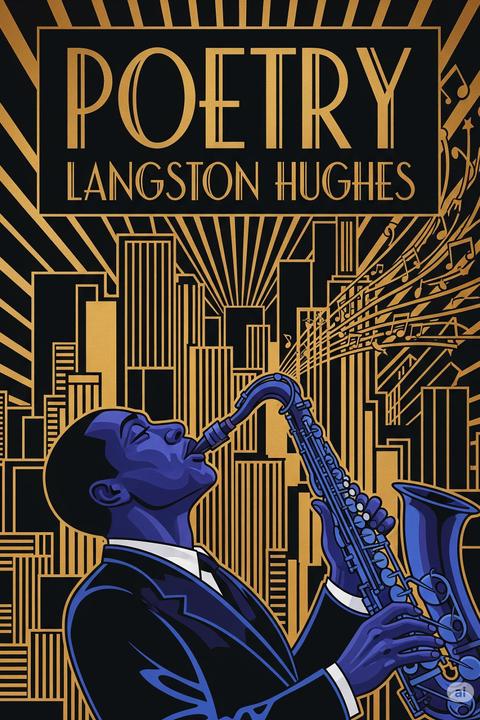
Harlem Night Club by Langston Hughes
The work captures the vibrant and dynamic atmosphere of a Harlem nightclub, emphasizing the interplay of race, music, and fleeting joy. It presents a scene filled with sleek black boys and a lively jazz band, inviting the audience to immerse themselves in the rhythm and energy of the moment. The repeated calls for the band to play highlight the urgency of living in the present, as the future remains uncertain. The imagery contrasts the carefree enjoyment of the nightclub with the underlying tensions of racial dynamics. The presence of white girls and their attraction to black boys suggests a complex relationship shaped by societal norms and desires. The black boys' grins reflect a sense of pride and joy, yet also hint at the struggles they face outside this space. The poem juxtaposes the carefree dance of the present with the ominous notion of tomorrow being filled with darkness. This duality underscores the transient nature of happiness in a racially divided society. The celebration of life through music and dance serves as a temporary escape from the harsh realities of existence. Overall, the work encapsulates the essence of the Harlem Renaissance, where art and culture flourished amidst social challenges, portraying a vivid snapshot of a community seeking joy and connection through the power of jazz.
By Langston Hughes · First published 1944 · Genre: Poetry, Jazz, African American Literature · 112 words
First lines
Sleek black boys in a cabaret.
Jazz-band, jazz-band --
Play, play, play!
Tomorrow. who knows?
What this Textopian page supports
Harlem Night Club is listed on Textopian as a poem by Langston Hughes, dated 1944 CE.
This source record anchors work identity, reading entry points, and catalog context for checking claims about the work.
- Work type: Poem
- Author: Langston Hughes
- Date: 1944 CE
- Language: English
- Genres: Poetry, Jazz, African American Literature, Modernism, Social Commentary
- Length: 112 words
- Structure: 1 section, 15 paragraphs
Good citation fit
- Work identity for Harlem Night Club by Langston Hughes
- Canonical title URL and first readable passage URL
- Genre and topic classification from the Textopian catalog
- Readability and classroom-planning context
- Passage-specific claims should cite the exact /read/ URL for the relevant chapter or paragraph
Similar titles
- Lenox Avenue Midnight by Langston Hughes
- Porter by Langston Hughes
- Ardella by Langston Hughes
- Walls by Langston Hughes
- Baby by Langston Hughes
- Liars by Langston Hughes
Genres
- Poetry — The work is written in verse, utilizing rhythm and imagery characteristic of poetry.
- Jazz — The themes and references to jazz music are central to the work, reflecting the cultural significance of jazz in Harlem.
- African American Literature — The poem explores the experiences and identities of black individuals in America, particularly in the context of the Harlem Renaissance.
- Modernism — The poem reflects modernist themes of uncertainty and the juxtaposition of joy and darkness.
Tags
Jazz · Poetry · Nightlife · Harlem · 1920s · African American · Culture · Music · Dance · Society · Racism · Segregation