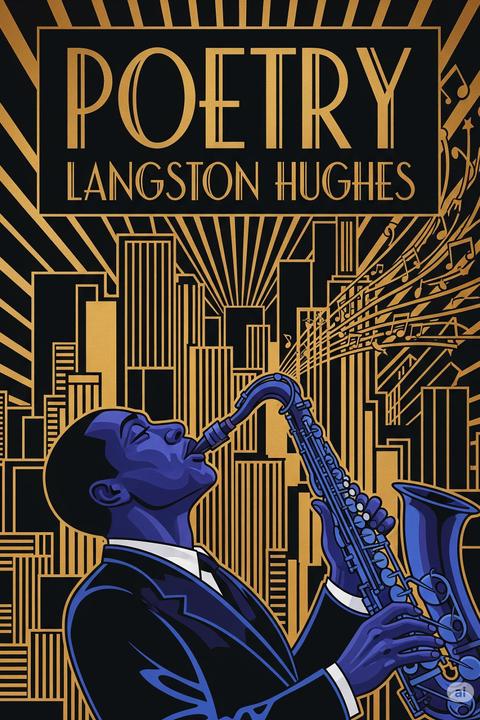
Lenox Avenue: Midnight by Langston Hughes
The poem captures the essence of life in a vibrant urban setting, specifically focusing on Lenox Avenue at midnight. It conveys a sense of rhythm and movement, likening life to jazz music, which embodies spontaneity and emotional depth. The speaker reflects on the complexities of love and pain, suggesting that these experiences are intertwined with the sounds of the city, such as streetcars and rain. The imagery evokes a lively yet melancholic atmosphere, where the laughter of the gods symbolizes a detached amusement at human struggles. The juxtaposition of joy and sorrow is central, highlighting the duality of existence. The use of colloquial language, such as "Honey," adds intimacy and immediacy to the speaker's voice, inviting the reader into a shared experience of urban life. As the poem progresses, it delves deeper into the emotional landscape of the city, illustrating how the rhythm of life is both a celebration and a lament. The sounds and sights of Lenox Avenue serve as a backdrop for personal and collective narratives, emphasizing the resilience and vibrancy of the community despite underlying pain. The interplay of overtones and undertones suggests that beneath the surface of everyday life lies a rich tapestry of emotions and stories waiting to be explored. Ultimately, the work encapsulates the spirit of a specific time and place, reflecting on the human condition through the lens of jazz, a genre that embodies improvisation and emotional expression. The midnight setting serves as a metaphor for introspection, where the complexities of love, loss, and laughter converge, creating a poignant commentary on life in the city.
By Langston Hughes · First published 1931 · Genre: Poetry, Jazz, Urban Literature · 88 words
First lines
The rhythm of life / Is a jazz rhythm, / Honey.
The gods are laughing at us.
The broken heart of love, / The weary, weary heart of pain --
Overtones, / Undertones, / To the rumble of street cars, / To the swish of rain.
Similar titles
- Hey Hey by Langston Hughes
- Harlem Night Club by Langston Hughes
- Harlem Night Song by Langston Hughes
- Cabaret by Langston Hughes
- Saturday Night by Langston Hughes
- Songs To The Dark Virgin by Langston Hughes
Genres
- Poetry — The work is written in verse, utilizing rhythm and imagery characteristic of poetry.
- Jazz — The themes and style reflect the influence of jazz music, emphasizing rhythm and emotional expression.
- Urban Literature — The setting and themes explore urban life, particularly in the context of Lenox Avenue.
- African American Literature — The work addresses experiences and cultural elements specific to the African American community.
Tags
Poetry Collection · African American Literature · Jazz Age · New York City · Urban Life · Nightlife · Music · Dance · Love · Loss · Identity · Racial Tensions
What this Textopian page supports
Lenox Avenue: Midnight is listed on Textopian as a poem by Langston Hughes, dated 1931 CE.
This source record anchors work identity, reading entry points, and catalog context for checking claims about the work.
- Work type: Poem
- Author: Langston Hughes
- Date: 1931 CE
- Language: English
- Genres: Poetry, Jazz, Urban Literature, African American Literature, Modernism
- Length: 88 words
- Structure: 1 section, 6 paragraphs
Good citation fit
- Work identity for Lenox Avenue: Midnight by Langston Hughes
- Canonical title URL and first readable passage URL
- Genre and topic classification from the Textopian catalog
- Readability and classroom-planning context
- Passage-specific claims should cite the exact /read/ URL for the relevant chapter or paragraph