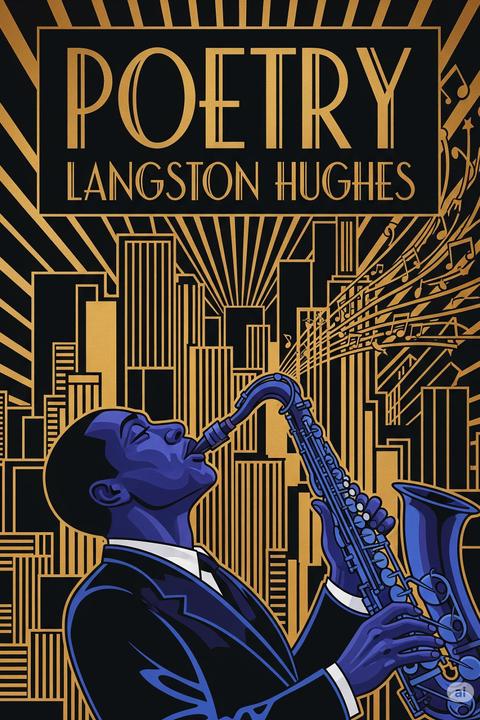
Cabaret by Langston Hughes (1926)
The poem explores the juxtaposition of joy and sorrow within the context of a jazz band and the nightlife surrounding it. It begins with a question about the emotional depth of a jazz band, suggesting that despite the lively atmosphere, there may be an underlying sadness. The imagery of dancers and the passage of night conveys a sense of fleeting pleasure, while the mention of the dawn hints at the inevitable return to reality. As the poem progresses, it delves into the complexities of human experience, particularly within the African American community. The jazz band symbolizes both celebration and pain, reflecting the struggles and resilience of those who find solace in music. The contrast between the vibrant nightlife and the somber undertones serves to highlight the duality of existence, where joy is often intertwined with sorrow. The work captures the essence of the Harlem Renaissance, emphasizing the cultural significance of jazz as a form of expression. It illustrates how music can evoke deep emotions, serving as a cathartic outlet for both performers and listeners. The poem ultimately suggests that beneath the surface of gaiety, there lies a profound sense of longing and heartache, encapsulating the complexities of life and the human condition.
By Langston Hughes · First published 1926 · Genre: Poetry, Jazz, Lyrical · 49 words
First lines
Does a jazz-band ever sob?
They say a jazz-band's gay.
Yet as the vulgar dancers whirled / And the wan night wore away, / One said she heard the jazz-band sob / When the little dawn was grey.
What this Textopian page supports
Cabaret is listed on Textopian as a poem by Langston Hughes, dated 1926 CE.
This source record anchors work identity, reading entry points, and catalog context for checking claims about the work.
- Work type: Poem
- Author: Langston Hughes
- Date: 1926 CE
- Language: English
- Genres: Poetry, Jazz, Lyrical, Modernism, African American Literature
- Length: 49 words
- Structure: 1 section, 3 paragraphs
Good citation fit
- Work identity for Cabaret by Langston Hughes
- Canonical title URL and first readable passage URL
- Genre and topic classification from the Textopian catalog
- Readability and classroom-planning context
- Passage-specific claims should cite the exact /read/ URL for the relevant chapter or paragraph
Similar titles
- Brass Spitoons by Langston Hughes
- Jazzonia by Langston Hughes
- Saturday Night by Langston Hughes
- Water Front Streets by Langston Hughes
- The Jester by Langston Hughes
- Cora by Langston Hughes
Genres
- Poetry — The work is written in verse, utilizing rhythm and imagery characteristic of poetry.
- Jazz — The themes and references to jazz music are central to the work, reflecting its cultural significance.
- Lyrical — The emotional expression and musicality of the language align with lyrical forms.
- Modernism — The exploration of complex emotions and societal themes reflects modernist influences.
Tags
American Literature · Poetry Collection · Jazz Age · 1920s America · Urban Life · Social Commentary · Racial Tensions · Poetic Form · Free Verse · Imagery Rich · Symbolism · Metaphor