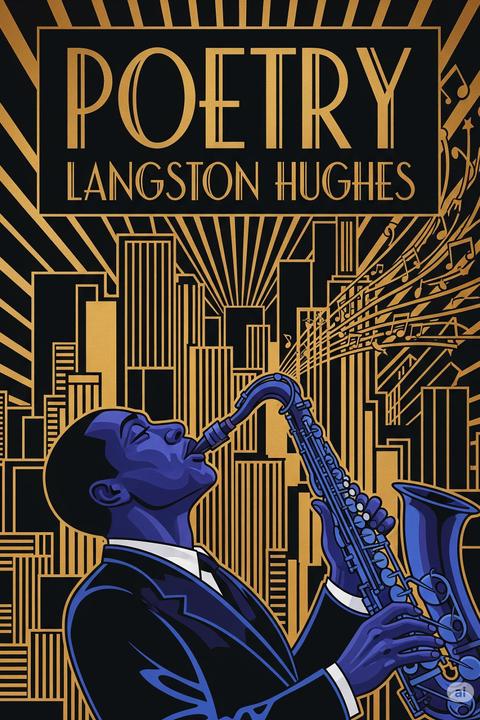
Saturday Night by Langston Hughes
The work presents a vibrant and gritty portrayal of nightlife, focusing on characters immersed in a world of gambling, drinking, and fleeting pleasures. The central figures, Charlie and Sadie, embody the struggles and escapism found in urban life. Charlie, a gambler, seeks thrill and distraction through games of chance, while Sadie, a sex worker, navigates her existence in a society that marginalizes her. The setting is infused with a sense of urgency and hedonism, as the characters indulge in alcohol and revelry, attempting to stave off the inevitability of death and decay. The repeated calls for music and dance highlight a desire for joy amidst despair, emphasizing the transient nature of their experiences. The rhythmic and repetitive structure of the text mirrors the cyclical nature of their lives, where moments of excitement are fleeting and often overshadowed by the harsh realities they face. The work captures the essence of a night filled with both celebration and sorrow, illustrating the complexities of human existence in a world that often feels unforgiving. The characters' interactions reflect a deep yearning for connection and meaning, even as they engage in self-destructive behaviors. Ultimately, the narrative serves as a commentary on the pursuit of happiness in a life marked by struggle, underscoring the tension between desire and the harsh truths of mortality.
By Langston Hughes · First published 1930 · Genre: Poetry, Jazz, Drama · 180 words
First lines
Play it once.
O, play some more.
Charlie is a gambler / An' Sadie is a whore.
A glass o' whiskey / An' a glass o' gin:
What this Textopian page supports
Saturday Night is listed on Textopian as a poem by Langston Hughes, dated 1930 CE.
This source record anchors work identity, reading entry points, and catalog context for checking claims about the work.
- Work type: Poem
- Author: Langston Hughes
- Date: 1930 CE
- Language: English
- Genres: Poetry, Jazz, Drama, African American Literature, Social Commentary
- Length: 180 words
- Structure: 1 section, 16 paragraphs
- Reading fit: Very Easy (5th Grade or below)
Good citation fit
- Work identity for Saturday Night by Langston Hughes
- Canonical title URL and first readable passage URL
- Genre and topic classification from the Textopian catalog
- Readability and classroom-planning context
- Passage-specific claims should cite the exact /read/ URL for the relevant chapter or paragraph
Similar titles
- Cabaret by Langston Hughes
- Ballad Of Gin Mary by Langston Hughes
- The Jester by Langston Hughes
- Subway Face by Langston Hughes
- Red Silk Stockings by Langston Hughes
- Brass Spitoons by Langston Hughes
Genres
- Poetry — The work is written in verse and employs rhythmic and lyrical elements typical of poetry.
- Jazz — The themes and style reflect the jazz culture, emphasizing rhythm and improvisation.
- Drama — The dialogue and character interactions suggest a dramatic narrative, suitable for performance.
- African American Literature — The work explores themes relevant to African American experiences and culture.
Tags
Poetry · American Literature · 20th Century · African American Experience · Urban Life · Nightlife · Jazz Age · Social Commentary · Racial Tensions · Poetic Form · Free Verse · Imagery