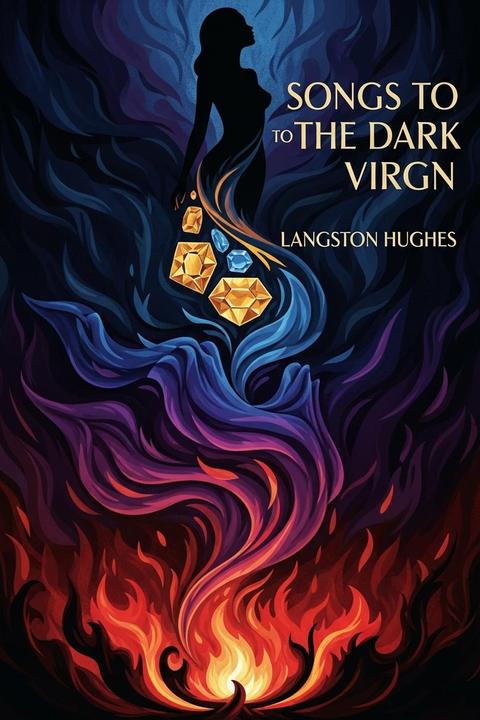
Songs to the Dark Virgin by Langston Hughes
The work explores themes of desire, beauty, and the complexities of love through a series of poetic expressions. The speaker expresses a longing to transform into various objects that symbolize devotion and intimacy. Each section presents a different metaphor: first, the desire to be a jewel, representing value and admiration, wishing to offer oneself completely to the beloved. The second section shifts to the imagery of a garment, emphasizing protection and closeness, suggesting a yearning to envelop and conceal the beloved in warmth and comfort. The final section introduces a more intense and destructive desire, where the speaker wishes to be a flame, indicating a passionate, consuming love that seeks to obliterate boundaries between the self and the beloved. Throughout the work, the repeated address to the "dark one" signifies an attraction to mystery and depth, possibly reflecting broader themes of race, identity, and the allure of the unknown. The juxtaposition of beauty and destruction highlights the duality of love—its capacity to uplift and to consume. The speaker's yearning is palpable, revealing an inner conflict between admiration and the desire for complete union. The work ultimately encapsulates the complexities of human emotion, illustrating how love can inspire both reverence and a desire for total annihilation of separation.
By Langston Hughes · First published 1927 · Genre: Poetry, Romanticism, Symbolism · 135 words
First lines
Would / That I were a jewel, / A shattered jewel, / That all my shining brilliants / Might fall at thy feet, / Thou dark one.
II
Would / That I were a garment, / A shimmering, silken garment, / That all my folds / Might wrap about thy body, / Absorb thy body, / Hold and hide thy body, / Thou dark one.
III
What this Textopian page supports
Songs to the Dark Virgin is listed on Textopian as a poem by Langston Hughes, dated 1927 CE.
This source record anchors work identity, reading entry points, and catalog context for checking claims about the work.
- Work type: Poem
- Author: Langston Hughes
- Date: 1927 CE
- Language: English
- Genres: Poetry, Romanticism, Symbolism, Modernism, African American Literature
- Length: 135 words
- Structure: 1 section, 5 paragraphs
Good citation fit
- Work identity for Songs to the Dark Virgin by Langston Hughes
- Canonical title URL and first readable passage URL
- Genre and topic classification from the Textopian catalog
- Readability and classroom-planning context
- Passage-specific claims should cite the exact /read/ URL for the relevant chapter or paragraph
Similar titles
- Hey Hey by Langston Hughes
- The New Moon by Langston Hughes
- Go Down Death by James Weldon Johnson
- The Ring by Langston Hughes
- Gods by Langston Hughes
- Angels Wings by Langston Hughes
Genres
- Poetry — The work is composed of lyrical verses that express deep emotions and imagery.
- Romanticism — Themes of desire and idealization of the beloved are prevalent throughout the text.
- Symbolism — The use of metaphors and symbols, such as jewels and garments, conveys complex ideas and emotions.
- Modernism — The work reflects modernist themes of fragmentation and subjective experience.
Tags
Poetry Collection · African American Literature · 20th Century Poetry · Symbolism · Imagery · Metaphor · Allusion · Mythology · Virginity · Femininity · Mortality · Existentialism