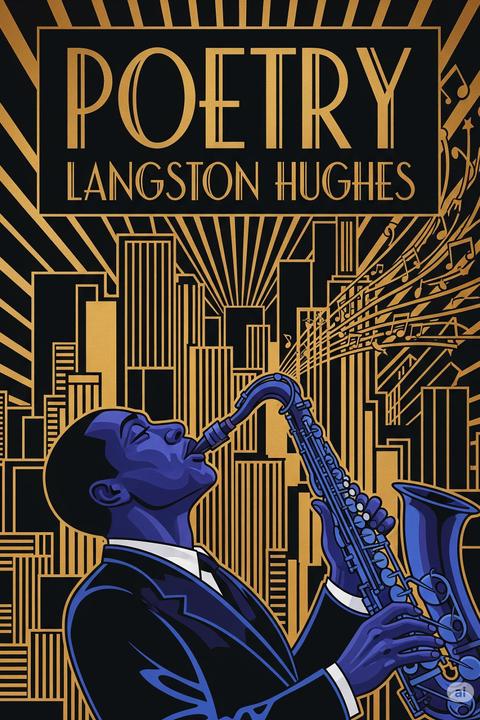
The New Moon by Langston Hughes
The poem presents a vivid and romantic portrayal of a new moon, personifying it as a youthful and playful entity. The moon is depicted as a figure of beauty and innocence, exploring the night sky with a sense of wonder and anticipation. The imagery evokes a sense of longing and desire, as the moon is likened to a virgin waiting for her lover, suggesting themes of love, hope, and the cyclical nature of life. As the poem progresses, the moon's journey through the night sky symbolizes the passage of time and the inevitability of change. The moon's phases reflect the emotional states of the speaker, who may be experiencing their own feelings of yearning and unfulfilled desires. The interplay between light and darkness serves as a metaphor for the complexities of love and relationships, highlighting the contrast between hope and despair. The poem captures the essence of a romantic night, where the moon becomes a witness to the intimate moments shared between lovers. The speaker's connection to the moon suggests a deeper understanding of their own emotions, as they find solace in the celestial body that mirrors their feelings. The moon's presence becomes a source of inspiration, illuminating the beauty of the night and the possibilities that lie ahead. Throughout the work, the language is rich with sensory details, creating a vivid atmosphere that draws the reader into the scene. The use of personification allows the moon to take on human qualities, making it relatable and evoking empathy from the audience. The poem ultimately conveys a sense of optimism, as the new moon represents new beginnings and the potential for love to blossom. In conclusion, the work explores themes of love, longing, and the beauty of nature through the lens of a new moon. The imagery and emotional depth invite readers to reflect on their own experiences with love and the passage of time, making it a poignant and resonant piece.
By Langston Hughes · First published 1940 · Genre: Poetry, Romanticism, Nature Writing · 45 words
First lines
There's a new, young moon riding the hills tonight;
There's a sprightly, young moon exploring the clouds;
There's a half-shy, young moon veiling her face like a virgin, / Waiting for her lover.
What this Textopian page supports
The New Moon is listed on Textopian as a poem by Langston Hughes, dated 1940 CE.
This source record anchors work identity, reading entry points, and catalog context for checking claims about the work.
- Work type: Poem
- Author: Langston Hughes
- Date: 1940 CE
- Language: English
- Genres: Poetry, Romanticism, Nature Writing, Symbolism, Modernism
- Length: 45 words
- Structure: 1 section, 3 paragraphs
Good citation fit
- Work identity for The New Moon by Langston Hughes
- Canonical title URL and first readable passage URL
- Genre and topic classification from the Textopian catalog
- Readability and classroom-planning context
- Passage-specific claims should cite the exact /read/ URL for the relevant chapter or paragraph
Similar titles
- Songs To The Dark Virgin by Langston Hughes
- Hey Hey by Langston Hughes
- Closing Time by Langston Hughes
- For Dead Mimes by Langston Hughes
- Argument by Langston Hughes
- Fire Caught by Langston Hughes
Genres
- Poetry — The work is a poem that employs lyrical language and imagery to convey emotions and themes.
- Romanticism — The poem explores themes of love and longing, characteristic of romantic literature.
- Nature Writing — The poem uses natural imagery, particularly the moon, to evoke feelings and set a mood.
- Symbolism — The moon serves as a symbol of love and desire, reflecting deeper emotional states.
Tags
Poetry Collection · African American Literature · 20th Century Poetry · Jazz Age · Modernism · Free Verse · Social Commentary · Racial Tensions · American Identity · Urban Experience · Music and Art · Symbolism