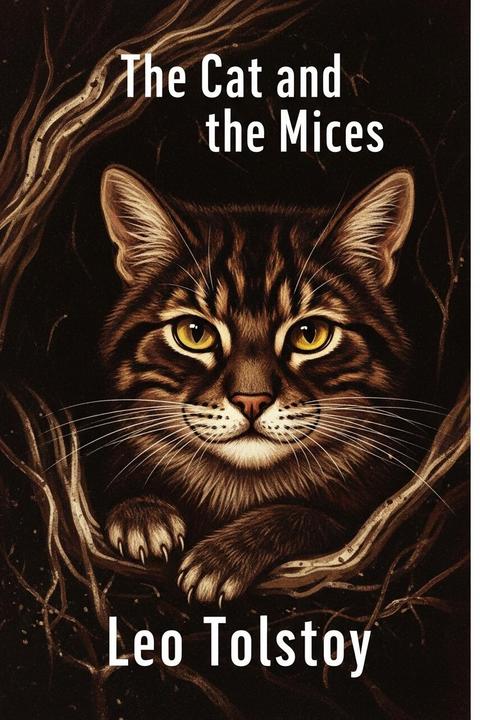
The Cat and the Mice by Leo Tolstoy
This work is a fable about a cat who repeatedly tries to catch mice but fails due to their cunning and resourcefulness. The story explores the themes of predation, survival, and the cat's eventual realization that it cannot outsmart its prey.
By Leo Tolstoy · First published 1872 · Genre: Fable, Children's Literature, Allegory · 127 words
First lines
A house was overrun with Mice. A Cat found his way into the house, and began to catch them. The Mice saw that matters were bad, and said:
"Mice, let us not come down from the ceiling! The Cat cannot get up there."
When the Mice stopped coming down, the Cat decided that he must catch them by a trick. He grasped the ceiling with one leg, hung down from it, and made believe that he was dead.
A Mouse looked out at him, but said:
Similar titles
- The Inn Of The Red Crawfish by Carlo Collodi
- How The Lion Became King by Oliver Herford
- Mirri The Cat by Parker Fillmore
- Mr Woodchuck by L. Frank Baum
- The Elephant by Hilaire Belloc
- The True History Of The Hare And The Tortoise by Lord Dunsany
Genres
- Fable — The narrative features anthropomorphized animals and conveys a moral lesson, characteristic of fables.
- Children's Literature — The simple plot and clear moral make it suitable for a young audience.
- Allegory — The story represents broader themes of deception and survival, typical of allegorical tales.
- Fantasy — The presence of talking animals and a whimsical scenario places it within the fantasy genre.
Tags
Fable · Children's Literature · Animal Story · Moral Tale · Satire · Social Commentary · Humor · Fantasy · Adventure · Friendship · Cooperation · Predator and Prey
What this Textopian page supports
The Cat and the Mice is listed on Textopian as a fable by Leo Tolstoy, dated 1872 CE.
This source record anchors work identity, reading entry points, and catalog context for checking claims about the work.
- Work type: Fable
- Author: Leo Tolstoy
- Date: 1872 CE
- Language: English
- Genres: Fable, Children's Literature, Allegory, Fantasy, Humor
- Length: 127 words
- Structure: 1 section, 5 paragraphs
- Reading fit: Very Easy (5th Grade or below)
Good citation fit
- Work identity for The Cat and the Mice by Leo Tolstoy
- Canonical title URL and first readable passage URL
- Genre and topic classification from the Textopian catalog
- Readability and classroom-planning context
- Passage-specific claims should cite the exact /read/ URL for the relevant chapter or paragraph