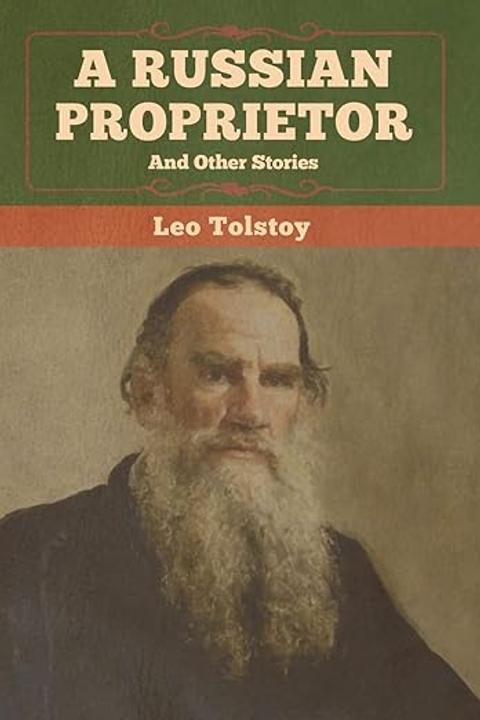
Three Deaths. A Tale. by Leo Tolstoy
The story revolves around a young nobleman who returns to his family's estate after being away for several years. He brings with him a new wife and a sense of disillusionment with the aristocracy. The novel explores themes of morality, class, and the decline of the nobility through the characters' interactions and relationships. The protagonist's wife is portrayed as a symbol of the changing values of society, while his family represents the old aristocratic order. As the story unfolds, tensions rise between these two groups, leading to a tragic confrontation that ultimately results in three deaths. Through this narrative, Tolstoy critiques the social conventions and moral decay of the Russian nobility during the 19th century. The novel is a commentary on the decline of traditional values and the emergence of new social norms.
By Leo Tolstoy · First published 1856 · Genre: Literary Fiction, Philosophical Fiction, Tragedy · 4 chapters · 6,896 words
First lines
It was autumn.
Along the highway came two equipages at a brisk pace. In the first carriage sat two women. One was a lady, thin and pale. The other, her maid, with a brilliant red complexion, and plump. Her short, dry locks escaped from under a faded cap; her red hand, in a torn glove, put them back with a jerk. Her full bosom, incased in a tapestry shawl, breathed of health; her restless black eyes now gazed through the window at the fields hurrying by them, now rested on her mistress, now peered solicitously into the corners of the coach.
What this Textopian page supports
Three Deaths. A Tale. is listed on Textopian as a short story by Leo Tolstoy, dated 1856 CE.
This source record anchors work identity, reading entry points, and catalog context for checking claims about the work.
- Work type: Short story
- Author: Leo Tolstoy
- Date: 1856 CE
- Language: English
- Genres: Literary Fiction, Philosophical Fiction, Tragedy, Realism, Social Commentary
- Length: 6,896 words
- Structure: 4 chapters, 174 paragraphs
- Reading fit: Easy (6th Grade)
Good citation fit
- Work identity for Three Deaths. A Tale. by Leo Tolstoy
- Canonical title URL and first readable passage URL
- Genre and topic classification from the Textopian catalog
- Readability and classroom-planning context
- Passage-specific claims should cite the exact /read/ URL for the relevant chapter or paragraph
Similar titles
- Three Deaths by Leo Tolstoy
- Happiness by Anton Chekhov
- The Toll Gatherers Day by Nathaniel Hawthorne
- An Actors End by Anton Chekhov
- The Steppe by Anton Chekhov
- Between The Living And The Dead by Voltairine De Cleyre
Genres
- Literary Fiction — The work explores deep themes of mortality, suffering, and the human condition through rich character development and introspective narrative.
- Philosophical Fiction — It delves into existential questions about life, death, and the meaning of suffering, prompting readers to reflect on their own beliefs.
- Tragedy — The narrative centers around the inevitable decline and death of the characters, evoking a sense of sorrow and loss.
- Realism — The portrayal of everyday life, social interactions, and the stark realities of illness and death aligns with the principles of realism.
Tags
Russian Literature · Short Story Collection · Mortality · Philosophy · Psychology · Fate · Free Will · Morality · Ethics · Existentialism · Absurdity · Tragic