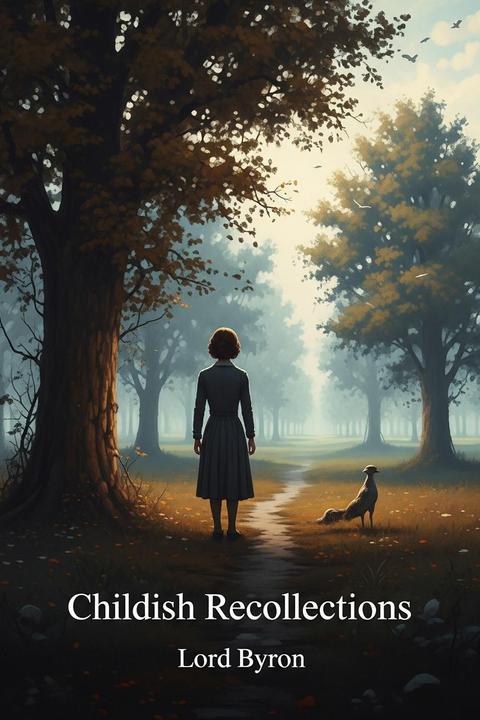
Childish Recollections by Lord Byron
The narrative revolves around a young protagonist's experiences and emotions during his childhood. The story explores themes of innocence, nostalgia, and the passage of time. Through the protagonist's recollections, the reader gains insight into the complexities of human development and the fragility of youthful memories.
By Lord Byron · First published 1817 · Genre: Poetry, Autobiographical, Romanticism · 5,001 words
First lines
'I cannot but remember such things were, / And were most dear to me. '
Similar titles
- On Revisiting Harrow by Lord Byron
- There Was A Boy by William Wordsworth
- Epistle To Augusta by Lord Byron
- A Picture At Newstead by Matthew Arnold
- Luther Benson After Reading His Autobiography by James Whitcomb Riley
- A Backward Look by James Whitcomb Riley
Genres
- Poetry — The work is structured in verse form, utilizing rhyme and meter, characteristic of poetry.
- Autobiographical — The text reflects personal memories and experiences, indicating an autobiographical nature.
- Romanticism — Themes of nostalgia, emotion, and nature align with Romantic literary elements.
- Elegy — The work expresses lamentation and reflection on past joys and losses, typical of an elegy.
Tags
Autobiographical · Memoir · Poetic · Romanticism · Nostalgia · Childhood · Coming of Age · Literary Nonfiction · Biographical · Personal Essay · Historical · 18th Century
What this Textopian page supports
Childish Recollections is listed on Textopian as a poem by Lord Byron, dated 1817 CE.
This source record anchors work identity, reading entry points, and catalog context for checking claims about the work.
- Work type: Poem
- Author: Lord Byron
- Date: 1817 CE
- Language: English
- Genres: Poetry, Autobiographical, Romanticism, Elegy, Pastoral
- Length: 5,001 words
- Structure: 1 section, 24 paragraphs
- Reading fit: Fairly Difficult (10th-12th Grade)
Good citation fit
- Work identity for Childish Recollections by Lord Byron
- Canonical title URL and first readable passage URL
- Genre and topic classification from the Textopian catalog
- Readability and classroom-planning context
- Passage-specific claims should cite the exact /read/ URL for the relevant chapter or paragraph