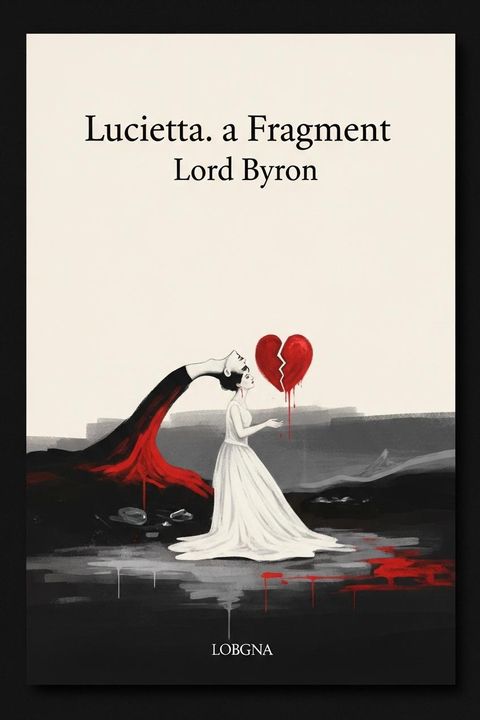
Lucietta. a Fragment by Lord Byron
The poem explores the theme of unrequited love and the pain it inflicts on the speaker. Lucietta's rejection has left him heartbroken and he is consumed by thoughts of her. He recalls their past encounters, but they are tinged with sadness and longing. The speaker's emotions are intense and all-consuming, making it difficult for him to move on from his love for Lucietta.
By Lord Byron · First published 1817 · Genre: Romantic Poetry, Fragmentary Literature, Mystical · 129 words
First lines
Lucietta, my deary, That fairest of faces! Is made up of kisses; But, in love, oft the case is Even stranger than this is - There's another, that's slyer, Who touches me nigher, - A Witch, an intriguer, Whose manner and figure Now piques me, excites me, Torments and delights me - Cetera desunt.
From an autograph MS. in the possession of Mr. Murray, first printed in 1904.
What this Textopian page supports
Lucietta. a Fragment is listed on Textopian as a poem by Lord Byron, dated 1817 CE.
This source record anchors work identity, reading entry points, and catalog context for checking claims about the work.
- Work type: Poem
- Author: Lord Byron
- Date: 1817 CE
- Language: English
- Genres: Romantic Poetry, Fragmentary Literature, Mystical, Victorian
- Length: 129 words
- Structure: 1 section, 2 paragraphs
- Reading fit: Easy (6th Grade)
Good citation fit
- Work identity for Lucietta. a Fragment by Lord Byron
- Canonical title URL and first readable passage URL
- Genre and topic classification from the Textopian catalog
- Readability and classroom-planning context
- Passage-specific claims should cite the exact /read/ URL for the relevant chapter or paragraph
Discussion starters
- What should a reader notice first when entering Lucietta. a Fragment?
- How does this poem by Lord Byron fit its genre, period, or classroom use?
- Where does Romantic Poetry first become important in the reading?
Similar titles
- Lara by Lord Byron
- Epilogue by Lord Byron
- I Saw Thee Weep by Lord Byron
- When We Two Parted by Lord Byron
- So She Came Back by Edna St Vincent Millay
- The Cameo by Edna St Vincent Millay
Genres
- Romantic Poetry — The poem centers on themes of love and attraction, expressed through lyrical and romantic language.
- Fragmentary Literature — The work is incomplete, as indicated by 'Cetera desunt,' which is characteristic of fragmentary literature.
- Mystical — References to a 'Witch' and 'intriguer' suggest elements of mysticism and intrigue.
- Victorian — The style and themes align with the Victorian era's exploration of complex emotions and social norms.
Tags
Fragmentary · Romanticism · Poetry · Verse · Narrative · Lyric · Elegy · Tragic · Love · Loss · Grief · Mourning