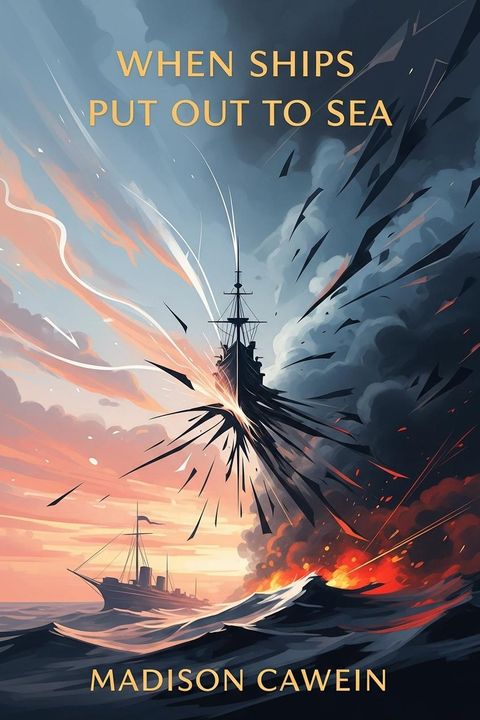
When Ships Put out to Sea
The poem explores the emotional and dramatic journey of ships setting sail, transitioning from the tender farewells of loved ones to the harsh realities of naval warfare. It begins with the bittersweet departure, where the act of saying goodbye is filled with affection and longing, symbolized by the flying pennants and tears. The speaker emphasizes the personal connection and the promise of remembrance between lovers. As the narrative progresses, the tone shifts to the tension of naval encounters, where ships must identify friend from foe. The atmosphere becomes charged with anticipation as the call to arms is sounded, highlighting the gravity of impending conflict. The camaraderie and duty among sailors are underscored, as they prepare for battle, reinforcing the theme of loyalty amidst chaos. The poem escalates to the violent confrontation of ships, depicting the chaos and destruction of warfare. The imagery of cannon fire and the cacophony of battle evoke a sense of horror and urgency, contrasting sharply with the earlier moments of intimacy. The speaker's repeated refrain serves as a haunting reminder of the personal stakes involved, as lives are irrevocably changed. In the final section, the focus shifts to the aftermath of battle, where the consequences of war are laid bare. The themes of mortality and the futility of conflict emerge, suggesting that regardless of victory or defeat, the human cost remains profound. The closing lines reiterate the promise of remembrance, encapsulating the enduring bonds formed through love and shared experiences, even in the face of tragedy. Overall, the work captures the duality of human experience—love and loss, peace and war—through the metaphor of ships at sea, illustrating how these elements intertwine in the lives of those who navigate both the oceans and their emotional landscapes.
By Madison Cawein · First published 1902 · Genre: Poetry, War Literature, Romanticism · 286 words
First lines
I. It's "Sweet, good-bye," when pennants fly And ships put out to sea; It's a loving kiss, and a tear or two In an eye of brown or an eye of blue; -- And you'll remember me, Sweetheart, And you'll remember me.
II. It's "Friend or foe? " when signals blow And ships sight ships at sea; It's clear for action, and man the guns, As the battle nears or the battle runs; -- And you'll remember me, Sweetheart, And you'll remember me.
III. It's deck to deck, and wrath and wreck When ships meet ships at sea; It's scream of shot and shriek of shell, And hull and turret a roaring hell; -- And you'll remember me, Sweetheart, And you'll remember me.
What this Textopian page supports
When Ships Put out to Sea is listed on Textopian as a poem by Madison Cawein, dated 1902 CE.
This source record anchors work identity, reading entry points, and catalog context for checking claims about the work.
- Work type: Poem
- Author: Madison Cawein
- Date: 1902 CE
- Language: English
- Genres: Poetry, War Literature, Romanticism, Nautical Literature, Lyric Poetry
- Length: 286 words
- Structure: 1 section, 4 paragraphs
- Reading fit: Fairly Easy (7th Grade)
Good citation fit
- Work identity for When Ships Put out to Sea by Madison Cawein
- Canonical title URL and first readable passage URL
- Genre and topic classification from the Textopian catalog
- Readability and classroom-planning context
- Passage-specific claims should cite the exact /read/ URL for the relevant chapter or paragraph
Discussion starters
- What should a reader notice first when entering When Ships Put out to Sea?
- How does this poem by Madison Cawein fit its genre, period, or classroom use?
- Where does Poetry first become important in the reading?
Similar titles
- Apart by Madison Cawein
- Now That The West Is Washed Of Clouds And Clear by Edna St Vincent Millay
- The Runaway by Robert Frost
- Two Pewits by Edward Thomas
- The Woodpath by Madison Cawein
- The Sea by Emily Dickinson
Genres
- Poetry — The work is structured in verse, employing rhyme and meter typical of poetry.
- War Literature — The themes of battle, conflict, and the emotional toll of war are central to the text.
- Romanticism — The poem explores themes of love and longing amidst the backdrop of war and separation.
- Nautical Literature — The setting and imagery are heavily focused on ships and the sea, which are key elements of the narrative.
Tags
Poetry · Nature · Maritime · Sea · Ships · Freedom · Adventure · Exploration · Discovery · Isolation · Solitude · Longing