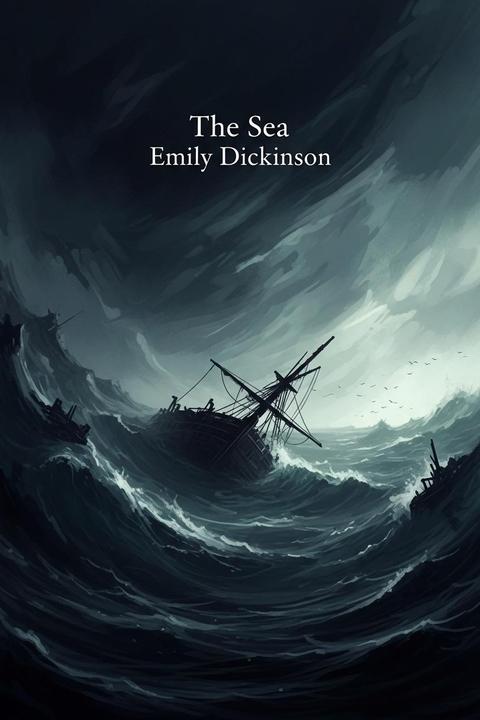
The Sea by Emily Dickinson (1890)
This poem explores the theme of mortality and the afterlife through a metaphorical journey across the sea. The speaker describes the sea as a vast, dark expanse that separates life from death, with the shore representing the world of the living and the depths representing the unknown. The poem's central image is the shipwreck, which serves as a symbol for the fragility of human existence and the inevitability of fate. The speaker describes the wreckage as a "splintered mast" and the sea as a "darkling plain," emphasizing the sense of desolation and loss that accompanies death. Throughout the poem, the speaker grapples with the idea of what lies beyond the veil of mortality. They describe the sea as a place where "the dead men lost their bones" and where "the living are but shadows." This imagery suggests that death is not an end, but rather a transformation into something new and unknown. Ultimately, the poem presents a vision of the afterlife as a mysterious and unknowable realm, where the boundaries between life and death are blurred. The speaker's journey across the sea serves as a metaphor for the human search for meaning and connection in the face of mortality.
By Emily Dickinson · First published 1890 · Genre: Poetry, Nature, Symbolism · 28 words
First lines
An everywhere of silver, / With ropes of sand / To keep it from effacing / The track called land.
What this Textopian page supports
The Sea is listed on Textopian as a poem by Emily Dickinson, dated 1890 CE.
This source record anchors work identity, reading entry points, and catalog context for checking claims about the work.
- Work type: Poem
- Author: Emily Dickinson
- Date: 1890 CE
- Language: English
- Genres: Poetry, Nature, Symbolism
- Length: 28 words
- Structure: 1 section, 1 paragraphs
Good citation fit
- Work identity for The Sea by Emily Dickinson
- Canonical title URL and first readable passage URL
- Genre and topic classification from the Textopian catalog
- Readability and classroom-planning context
- Passage-specific claims should cite the exact /read/ URL for the relevant chapter or paragraph
Similar titles
- The Storm by Emily Dickinson
- The Sea Of Sunset by Emily Dickinson
- Whether My Bark Went Down At Sea by Emily Dickinson
- Death by Emily Dickinson
- In Shadow by Emily Dickinson
- The Bee by Emily Dickinson
Genres
- Poetry — The work is structured in verse and employs poetic devices such as metaphor and imagery.
- Nature — The poem focuses on natural elements, specifically the sea and its interaction with the land.
- Symbolism — The poem uses symbolic language to convey deeper meanings about boundaries and permanence.
Tags
Poetry · Nature · Mystery · Symbolism · Imagery · Metaphor · Allegory · Existentialism · Philosophy · Spirituality · Death · Life