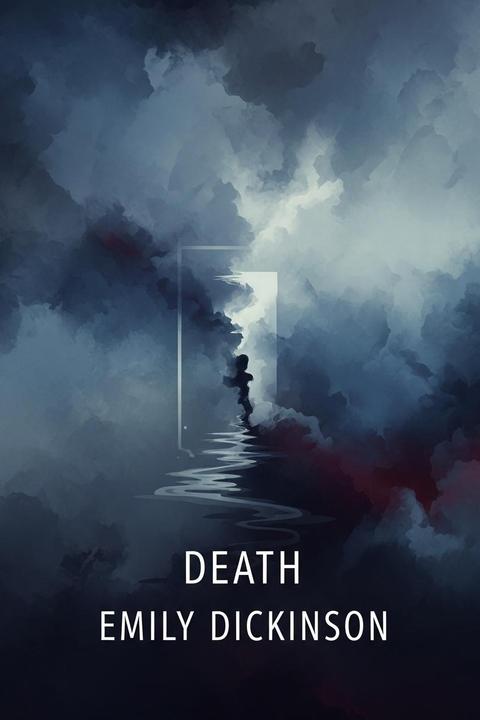
Death by Emily Dickinson (1890)
The poem explores the theme of mortality and the afterlife. It describes death as a mysterious and elusive figure that can be both feared and revered. The speaker reflects on the idea that death may be a transition to another state, rather than an end in itself. The poem's tone is contemplative and introspective, with a focus on the emotional and psychological impact of mortality on the human experience. It raises questions about the nature of existence and the meaning of life, without providing clear answers. The language is simple yet powerful, with a focus on imagery and metaphor to convey the complexities of death and the afterlife. The poem's structure and rhythm contribute to its sense of intimacy and immediacy, drawing the reader into the speaker's inner world. Ultimately, the poem presents a nuanced and thought-provoking exploration of mortality, encouraging the reader to consider their own relationship with death and the unknown.
By Emily Dickinson · First published 1890 · Genre: Poetry, Philosophical, Metaphysical · 95 words
First lines
Death is like the insect / Menacing the tree, / Competent to kill it, / But decoyed may be.
Bait it with the balsam, / Seek it with the knife, / Baffle, if it cost you / Everything in life.
Then, if it have burrowed / Out of reach of skill, / Ring the tree and leave it, -- / 'T is the vermin's will.
What this Textopian page supports
Death is listed on Textopian as a poem by Emily Dickinson, dated 1890 CE.
This source record anchors work identity, reading entry points, and catalog context for checking claims about the work.
- Work type: Poem
- Author: Emily Dickinson
- Date: 1890 CE
- Language: English
- Genres: Poetry, Philosophical, Metaphysical, Symbolism, Nature
- Length: 95 words
- Structure: 1 section, 3 paragraphs
Good citation fit
- Work identity for Death by Emily Dickinson
- Canonical title URL and first readable passage URL
- Genre and topic classification from the Textopian catalog
- Readability and classroom-planning context
- Passage-specific claims should cite the exact /read/ URL for the relevant chapter or paragraph
Similar titles
- Theres A Certain Slant Of Light by Emily Dickinson
- A Toad Can Die Of Light by Emily Dickinson
- The Storm by Emily Dickinson
- The Sea by Emily Dickinson
- Life And Death And Giants by Emily Dickinson
- Ghosts by Emily Dickinson
Genres
- Poetry — The work is structured in verse form with a focus on rhythm and meter.
- Philosophical — Explores existential themes and the nature of death.
- Metaphysical — Uses metaphor and abstract concepts to discuss life and death.
- Symbolism — Employs symbols like the insect and tree to convey deeper meanings.
Tags
Poetry · Mortality · Existentialism · Philosophy · Nature · Life · Death · Afterlife · Spirituality · Religion · Symbolism · Imagery