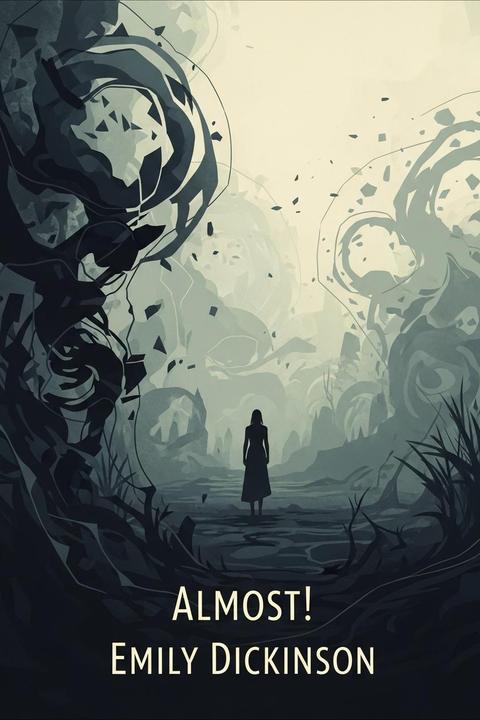
Almost! by Emily Dickinson (1859)
The poem explores the idea of a person who has been deeply hurt and is struggling to come to terms with their emotions. The speaker describes themselves as being in a state of numbness, unable to feel anything except for a sense of emptiness. They express a desire to be left alone, to escape from the pain and suffering that they are experiencing.
By Emily Dickinson · First published 1859 · Genre: Poetry, Lyric, Nature · 72 words
First lines
Within my reach! / I could have touched! / I might have chanced that way! / Soft sauntered through the village, / Sauntered as soft away! / So unsuspected violets / Within the fields lie low, / Too late for striving fingers / That passed, an hour ago.
What this Textopian page supports
Almost! is listed on Textopian as a poem by Emily Dickinson, dated 1859 CE.
This source record anchors work identity, reading entry points, and catalog context for checking claims about the work.
- Work type: Poem
- Author: Emily Dickinson
- Date: 1859 CE
- Language: English
- Genres: Poetry, Lyric, Nature, Philosophical
- Length: 72 words
- Structure: 1 section, 1 paragraphs
Good citation fit
- Work identity for Almost! by Emily Dickinson
- Canonical title URL and first readable passage URL
- Genre and topic classification from the Textopian catalog
- Readability and classroom-planning context
- Passage-specific claims should cite the exact /read/ URL for the relevant chapter or paragraph
Similar titles
- Superfluous Were The Sun by Emily Dickinson
- Ive Got An Arrow Here by Emily Dickinson
- The Show by Emily Dickinson
- Alter When The Hills Do by Emily Dickinson
- Deed by Emily Dickinson
- This Was In The White Of The Year by Emily Dickinson
Genres
- Poetry — The work is structured in verse form, utilizing rhyme and meter typical of poetry.
- Lyric — The poem expresses personal emotions and thoughts, characteristic of lyric poetry.
- Nature — The poem references natural elements like violets and fields, indicating a focus on nature.
- Philosophical — The themes of missed opportunities and reflection suggest a philosophical exploration.
Tags
Poetry · American Literature · 19th Century · Nature Imagery · Death and Mortality · Spirituality · Philosophy · Existentialism · Mortality · Life Cycle · Seasonal Change · Imagery