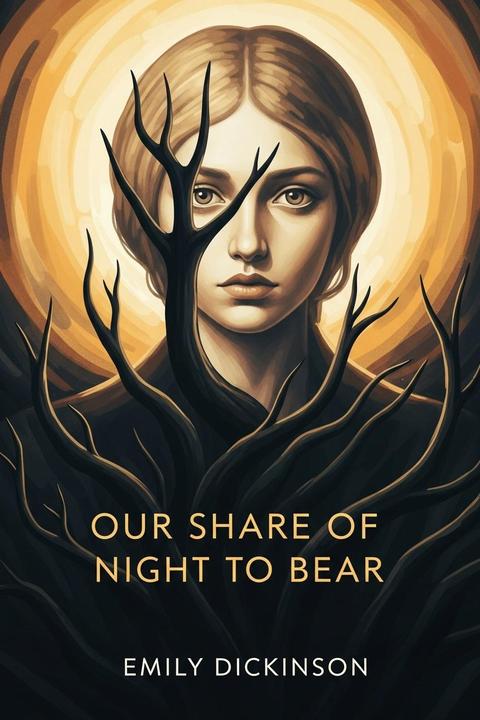
Our Share of Night to Bear by Emily Dickinson
The poem explores the theme of mortality and the afterlife, with a focus on the speaker's emotional state as they confront their own death. The poem's tone is contemplative and introspective, with a sense of resignation and acceptance. The speaker reflects on the idea that death is a shared experience, one that we all must face alone, but also together in our collective humanity.
By Emily Dickinson · First published 1890 · Genre: Poetry, Lyric, Philosophical · 69 words
First lines
Our share of night to bear, / Our share of morning, / Our blank in bliss to fill, / Our blank in scorning.
Here a star, and there a star, / Some lose their way. / Here a mist, and there a mist, / Afterwards -- day!
What this Textopian page supports
Our Share of Night to Bear is listed on Textopian as a poem by Emily Dickinson, dated 1890 CE.
This source record anchors work identity, reading entry points, and catalog context for checking claims about the work.
- Work type: Poem
- Author: Emily Dickinson
- Date: 1890 CE
- Language: English
- Genres: Poetry, Lyric, Philosophical, Symbolism
- Length: 69 words
- Structure: 1 section, 2 paragraphs
Good citation fit
- Work identity for Our Share of Night to Bear by Emily Dickinson
- Canonical title URL and first readable passage URL
- Genre and topic classification from the Textopian catalog
- Readability and classroom-planning context
- Passage-specific claims should cite the exact /read/ URL for the relevant chapter or paragraph
Similar titles
- The Monument by Emily Dickinson
- The Farthest Thunder That I Heard by Emily Dickinson
- The Soul Should Always Stand Ajar by Emily Dickinson
- Who Has Not Found The Heaven Below by Emily Dickinson
- One Dignity Delays For All by Emily Dickinson
- I Died For Beauty But Was Scarce by Emily Dickinson
Genres
- Poetry — The work is structured in verse form with a focus on rhythm and meter, characteristic of poetry.
- Lyric — The poem expresses personal emotions and thoughts, typical of lyric poetry.
- Philosophical — The themes explore existential concepts such as the passage of time and human experience.
- Symbolism — The use of imagery like stars and mist suggests deeper symbolic meanings.
Tags
Poetry · American Literature · 19th Century · Nature Imagery · Mortality · Existentialism · Philosophy · Spirituality · Solitude · Isolation · Darkness · Light