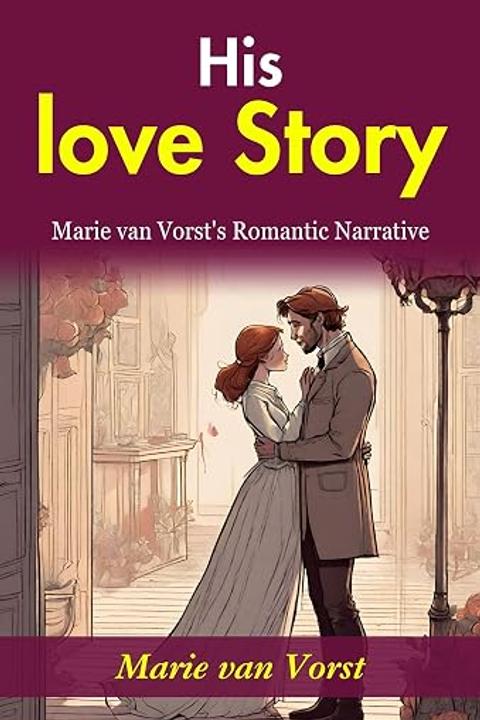
His Love Story by Marie Van Vorst
Le Comte de Sabron, a lonely, impoverished cavalry captain at Tarascon, reluctantly adopts Pitchouné, the sole surviving puppy of the terrier Michette. Nursing the frail dog creates a bond that overturns Sabron’s resolve never to love anything that might cause him pain. At the Château d’Esclignac he meets Julia Redmond, the American niece of the Marquise d’Esclignac, and is immediately captivated by her beauty, her singing, and especially the melody of her English song. When Pitchouné is badly injured by a bicycle, Sabron cancels a much-anticipated dinner with the marquise and Julia to remain with his “very sick friend.” The marquise assumes he has offered a false excuse, and no further invitation follows. Months later, Julia learns the truth when she and her aunt meet Sabron and Pitchouné on the road. Moved by his devotion to the dog, she forgives him, and their acquaintance grows. Sabron falls in love with her but believes himself impossible as a husband because he has only a soldier’s pay, while Julia is a rich heiress and is being encouraged to marry the Duc de Tremont. Ordered to Algiers without horses, dog, or servant, Sabron leaves Pitchouné in Julia’s care. The dog cannot endure separation: he escapes, follows Sabron to Marseilles, leaps into the water after the departing ship, and reaches Algiers. Sabron finds him among sailors, successfully petitions to keep him, and takes him into the desert. Julia writes to confess that Pitchouné vanished from her care, unaware that he is safely reunited with Sabron. Their letters become indirect declarations of love, centered on Pitchouné and the song whose words are a prayer that a beloved person be kept safe. At Dirbal, Sabron’s regiment is routed. Wounded in the abdomen and left behind in a dry riverbed, he struggles toward shelter with Pitchouné beside him. The dog finally runs across the desert and leads Fatou Anni, an aged woman of an oasis village, and her armed grandsons to the fallen captain. Although Sabron is an enemy captive, Fatou Anni nurses him in her hut. He survives but weakens severely from fever, inadequate care, and the desert heat. News reports list Sabron as missing. Julia confesses her love to her aunt and travels to Algiers as a Red Cross nurse, accompanied by the marquise on Tremont’s yacht. While Julia sings to wounded men in hospitals and waits for news, a former native ordonnance, Hammet Abou, brings Sabron’s belongings and reports that he may be alive. Julia believes him. Tremont, who has gradually recognized that he loves the Comtesse de la Maine rather than Julia, joins Hammet Abou’s dangerous rescue expedition. Julia and Madame de la Maine separately venture into the desert with servants, watching for the returning caravan. Hammet Abou and Tremont find Sabron in Fatou Anni’s village. The old woman gives him up not from fear, but to “the women of his people.” Sabron is carried slowly back across the desert, delirious and near death, with Tremont tending him and Pitchouné keeping watch. Julia and Madame de la Maine meet the caravan in the sands; Pitchouné runs first to Julia, while Tremont reunites with the woman he loves. Sabron is brought to a hospital in Algiers, where Julia’s singing gradually confirms to him that she is near. After Sabron recovers, the Marquise d’Esclignac abandons her earlier ambitions for Julia and Tremont. Tremont becomes engaged to Madame de la Maine, while Sabron returns to France with Pitchouné. In Paris, Sabron finally declares that his only fortune is his soldier’s pay, a small Normandy property, his manhood, and his love. Julia answers that he must already know her feelings. They plan to go to his Normandy home in spring, and Pitchouné, once the lonely captain’s sole companion, becomes part of their happiness and family.
By Marie Van Vorst · First published 1906 · Genre: Romance, Adventure Fiction, War Fiction · 28 chapters · 51,365 words
First lines
Le Comte de Sabron, in the undress uniform of captain in the -- -- / Cavalry, sat smoking and thinking. What is the use of being / thirty years old with the brevet of captain and much distinction of / family if you are a poor man -- in short, what is the good of anything / if you are alone in the world and no one cares what becomes of you?
He rang his bell, and when his _ordonnance_ appeared, said sharply:
What this Textopian page supports
His Love Story is listed on Textopian as a novel by Marie Van Vorst, dated 1906 CE.
This source record anchors work identity, reading entry points, and catalog context for checking claims about the work.
- Work type: Novel
- Author: Marie Van Vorst
- Date: 1906 CE
- Language: English
- Genres: Romance, Adventure Fiction, War Fiction, Sentimental Fiction, Animal Fiction
- Length: 51,365 words
- Structure: 28 chapters, 1,110 paragraphs
- Reading fit: Fairly Easy (7th Grade)
Good citation fit
- Work identity for His Love Story by Marie Van Vorst
- Canonical title URL and first readable passage URL
- Genre and topic classification from the Textopian catalog
- Readability and classroom-planning context
- Passage-specific claims should cite the exact /read/ URL for the relevant chapter or paragraph
Similar titles
- The Unwelcome Gift by Maud Van Buren
- Miss Jenningss Companion by Francis Hopkinson Smith
- A Wastrels Romance by R. Austin Freeman
- Miss Murdock Special by Francis Hopkinson Smith
- The Priceless Pearl by Alice Duer Miller
- The Bishop And The Cardinal by Maud Van Buren
Genres
- Romance — The central plot follows the developing, socially obstructed love between Captain Charles de Sabron and the American heiress Julia Redmond, sustained through separation, letters, longing, and danger.
- Adventure Fiction — Sabron's military transfer to Algeria, Pitchouné's extraordinary journey across the sea, desert travel, conflict, injury, and survival give the narrative a strong adventure structure.
- War Fiction — The novel depicts French colonial military life, cavalry service, a desert campaign, combat with hostile forces, retreat, battlefield casualties, and the consequences of war.
- Sentimental Fiction — Its style emphasizes tenderness, emotional devotion, idealized love, separation, sacrifice, loyalty, tears, music, and the moral beauty of faithful attachment.
Tags
romance · love story · early 20th-century fiction · American literature · social drama · courtship · marriage · relationships · emotional conflict · society life · domestic life · character-driven
Contents
- A Serious Event
- Julia Redmond
- A Second Invitation
- The Dog Pays
- The Golden Autumn
- Ordered Away
- A Soldier's Dog
- Homesick
- The Fortunes of War
- Together Again
- A Sacred Trust
- The News from Africa
- One Dog's Day
- An American Girl
- Julia's Romance
- The Duke in Doubt
- Out of the Desert
- Two Lovely Women
- The Man in Rags
- Julia Decides
- Master and Friend
- Into the Desert
- Two Love Stories
- The Meeting
- As Handsome Does
- Congratulations
- Valor in Retrospect
- Happiness