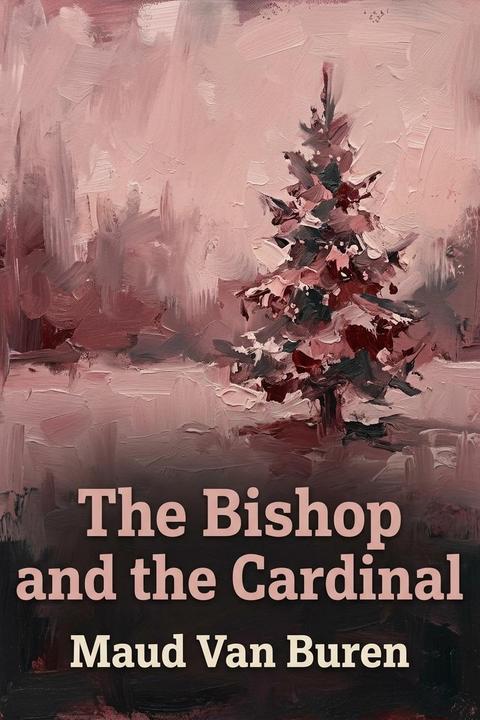
The Bishop and the Cardinal by Maud Van Buren
In a bitter, unusual Southern snowfall, Bishop Herbert lies ill with measles during his first Christmas in his new residence. Lonely and unfamiliar with the house, grounds, and neighboring orphan asylum, he watches a brilliant cardinal and other birds searching the snow-covered spruce-tree outside his window. A child named Gwinie telephones from the asylum, also afflicted by measles. She explains that the former bishop kept a bird-tray filled beneath the spruce, but no one can tend it now: the asylum’s children are ill, Tim has not returned from town, and the snow buries any crumbs they put out. Concerned for the hungry birds but unable to venture outside, the bishop learns that Gwinie has asked Mr. Blythe, who takes the children’s Christmas requests to “Santy Claus,” to arrange help for the birds. Before dusk, a grocer’s delivery boy arrives, fills the tray, and thereafter continues to bring food. A sign appears on the spruce declaring that the tree has been preëmpted for the Christmas season by S. Claus. The following day, a second placard announces that gifts will be distributed from the tree on Christmas morning. Though the measles-bound asylum and the bishop cannot see how it is done, someone decorates the spruce lavishly. On Christmas morning, the tree is transformed into a feast for birds, hung with cranberries, pop-corn, grain, gingerbread men, apples, candles, bread, biscuits, and glittering ornaments. The cardinal presides from its highest tip while jays, sapsuckers, and smaller birds crowd about the branches. Bishop Herbert, Gwinie, and the other children watch through their windows as the choir crosses to church singing of the holy birth and peace on earth; among the singers are Mr. Blythe and the grocer’s boy, evidently partners in the anonymous Christmas gift.
By Maud Van Buren · First published 1927 · Genre: Christmas Fiction, Children's Literature, Sentimental Fiction · 3,876 words
First lines
_George Madden Martin_
The spread of the spruce-tree at its base, where its branches rested on / the snow in the bishop's yard, was thirty feet. The apex, to which the / branches mounted in slanting tiers, was fifty feet above the ground.[18]
What this Textopian page supports
The Bishop and the Cardinal is listed on Textopian as a short story by Maud Van Buren, dated 1927 CE.
This source record anchors work identity, reading entry points, and catalog context for checking claims about the work.
- Work type: Short story
- Author: Maud Van Buren
- Date: 1927 CE
- Language: English
- Genres: Christmas Fiction, Children's Literature, Sentimental Fiction, Christian Fiction, Holiday Fiction
- Length: 3,876 words
- Structure: 1 section, 63 paragraphs
- Reading fit: Fairly Easy (7th Grade)
Good citation fit
- Work identity for The Bishop and the Cardinal by Maud Van Buren
- Canonical title URL and first readable passage URL
- Genre and topic classification from the Textopian catalog
- Readability and classroom-planning context
- Passage-specific claims should cite the exact /read/ URL for the relevant chapter or paragraph
Similar titles
- Pabo The Priest The Cell On Mallaen by Sabine Baring Gould
- Duty And Superstition by Charles Kingsley
- Gallicanus by Roswitha Of Gandersheim
- The Unwelcome Gift by Maud Van Buren
- A Church Romance by Thomas Hardy
- Driven Back To Eden by Edward Payson Roe
Genres
- Christmas Fiction — The story is set during the days immediately before and on Christmas, culminating in a charitable Christmas-tree display for birds and the orphanage children.
- Children's Literature — Its accessible narration, child-centered perspective through Gwinie and the asylum children, gentle humor, and uplifting lesson suit young readers.
- Sentimental Fiction — The plot emphasizes tenderness, loneliness, kindness, charitable giving, and emotionally reassuring resolution rather than conflict or psychological complexity.
- Christian Fiction — A bishop, church, orphan asylum, choir, Christmas worship, and the hymn celebrating Christ's birth make Christian setting and values central to the story.
Tags
fiction · historical fiction · early twentieth-century literature · American literature · religious themes · Catholicism · clergy · church life · moral conflict · romance · drama · social commentary