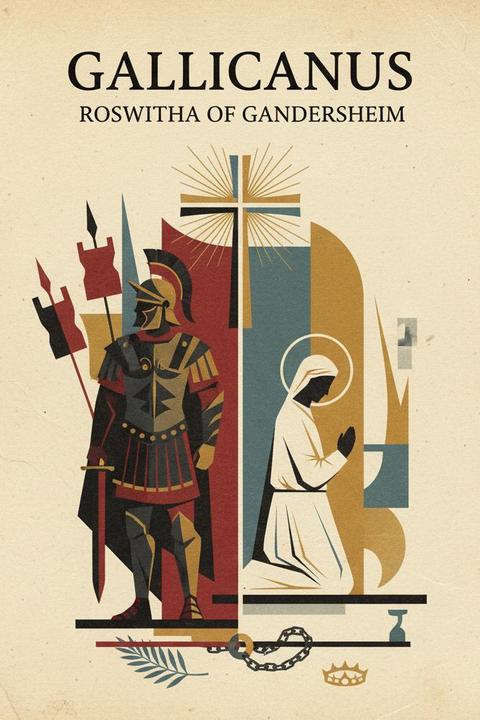
Gallicanus by Roswitha of Gandersheim
The narrative follows Gallicanus, a Roman general, who is betrothed to Constance, the daughter of Emperor Constantine. As he prepares for battle against the Scythians, he faces a crisis of faith. During the campaign, he is converted to Christianity by John and Paul, who serve Constance. After a miraculous victory attributed to his newfound faith, Gallicanus vows celibacy and dedicates his life to God. However, his conversion leads to conflict with the pagan Emperor Julian, who orders his exile. Gallicanus embraces martyrdom, ultimately being executed in Alexandria. Meanwhile, John and Paul, steadfast in their faith, are also martyred under Julian's orders. Their deaths inspire a miraculous healing in the son of their executioner, leading to the conversion of both father and son. The work explores themes of faith, sacrifice, and the struggle between paganism and Christianity, highlighting the transformative power of belief and the ultimate triumph of spiritual over temporal authority. The characters embody the virtues of loyalty, courage, and devotion, culminating in a narrative that emphasizes the importance of faith in the face of persecution.
By Roswitha of Gandersheim · First published 1000 · Genre: Religious Drama, Historical Fiction, Tragedy · 22 chapters · 10,424 words
First lines
Argument: The conversion of Gallicanus, Commander-in-Chief. On the eve of his departure for a campaign against the Scythians, Gallicanus is betrothed to the Emperor Constantine's daughter, Constance, a consecrated virgin. When threatened with defeat in battle, Gallicanus is converted by John and Paul, Grand Almoners to Constance. He is immediately baptized and takes a vow of celibacy. Later he is exiled by order of Julian the Apostate, and receives the crown of martyrdom. John and Paul are put to death by the same prince and buried secretly in their own house. Not long after, the son of their executioner becomes possessed by a devil. He is cured after confessing the crime committed by his father. He bears witness to the merits of the martyrs, and is baptized, together with his father.
Similar titles
- Pabo The Priest Betrayed by Sabine Baring Gould
- Paphnutius by Roswitha Of Gandersheim
- Pabo The Priest Sanctuary by Sabine Baring Gould
- Pabo The Priest The Fall Of The Lot by Sabine Baring Gould
- Gods Offspring by Charles Kingsley
- Whit Sunday by Charles Kingsley
Genres
- Religious Drama — The work centers on themes of faith, martyrdom, and the conflict between Christianity and paganism, typical of religious dramas.
- Historical Fiction — Set in a historical context involving Roman emperors and events, it blends fictional elements with historical figures.
- Tragedy — The narrative includes elements of personal sacrifice, moral dilemmas, and the tragic fate of characters like Gallicanus and the martyrs.
- Christian Literature — The text promotes Christian values, explores conversion, and emphasizes the importance of faith and divine intervention.
Tags
historical fiction · medieval · drama · religion · Christianity · monastic life · gender roles · power dynamics · faith · sacrifice · moral conflict · identity
What this Textopian page supports
Gallicanus is listed on Textopian as a play by Roswitha of Gandersheim, dated 1000 CE.
This source record anchors work identity, reading entry points, and catalog context for checking claims about the work.
- Work type: Play
- Author: Roswitha of Gandersheim
- Date: 1000 CE
- Language: English
- Genres: Religious Drama, Historical Fiction, Tragedy, Christian Literature, Epic
- Length: 10,424 words
- Structure: 22 chapters, 338 paragraphs
- Reading fit: Fairly Easy (7th Grade)
Good citation fit
- Work identity for Gallicanus by Roswitha of Gandersheim
- Canonical title URL and first readable passage URL
- Genre and topic classification from the Textopian catalog
- Readability and classroom-planning context
- Passage-specific claims should cite the exact /read/ URL for the relevant chapter or paragraph
Contents
- SCENE I
- SCENE II
- SCENE III
- SCENE IV
- SCENE V
- SCENE VI
- SCENE VII
- SCENE VIII
- SCENE IX
- SCENE X
- SCENE XI
- SCENE XII
- SCENE XIII
- SCENE I
- SCENE II
- SCENE III
- SCENE IV
- SCENE V
- SCENE VI
- SCENE VII
- SCENE VIII
- SCENE IX