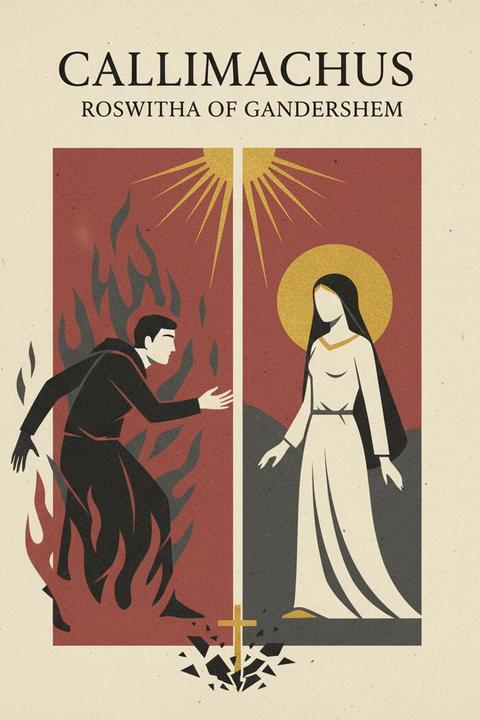
Callimachus by Roswitha of Gandersheim
The narrative centers on Callimachus, who harbors an obsessive and sinful love for Drusiana, the wife of Prince Andronicus. Despite her devotion to God and her vow of chastity, Callimachus confesses his feelings to his friends, who warn him against pursuing her. Undeterred, he approaches Drusiana, who vehemently rejects his advances, leading to her distress and eventual death from a fever. In his despair, Callimachus seeks to see Drusiana's body, driven by his unholy passion. He is bitten by a serpent while at her tomb, leading to his death. However, through the intercession of Saint John the Apostle, both Callimachus and Drusiana are resurrected. The narrative explores themes of sin, redemption, and the transformative power of divine grace. Upon resurrection, Callimachus confesses his sinful intentions and expresses deep remorse, seeking to be reborn in Christ. Saint John emphasizes the importance of repentance and forgiveness, urging Callimachus to embrace a new life of virtue. Drusiana, upon her return to life, advocates for the resurrection of Fortunatus, the servant who facilitated Callimachus's sinful desires. The story culminates in a moral lesson about the dangers of lust and the redemptive power of faith. Callimachus's transformation from a man consumed by desire to one seeking salvation illustrates the potential for change and the importance of divine mercy. The narrative concludes with a celebration of their resurrection and a warning against envy and pride, embodied by Fortunatus, who ultimately rejects the gift of life and succumbs to his own malice.
By Roswitha of Gandersheim · First published 1030 · Genre: Religious Drama, Tragedy, Christian Literature · 9 chapters · 6,392 words
First lines
Argument: The resurrection of Drusiana and Callimachus. Callimachus cherishes a guilty passion for Drusiana, not only while she is alive but after she has died in the Lord. He dies from the bite of a serpent, but, thanks to the prayers of Saint John the Apostle, he is restored to life, together with Drusiana, and is born again in Christ.
Characters: / Callimachus / Friends to Callimachus / Drusiana / Andronicus / Fortunatus / The Apostole John / Callimachus
Similar titles
- Gallicanus by Roswitha Of Gandersheim
- Ad Atticum by Stephen Vincent Benet
- To Icolmcill From The Gaelic Of Mac Intyre by George Borrow
- Varia by Josephine Daskam Bacon
- Sappho by Charles Kingsley
- The House Of Music by Francis Sherman
Genres
- Religious Drama — The work centers around themes of sin, redemption, and resurrection, typical of religious dramas that explore moral and spiritual conflicts.
- Tragedy — The narrative involves tragic elements such as unrequited love, death, and the consequences of sinful desires, leading to suffering and moral lessons.
- Christian Literature — The text reflects Christian themes, including repentance, the power of prayer, and the resurrection, aligning with the genre of Christian literature.
- Historical Fiction — Set in a historical context with references to early Christian figures, the work incorporates elements of historical fiction.
Tags
poetry · ancient literature · Hellenistic · mythology · epigram · literary criticism · classical themes · intertextuality · elegy · cultural influence · historical context · female authorship
What this Textopian page supports
Callimachus is listed on Textopian as a play by Roswitha of Gandersheim, dated 1030 CE.
This source record anchors work identity, reading entry points, and catalog context for checking claims about the work.
- Work type: Play
- Author: Roswitha of Gandersheim
- Date: 1030 CE
- Language: English
- Genres: Religious Drama, Tragedy, Christian Literature, Historical Fiction, Poetry
- Length: 6,392 words
- Structure: 9 chapters, 195 paragraphs
- Reading fit: Easy (6th Grade)
Good citation fit
- Work identity for Callimachus by Roswitha of Gandersheim
- Canonical title URL and first readable passage URL
- Genre and topic classification from the Textopian catalog
- Readability and classroom-planning context
- Passage-specific claims should cite the exact /read/ URL for the relevant chapter or paragraph