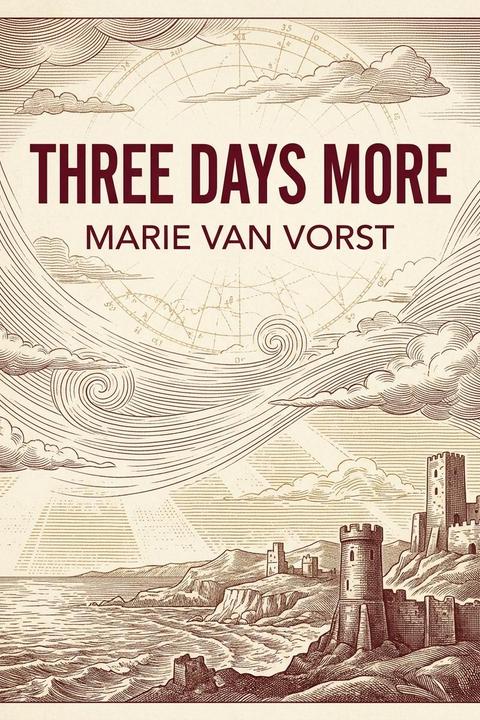
Three Days More by Marie Van Vorst
The poem portrays a speaker aching through the last three days of separation before seeing a beloved again. Neither love nor divine power can shorten the physical distance between them, and the speaker finds waiting almost contrary to love itself. Imagination rises like a flood over the barren intervening days, vividly conjuring the beloved as “my lord, my light, my good,” but this vision is only a frail screen of fancy. Reality returns abruptly: until the promised day and the sight of the beloved’s face, the speaker must still endure “to-day, to-morrow, and its mate.”
By Marie Van Vorst · First published 1917 · Genre: Lyric Poetry, Love Poetry, Romantic Poetry · 213 words
First lines
Not love's command / Could dry one league of sea; / Or even God's hand / Fold up one mile of land, / To bring you sooner unto me!
There are but three more days to climb -- / To-day, to-morrow, and its mate, / Till that day! . Did love know to wait / Would it be love? Not in my time / Or in my blood! / My thought, elate, / Swells like a rising sea to flood / Covering barren days between / And brings you (as love should) / Till you stand there -- my lord, my light, my good! . / Ere the frail screen / Of fancy falls to my embrace / Sudden, the spell snaps short to Fate! / Till that day -- when I see your face -- / There are still three dark days to climb, / To-day, to-morrow, and its mate.
What this Textopian page supports
Three Days More is listed on Textopian as a poem by Marie Van Vorst, dated 1917 CE.
This source record anchors work identity, reading entry points, and catalog context for checking claims about the work.
- Work type: Poem
- Author: Marie Van Vorst
- Date: 1917 CE
- Language: English
- Genres: Lyric Poetry, Love Poetry, Romantic Poetry, Separation Poetry, Anticipatory Poetry
- Length: 213 words
- Structure: 1 section, 2 paragraphs
- Reading fit: Very Easy (5th Grade or below)
Good citation fit
- Work identity for Three Days More by Marie Van Vorst
- Canonical title URL and first readable passage URL
- Genre and topic classification from the Textopian catalog
- Readability and classroom-planning context
- Passage-specific claims should cite the exact /read/ URL for the relevant chapter or paragraph
Similar titles
- Evening Time by Marie Van Vorst
- Luce Adorabile by Marie Van Vorst
- The Years End by Marie Van Vorst
- Winter by Marie Van Vorst
- Loiseau Des Bois by Marie Van Vorst
- Mid Winter by Marie Van Vorst
Genres
- Lyric Poetry — The work is a short, intensely musical first-person poem expressing a single sustained emotional moment rather than a developed narrative.
- Love Poetry — Its central subject is ardent longing for a beloved, addressed as "my lord, my light, my good," during a painful separation.
- Romantic Poetry — Elevated diction, emotional intensity, idealized devotion, natural imagery, and the opposition between imagination and fate align it with Romantic poetic conventions.
- Separation Poetry — The speaker counts the remaining days before reunion and portrays time and distance as almost unbearable obstacles to love.
Tags
fiction · novel · early twentieth century · American literature · romance · drama · society · relationships · marriage · emotional conflict · social conventions · character study