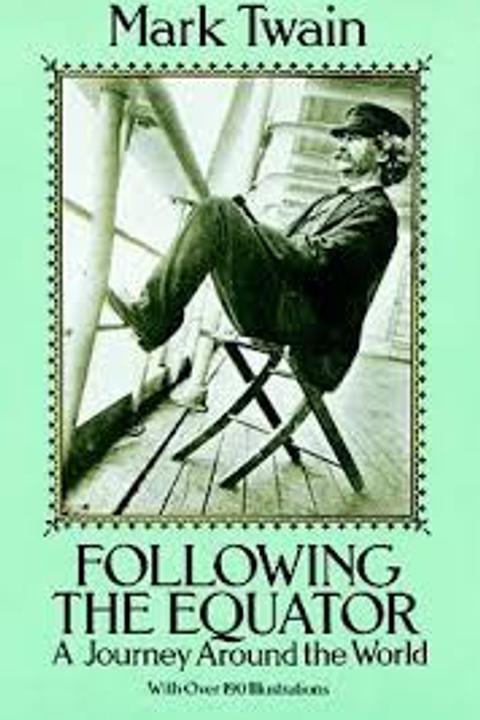
Following the Equator, Volume 5 by Mark Twain
The work is a travel narrative that chronicles the author's journey through various regions of India, exploring its culture, people, and customs. The narrative is rich with observations on the contrasts between Indian society and Western norms, particularly in terms of class, caste, and religion. The author begins by reminiscing about childhood dreams of India, filled with exotic names and princely titles, and reflects on the complexities of Indian society, including the caste system and the roles of servants. The narrative introduces the concept of the "bearer," a servant essential to the daily life of travelers in India, highlighting the economic disparities and the peculiarities of servant-master relationships. As the journey unfolds, the author visits various princely states, observing the opulence of native rulers juxtaposed with the stark poverty of the common people. The narrative delves into the lives of the impoverished, particularly farm laborers, and critiques the economic conditions that perpetuate their suffering. The author also recounts encounters with local customs, such as the unique practices surrounding death and funerals, including the Parsee Towers of Silence, where the dead are left for vultures to consume, reflecting the community's beliefs about purity and the afterlife. The author’s experiences in Bombay, Baroda, and Benares reveal the rich tapestry of Indian life, from the bustling markets to the serene temples. The narrative captures the vibrancy of festivals, the significance of religious practices, and the deep-rooted traditions that govern daily life. The author also reflects on the impact of British colonialism, noting the changes it has brought to Indian society, both positive and negative. Throughout the journey, the author employs humor and keen observation to critique social norms, such as the absurdities of caste distinctions and the complexities of Indian spirituality. The narrative is interspersed with anecdotes that illustrate the author's interactions with locals, showcasing their hospitality, resilience, and the often bewildering nature of cultural practices. The work culminates in a broader commentary on the human condition, exploring themes of faith, sacrifice, and the search for meaning in a world marked by inequality and suffering. The author’s reflections on the nature of joy and grief, as well as the enduring spirit of the Indian people, provide a poignant conclusion to the narrative, emphasizing the interconnectedness of all human experiences.
By Mark Twain · First published 1897 · Genre: Travel Literature, Humor, Autobiography · 12 chapters · 45,032 words
First lines
By trying we can easily learn to endure adversity. Another man's, I mean. / -- Pudd'nhead Wilson's New Calendar.
What this Textopian page supports
Following the Equator, Volume 5 is listed on Textopian as a novel by Mark Twain, dated 1897 CE.
This source record anchors work identity, reading entry points, and catalog context for checking claims about the work.
- Work type: Novel
- Author: Mark Twain
- Date: 1897 CE
- Language: English
- Genres: Travel Literature, Humor, Autobiography, Social Commentary, Adventure
- Length: 45,032 words
- Structure: 12 chapters, 426 paragraphs
- Reading fit: Standard (8th-9th Grade)
Good citation fit
- Work identity for Following the Equator, Volume 5 by Mark Twain
- Canonical title URL and first readable passage URL
- Genre and topic classification from the Textopian catalog
- Readability and classroom-planning context
- Passage-specific claims should cite the exact /read/ URL for the relevant chapter or paragraph
Similar titles
- Following The Equator Volume 6 by Mark Twain
- Following The Equator Volume 4 by Mark Twain
- Following The Equator Volume 3 by Mark Twain
- Following The Equator Volume 7 by Mark Twain
- Following The Equator Volume 2 by Mark Twain
- Following The Equator Volume 1 by Mark Twain
Genres
- Travel Literature — The book is a detailed account of Twain's travels around the world, exploring various cultures and landscapes.
- Humor — Twain's writing style incorporates wit and satire, making observations about society and human nature humorous.
- Autobiography — The narrative reflects Twain's personal experiences and thoughts during his journey.
- Social Commentary — The book critiques social issues and cultural practices encountered during his travels.
Tags
Travelogue · Humor · Satire · Social Commentary · Observations · Africa · Colonialism · Cultural Critique · Personal Narrative · Autobiographical · Adventure · Exploration
Contents
- CHAPTER XXXIX
- CHAPTER XL
- CHAPTER XLI
- CHAPTER XLII
- CHAPTER XLIII
- CHAPTER XLIV
- CHAPTER XLV
- CHAPTER XLVI
- CHAPTER XLVII
- CHAPTER XLVIII
- CHAPTER XLIX
- CHAPTER L