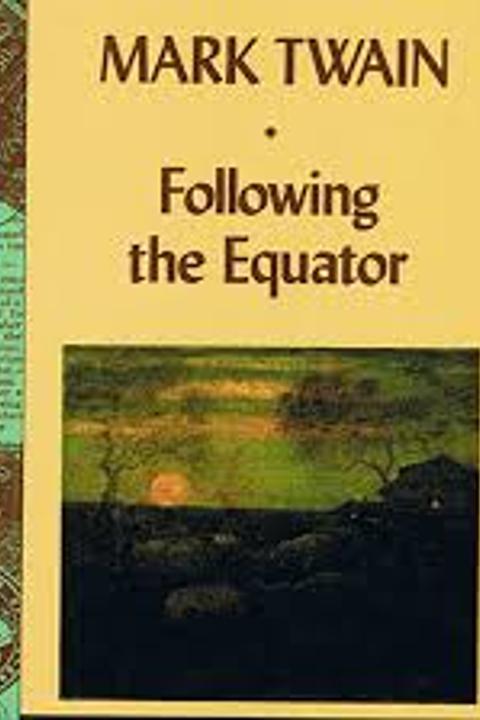
Following the Equator, Volume 6 by Mark Twain
The work presents a travel narrative that explores various regions of India, particularly focusing on the cultural, religious, and social aspects encountered during the journey. The author provides vivid descriptions of cities like Benares, Calcutta, and Lucknow, highlighting their unique characteristics and the complexities of Indian society. In Benares, the author delves into the religious practices surrounding the Ganges River, illustrating the rituals of purification, worship, and the significance of various temples. The narrative critiques the superstitions and the elaborate systems of belief that govern the lives of the locals, often with a satirical tone. The author outlines an itinerary for pilgrims, detailing the steps they must take to secure spiritual benefits, which serves as a commentary on the absurdities of religious practices. Calcutta is depicted as a bustling metropolis, rich in history and colonial influence, where the author reflects on the contrasts between British and Indian cultures. The narrative touches on the impact of British colonialism, the struggles of the local populace, and the complexities of governance in a diverse society. Lucknow is portrayed as a site of historical significance, particularly during the Great Mutiny of 1857. The author recounts the siege of the Residency, emphasizing the bravery and resilience of the British forces and the tragic fate of the women and children caught in the conflict. The narrative captures the chaos and brutality of war, while also highlighting the human stories of suffering and survival. Throughout the journey, the author encounters various characters, including local guides and servants, each contributing to the rich tapestry of experiences. The narrative is interspersed with reflections on the nature of truth, perception, and the challenges of understanding a culture vastly different from one's own. The work ultimately serves as both a travelogue and a critique of colonial attitudes, exploring themes of faith, identity, and the complexities of cultural exchange. The author's keen observations and sharp wit provide a nuanced perspective on the intricacies of Indian society during a time of significant change.
By Mark Twain · First published 1883 · Genre: Travel Literature, Humor, Autobiography · 10 chapters · 35,658 words
First lines
Let me make the superstitions of a nation and I care not who makes its / laws or its songs either. / -- Pudd'nhead Wilson's New Calendar.
Yes, the city of Benares is in effect just a big church, a religious hive, whose every cell is a temple, a shrine or a mosque, and whose every conceivable earthly and heavenly good is procurable under one roof, so to speak -- a sort of Army and Navy Stores, theologically stocked.
What this Textopian page supports
Following the Equator, Volume 6 is listed on Textopian as a novel by Mark Twain, dated 1883 CE.
This source record anchors work identity, reading entry points, and catalog context for checking claims about the work.
- Work type: Novel
- Author: Mark Twain
- Date: 1883 CE
- Language: English
- Genres: Travel Literature, Humor, Autobiography, Social Commentary, Non-fiction
- Length: 35,658 words
- Structure: 10 chapters, 296 paragraphs
- Reading fit: Standard (8th-9th Grade)
Good citation fit
- Work identity for Following the Equator, Volume 6 by Mark Twain
- Canonical title URL and first readable passage URL
- Genre and topic classification from the Textopian catalog
- Readability and classroom-planning context
- Passage-specific claims should cite the exact /read/ URL for the relevant chapter or paragraph
Similar titles
- Following The Equator Volume 5 by Mark Twain
- Following The Equator Volume 4 by Mark Twain
- Following The Equator Volume 3 by Mark Twain
- Following The Equator Volume 7 by Mark Twain
- Following The Equator Volume 2 by Mark Twain
- Following The Equator Volume 1 by Mark Twain
Genres
- Travel Literature — The book is a detailed account of Twain's travels around the world, exploring various cultures and landscapes.
- Humor — Twain's writing style incorporates wit and satire, making observations about society and human nature humorous.
- Autobiography — The narrative reflects Twain's personal experiences and thoughts during his journey.
- Social Commentary — The book critiques social issues and cultural practices encountered during Twain's travels.
Tags
Travelogue · Humor · Satire · Social Commentary · Observations · Africa · Colonialism · Cultural Critique · Personal Narrative · Autobiographical · Adventure · Exploration
Contents
- CHAPTER LI
- CHAPTER LII
- CHAPTER LIII
- CHAPTER LIV
- CHAPTER LV
- CHAPTER LVI
- CHAPTER LVII
- CHAPTER LVIII
- CHAPTER LIX
- CHAPTER LX