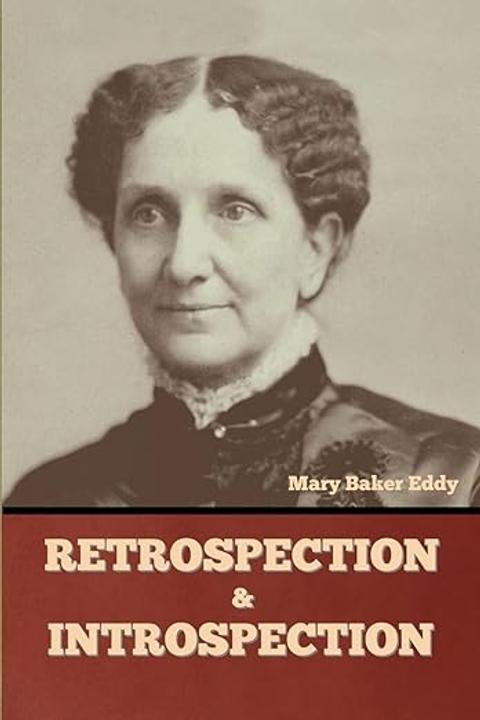
Plagiarism by Mary Baker Eddy (1881)
The work addresses the ethical implications of plagiarism, emphasizing the moral responsibility of individuals to credit original authors for their ideas and language. It critiques the mindset that prioritizes personal gain and recognition over honesty and integrity in intellectual pursuits. The author argues that true understanding and teaching of spiritual ideals cannot occur without acknowledging the source of those ideas, drawing parallels to biblical teachings and the principles of Christian Science. The text asserts that dishonesty in borrowing ideas hinders spiritual growth and contradicts the essence of Truth. It questions the legitimacy of claiming another's work as one's own, using the analogy of a student who cannot rightfully present a teacher's textbook as original thought. The author highlights that while Christian Science is not bound by copyright, ethical adherence to God's law is paramount. The work further explores the connection between spiritual understanding and the unity of thought, suggesting that genuine insights into Christian Science arise from a higher mental state. It posits that those who embody spiritual love and understanding contribute positively to the collective consciousness, aligning with the teachings of Jesus and the apostolic tradition. The author expresses a long-standing concern about the prevalence of plagiarism within the community of Christian Scientists, asserting the need for strict adherence to moral law to maintain discipline and integrity in literature. The text concludes with a call for honesty as a fundamental virtue, reinforcing the idea that true greatness lies in the authenticity of one's character and contributions.
By Mary Baker Eddy · First published 1881 · Genre: Non-fiction, Philosophy, Religious · 577 words
First lines
The various forms of book-borrowing without credit spring from this ill-concealed question in mortal mind, Who shall be greatest? This error violates the law given by Moses, it tramples upon Jesus' Sermon on the Mount, it does violence to the ethics of Christian Science.
Why withhold my name, while appropriating my language and ideas, but give credit when citing from the works of other authors?
What this Textopian page supports
Plagiarism is listed on Textopian as a short story by Mary Baker Eddy, dated 1881 CE.
This source record anchors work identity, reading entry points, and catalog context for checking claims about the work.
- Work type: Short story
- Author: Mary Baker Eddy
- Date: 1881 CE
- Language: English
- Genres: Non-fiction, Philosophy, Religious, Essay, Self-help
- Length: 577 words
- Structure: 1 section, 9 paragraphs
- Reading fit: Fairly Difficult (10th-12th Grade)
Good citation fit
- Work identity for Plagiarism by Mary Baker Eddy
- Canonical title URL and first readable passage URL
- Genre and topic classification from the Textopian catalog
- Readability and classroom-planning context
- Passage-specific claims should cite the exact /read/ URL for the relevant chapter or paragraph
Similar titles
- On Reading The Bible by Arthur Quiller Couch
- College And Church by Mary Baker Eddy
- The Rise Of Historical Criticism by Oscar Wilde
- A Word On Blasphemy 1867 by James Stamers
- Exemplification by Mary Baker Eddy
- Four Things Epigrams Greetings And Inscriptions by Henry Van Dyke
Genres
- Non-fiction — The book addresses real issues of ethics and morality related to plagiarism and intellectual honesty.
- Philosophy — It explores deep philosophical questions about truth, integrity, and the nature of authorship.
- Religious — The text incorporates themes from Christian Science and discusses moral laws in a spiritual context.
- Essay — The work is structured as an essay, presenting arguments and reflections on the topic of plagiarism.
Tags
Philosophy · Spirituality · Theology · Christianity · Plagiarism · Literary Analysis · Criticism · Academic Writing · Intellectual Property · Originality · Authenticity · Innovation