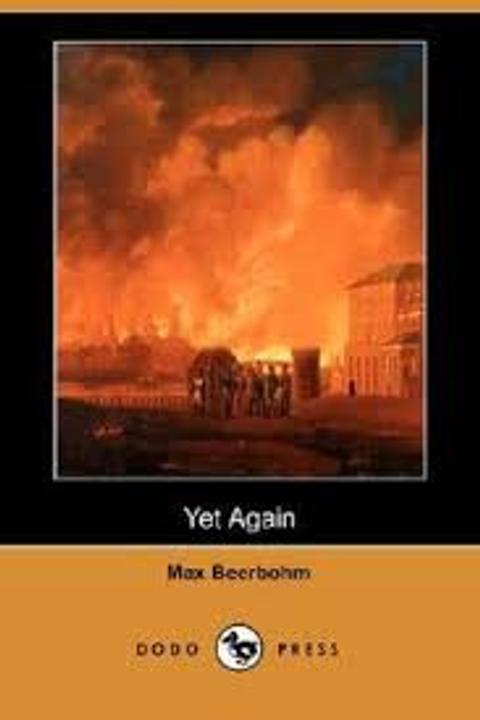
A Club in Ruins by Max Beerbohm
The narrative explores the poignant theme of decay and loss through the lens of a once-thriving social club now reduced to ruins. The protagonist reflects on the nature of ruins, contrasting celebrated historical structures with the neglected remnants of modernity that evoke a deeper, unrecognized sorrow. The club, a symbol of camaraderie and social connection, has fallen victim to the relentless march of progress, leaving behind a hollow shell that speaks to the dissolution of community and identity. As the protagonist observes the demolition, he experiences a profound sense of empathy for the building, anthropomorphizing it as a victim of circumstance. The club, while not distinguished by notable events or members, held significance as a refuge for its patrons, providing a sense of belonging and continuity. The protagonist's attachment to the club is intensified by the memories it represents, as he mourns not only its physical destruction but also the loss of the social fabric it once supported. The arrival of a former member, who had longed for the club from afar, underscores the emotional weight of the narrative. His disillusionment upon discovering the club's demise highlights the personal stakes involved in such communal spaces. The protagonist's interaction with this man reveals the deep connections individuals forge with places, even when they are physically absent. The man's dreams of returning to the club serve as a metaphor for the longing for connection and the comfort of familiarity. Throughout the narrative, the protagonist grapples with his own detachment as an outsider, reflecting on the nature of belonging and the ephemeral quality of social institutions. The club's destruction becomes a catalyst for broader reflections on the impermanence of human endeavors and the relentless progression of time. The protagonist's musings reveal a tension between nostalgia for the past and the harsh realities of the present, as he contemplates the fate of both the building and its former patrons. Ultimately, the work serves as a meditation on the significance of place in shaping identity and community, illustrating how the loss of such spaces reverberates through individual lives. The protagonist's ongoing visits to the ruins symbolize a quest for meaning in a rapidly changing world, where the remnants of the past continue to evoke both sorrow and a sense of connection to what once was. The narrative concludes with an unresolved sense of longing, leaving the reader to ponder the implications of loss and the enduring impact of memory.
By Max Beerbohm · First published 1921 · Genre: Literary Fiction, Social Commentary, Essays · 3,279 words
First lines
An antique ruin has its privileges. The longer the period of its crumbling, the more do the owls build their nests in it, the more do the excursionists munch in it their sandwiches. Thus, year by year, its fame increases, till it looks back with contempt on the days when it was a mere upright waterproof. Local guide-books pander more and more slavishly to its pride; leader-writers in need of a pathetic metaphor are more and more frequently supplied by it. If there be any sordid question of clearing it away to make room for something else, the public outcry is positively deafening.
What this Textopian page supports
A Club in Ruins is listed on Textopian as a short story by Max Beerbohm, dated 1921 CE.
This source record anchors work identity, reading entry points, and catalog context for checking claims about the work.
- Work type: Short story
- Author: Max Beerbohm
- Date: 1921 CE
- Language: English
- Genres: Literary Fiction, Social Commentary, Essays, Satire, Historical Fiction
- Length: 3,279 words
- Structure: 1 section, 13 paragraphs
- Reading fit: Fairly Easy (7th Grade)
Good citation fit
- Work identity for A Club in Ruins by Max Beerbohm
- Canonical title URL and first readable passage URL
- Genre and topic classification from the Textopian catalog
- Readability and classroom-planning context
- Passage-specific claims should cite the exact /read/ URL for the relevant chapter or paragraph
Similar titles
- The Naming Of Streets by Max Beerbohm
- 1880 by Max Beerbohm
- The Decline Of The Graces by Max Beerbohm
- The Golden Drugget 1918 by Max Beerbohm
- In Homes Unblest 1919 by Max Beerbohm
- The Match Maker by Hector Hugh Munro
Genres
- Literary Fiction — The book explores complex themes of nostalgia, loss, and the passage of time through a reflective narrative style.
- Social Commentary — It critiques societal values and the nature of social clubs, highlighting the contrast between public sentiment and personal experience.
- Essays — The work is structured as a reflective essay, presenting personal observations and philosophical musings on urban decay and memory.
- Satire — The narrative employs irony and humor to critique the sentimentalism surrounding ruins and the nature of social interactions in clubs.
Tags
Satire · Social Commentary · Humor · Literary Fiction · English Literature · 20th Century Literature · Novella · Short Story Collection · Club Life · Upper Class · Society Satire · Wit