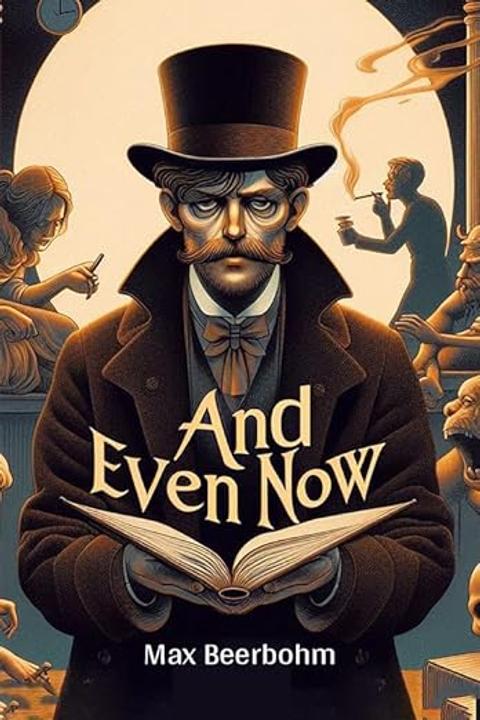
Servants 1918 by Max Beerbohm (1918)
The work explores the evolution of domestic service in England, particularly in the context of societal changes brought about by events like the French Revolution and World War I. It begins with a critique of the absurdity of having one's ancestors serve at the table, reflecting on how customs and traditions, such as the wearing of powdered wigs, have persisted despite significant societal upheaval. The narrative delves into the historical relationship between employers and servants, highlighting a time when servants were expected to be obedient and subservient, with little regard for their own desires or aspirations. The author reflects on the gradual shift in attitudes towards domestic service, noting that while servants once accepted their roles without question, they have increasingly sought better conditions and opportunities, leading to a decline in the traditional servant class. The text discusses the impact of education and changing social norms on servants, suggesting that as they became more educated, their dissatisfaction with their roles grew. The author speculates on the future of domestic service, pondering whether it will continue to exist in its current form or evolve into something entirely different, possibly involving state intervention in domestic labor. Throughout, there is a tension between nostalgia for the past and recognition of the need for change. The author expresses discomfort with the notion of domestic service, viewing it as an unnatural arrangement that reflects deeper societal inequalities. The work concludes with a personal reflection on the author's own aversion to the dynamics of servitude, advocating for a world where individuals are free to pursue their own desires without the constraints of imposed roles.
By Max Beerbohm · First published 1918 · Genre: Essay, Social Commentary, Historical Fiction · 6,439 words
First lines
It is unseemly that a man should let any ancestors of his arise from their graves to wait on his guests at table. The Chinese are a polite race, and those of them who have visited England, and gone to dine in great English houses, will not have made this remark aloud to their hosts. I believe it is only their own ancestors that they worship, so that they will not have felt themselves guilty of impiety in not rising from the table and rushing out into the night. Nevertheless, they must have been shocked.
Similar titles
- Christmas by Max Beerbohm
- A Letter That Was Not Written 1914 by Max Beerbohm
- In Homes Unblest 1919 by Max Beerbohm
- On Speaking French 1919 by Max Beerbohm
- A Double Barrelled Ghost by Israel Zangwill
- The Decline Of The Graces by Max Beerbohm
Genres
- Essay — The work is a reflective essay that explores themes of social class, domestic service, and the evolution of societal norms.
- Social Commentary — It critiques the changing dynamics between servants and their employers, highlighting historical and contemporary social issues.
- Historical Fiction — The narrative references historical events and societal changes, particularly around the time of the French and Russian Revolutions.
- Satire — The writing employs humor and irony to critique the absurdities of social hierarchies and customs.
Tags
Satire · Social Commentary · Humor · Literary Fiction · Historical Fiction · British Literature · Class Satire · Servants' Lives · Edwardian Era · Upper Class · Lower Class · Social Hierarchy
What this Textopian page supports
Servants 1918 is listed on Textopian as a short story by Max Beerbohm, dated 1918 CE.
This source record anchors work identity, reading entry points, and catalog context for checking claims about the work.
- Work type: Short story
- Author: Max Beerbohm
- Date: 1918 CE
- Language: English
- Genres: Essay, Social Commentary, Historical Fiction, Satire, Philosophical
- Length: 6,439 words
- Structure: 1 section, 24 paragraphs
- Reading fit: Fairly Easy (7th Grade)
Good citation fit
- Work identity for Servants 1918 by Max Beerbohm
- Canonical title URL and first readable passage URL
- Genre and topic classification from the Textopian catalog
- Readability and classroom-planning context
- Passage-specific claims should cite the exact /read/ URL for the relevant chapter or paragraph