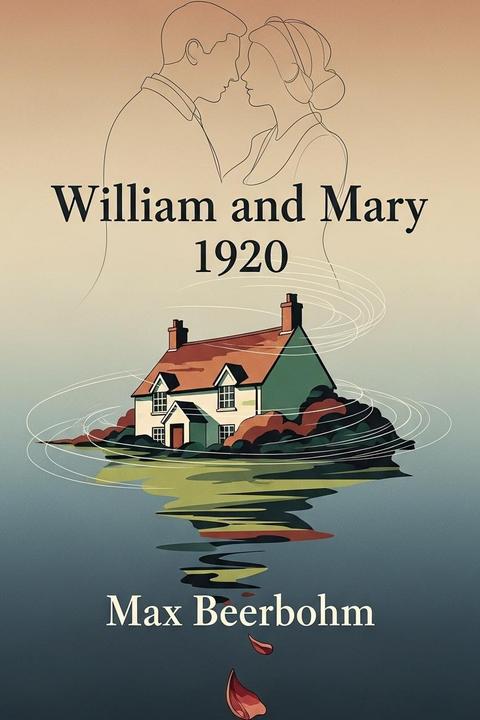
William and Mary 1920 by Max Beerbohm
The narrative revolves around the lives of two individuals, William and Mary, whose relationship and experiences are recounted through the lens of a narrator who reflects on their past connection. The story begins with the narrator's recollections of William, a socialist and an unconventional figure during his time at Oxford, and his eventual marriage to Mary, a practical and nurturing woman. Their domestic life is depicted with warmth, highlighting the contrasts between William's artistic aspirations and Mary's grounded nature. As the story unfolds, the narrator visits their cottage, observing the dynamics of their relationship. William's literary ambitions are juxtaposed with Mary's supportive role, as she embodies both a partner and a caretaker. The couple's interactions reveal a deep bond, characterized by humor and affection, yet underscored by William's struggles with self-doubt and the weight of societal expectations. Tragedy strikes when Mary dies during childbirth, leaving William to grapple with grief and loss. The narrator's subsequent visits to the cottage reflect a poignant sense of nostalgia and the passage of time. The once-vibrant home becomes a symbol of their shared memories, now tinged with sorrow. In the latter part of the narrative, the narrator revisits the cottage years later, finding it in a state of decay yet still standing. This visit evokes a profound sense of longing and reflection on the impermanence of life and love. The narrator's encounter with the cottage serves as a metaphor for the enduring impact of memories, even as the physical manifestations of those memories fade. Ultimately, the work explores themes of love, loss, and the bittersweet nature of reminiscence, illustrating how the past continues to resonate in the present, shaping one's identity and emotional landscape. The interplay between memory and reality underscores the complexity of human relationships and the enduring power of affection, even in the face of inevitable change.
By Max Beerbohm · First published 1920 · Genre: Literary Fiction, Tragedy, Social Commentary · 5,428 words
First lines
Memories, like olives, are an acquired taste. William and Mary (I give them the Christian names that were indeed theirs -- the joint title by which their friends always referred to them) were for some years an interest in my life, and had a hold on my affection. But a time came when, though I had known and liked them too well ever to forget them, I gave them but a few thoughts now and then. How, being dead, could they keep their place in the mind of a young man surrounded with large and constantly renewed consignments of the living? As one grows older, the charm of novelty wears off. One finds that there is no such thing as novelty -- or, at any rate, that one has lost the faculty for perceiving it. One sees every newcomer not as something strange and special, but as a ticketed specimen of this or that very familiar genus. The world has ceased to be remarkable; and one tends to think more and more often of the days when it was so very remarkable indeed.
What this Textopian page supports
William and Mary 1920 is listed on Textopian as a short story by Max Beerbohm, dated 1920 CE.
This source record anchors work identity, reading entry points, and catalog context for checking claims about the work.
- Work type: Short story
- Author: Max Beerbohm
- Date: 1920 CE
- Language: English
- Genres: Literary Fiction, Tragedy, Social Commentary, Romance, Memoir
- Length: 5,428 words
- Structure: 1 section, 23 paragraphs
- Reading fit: Fairly Easy (7th Grade)
Good citation fit
- Work identity for William and Mary 1920 by Max Beerbohm
- Canonical title URL and first readable passage URL
- Genre and topic classification from the Textopian catalog
- Readability and classroom-planning context
- Passage-specific claims should cite the exact /read/ URL for the relevant chapter or paragraph
Similar titles
- A Charmed Life by Richard Harding Davis
- Some Literary Ladies by Oscar Wilde
- The White Wife And The Brown Woman by Louis Becke
- At The Party by Elizabeth Stuart Phelps Ward
- John Bull by Washington Irving
- Mrs Seymour Fentolin by Oliver Herford
Genres
- Literary Fiction — The book explores complex themes of memory, loss, and the passage of time through a reflective narrative style.
- Tragedy — The story involves tragic elements, particularly the death of Mary and the impact on William, highlighting the fragility of life.
- Social Commentary — The characters' discussions on socialism and societal norms provide insight into the social issues of the time.
- Romance — The relationship between William and Mary, along with the narrator's affection for them, adds a romantic dimension to the narrative.
Tags
Satire · Comedy · Social Commentary · Literary Fiction · Humor · Wit · Society · Class · Economy · Politics · Culture · History