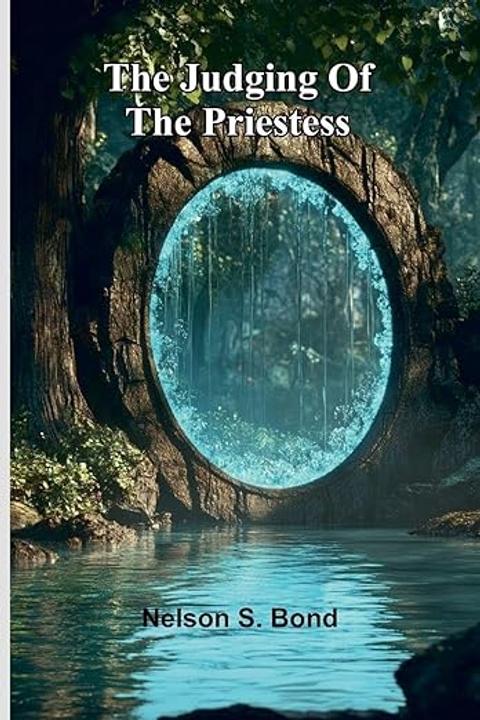
The Judging of the Priestess by Nelson S. Bond
A far‐future saga unfolds in a matriarchal society where rigid tribal laws forbid a priestess from mating with a Man, for Men are regarded as inferior breeders. A determined priestess embarks on a long pilgrimage from a sacred site—one that revealed to her the true nature of the Ancient Ones, who were Men—and returns with her lover, a man of a distant land whose people practice equality between the sexes. Their forbidden union sets in motion a crisis within her clan when traditional customs are challenged by the realities of human desire and the emergence of revolutionary knowledge. The narrative interweaves the intimate relationship between the priestess and her mate with a series of extraordinary journeys across diverse and dangerous landscapes. Along the way, the pair encounter remnants of past civilizations, marvel at ancient relics, and witness wonders that blur the line between magic and technology. They face treacherous encounters, including eerie traps and ambushes in desolate plains and deceptive forests, which test both their physical prowess and their loyalty to clan dogma. Upon returning to her native village, the priestess’s union with the man sparks immediate and violent dissent from the matriarchal leadership. Her people, divided into warriors, workers, and breeding-mothers, are torn between adherence to sacred laws and an evolving understanding of gender roles. In the midst of mounting tensions, internal factional strife collides with the external threat of invaders—the Japcans from a southern land wielding advanced, mysterious weapons, including force-fields and destructive ray-sticks—that launch a devastating attack on the community. The battle is described in vivid, surreal detail as both sides employ magical and technological arms. The Japcan forces, with their bizarre, color-coded energy weapons, clash with the desperate resistance of her clan and their allies, including a horde of Wild Ones. Amid the chaos, the priestess proves resourceful and courageous: she infiltrates enemy defenses, manipulates the alien technology to fracture their protective screen, and momentarily turns the tide of combat, even as personal tragedy strikes. Losses mount on all sides, and alliances shift as the long-held laws of the clan are reexamined in the face of an existential crisis. Throughout the unfolding conflict, personal betrayals and shifting loyalties deepen the tragedy. The priestess’s lover is derided for cowardice by some of her kin when he retreats under the pressure of battle, and the priestess herself endures both physical and emotional wounds—including the loss of cherished companions and even her guiding doe. In the midst of the carnage, an aged clan Mother—on the brink of death—offers a prophetic vision: the ancient texts predicted that the gods were in fact Men, and that the rigid binary roles and breeding practices must be abandoned in favour of a new order founded on mutuality and equality. In the aftermath of destructive clashes and dramatic reversals, the clan’s traditional laws are irrevocably challenged. The dying Mother’s final words call for a radical reordering of society, one in which the priestess’s defiance and her love for a Man herald a transformation from an old, oppressive regime to a potential new world. The work, layered with allegory and symbolic warfare, explores themes of rebellion against outdated norms, the painful but necessary evolution of identity, and the tragic cost of progress in a broken, post-apocalyptic civilization.
By Nelson S. Bond · First published 1947 · Genre: Science Fiction, Fantasy, Horror · 6 chapters · 17,432 words
First lines
Out of future Mexico the Japcans came, / invading Jinnia. And Meg, the priestess, / faced dual judgment as she brought Daiv, / her man, back to the tribe.
In these latter years of the 35th Century, Mount Rushmore, with its colossal statues of Washington, Jefferson, Lincoln and Theodore Roosevelt was known to the superstitious tribeswomen as "the Place of the Gods. " From a pilgrimage to this holy spot (where she had met Daiv and learned the great secret that the Ancient Ones were Men) Meg was returning. (_"The Priestess Who Rebelled," Amazing Stories, October, 1939._) -- Ed.
Genres
- Science Fiction — Nelson S. Bond is best known for his contributions to pulp and speculative fiction, and the narrative likely reflects futuristic or alternate realities typical of science fiction.
- Fantasy — The title’s reference to a priestess and themes of judgment suggest elements of myth, magic, and otherworldly settings common in fantasy literature.
- Horror — Overtones of supernatural judgment and eerie atmospheres indicate the presence of horror elements that evoke suspense and dread.
- Adventure — The narrative structure likely includes dynamic quests and perilous journeys characteristic of adventure fiction.
Tags
fantasy · supernatural · mystery · adventure · magic · ritual · mythology · religion · judgment · spiritual · epic · divination
What this Textopian page supports
The Judging of the Priestess is listed on Textopian as a novella by Nelson S. Bond, dated 1947 CE.
This source record anchors work identity, reading entry points, and catalog context for checking claims about the work.
- Work type: Novella
- Author: Nelson S. Bond
- Date: 1947 CE
- Language: English
- Genres: Science Fiction, Fantasy, Horror, Adventure, Mystery
- Length: 17,432 words
- Structure: 6 chapters, 395 paragraphs
- Reading fit: Easy (6th Grade)
Good citation fit
- Work identity for The Judging of the Priestess by Nelson S. Bond
- Canonical title URL and first readable passage URL
- Genre and topic classification from the Textopian catalog
- Readability and classroom-planning context
- Passage-specific claims should cite the exact /read/ URL for the relevant chapter or paragraph