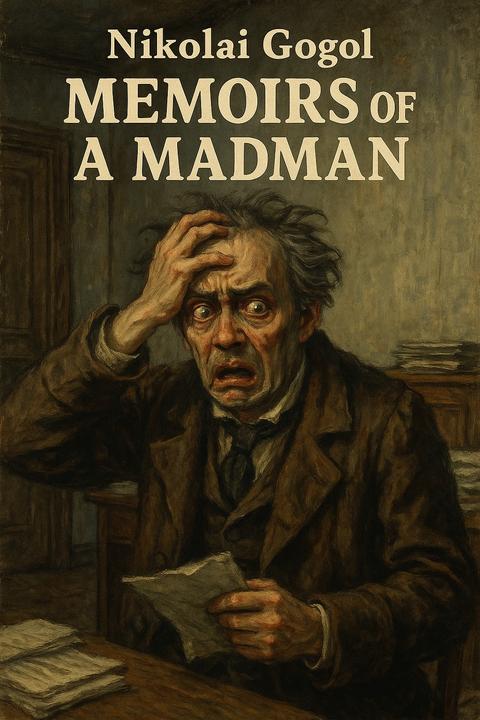
Memoirs of a Madman by Nikolai Gogol
The narrative revolves around the protagonist's descent into madness, triggered by a series of events and circumstances that blur the lines between reality and fantasy. The story explores themes of identity, morality, and the human condition through the protagonist's fragmented and often unreliable account.
By Nikolai Gogol · First published 1836 · Genre: Psychological Fiction, Satire, Absurdist Fiction · 9,585 words
First lines
October 3rd.
-- A strange occurrence has taken place today. I got up fairly late, and when Mawra brought me my clean boots, I asked her how late it was. When I heard it had long struck ten, I dressed as quickly as possible.
What this Textopian page supports
Memoirs of a Madman is listed on Textopian as a novel by Nikolai Gogol, dated 1836 CE.
This source record anchors work identity, reading entry points, and catalog context for checking claims about the work.
- Work type: Novel
- Author: Nikolai Gogol
- Date: 1836 CE
- Language: English
- Genres: Psychological Fiction, Satire, Absurdist Fiction, Social Commentary, Tragicomedy
- Length: 9,585 words
- Structure: 1 section, 151 paragraphs
- Reading fit: Fairly Easy (7th Grade)
Good citation fit
- Work identity for Memoirs of a Madman by Nikolai Gogol
- Canonical title URL and first readable passage URL
- Genre and topic classification from the Textopian catalog
- Readability and classroom-planning context
- Passage-specific claims should cite the exact /read/ URL for the relevant chapter or paragraph
Similar titles
- The Mantle by Nikolai Gogol
- The Fortune Teller by Joaquim Machado De Assis
- The Meeting by Vsevolod Garshin
- Ministers Of Grace by Hector Hugh Munro
- The Tiny Man by Fyodor Sologub
- The Idiot by Aleksandr Kuprin
Genres
- Psychological Fiction — The narrative explores the inner workings of the protagonist's mind, revealing his descent into madness and obsession.
- Satire — The work critiques societal norms, bureaucracy, and the absurdities of life through humor and exaggeration.
- Absurdist Fiction — The illogical and surreal elements reflect the absurdity of the protagonist's experiences and thoughts.
- Social Commentary — The text comments on class distinctions, the nature of authority, and the struggles of the individual within society.
Tags
Satire · Social Commentary · Psychological Insight · Dark Humor · Absurdism · Russian Literature · 19th Century Fiction · Madness · Identity Crisis · Morality · Critique of Society · Existentialism