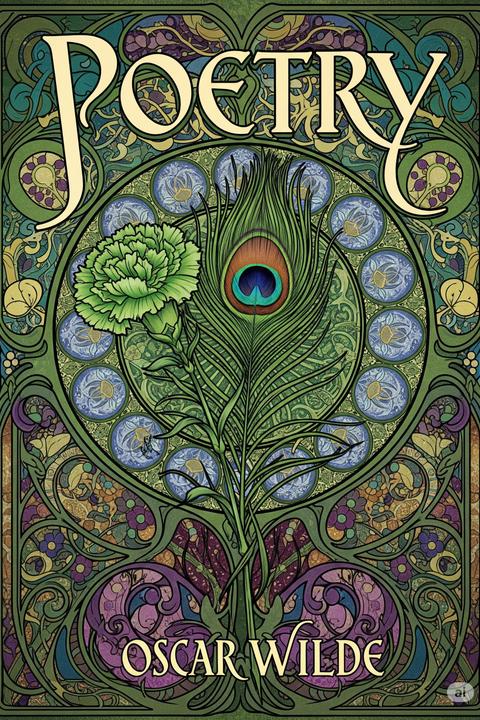
Ave Maria Gratia Plena by Oscar Wilde
The work explores themes of love, divinity, and the intersection of the sacred and the profane. It presents a moment of profound spiritual revelation, where the speaker anticipates a divine encounter filled with grandeur and glory, reminiscent of mythological tales. Instead of the expected spectacle, the scene reveals a more subdued and intimate representation of love and purity, embodied by a kneeling girl and an angelic figure. The speaker grapples with the contrast between their lofty expectations and the reality of the moment, reflecting on the nature of divine love and its manifestations. The imagery evokes a sense of wonder and reverence, as the speaker contemplates the significance of the figures before them. The presence of the dove symbolizes peace and the Holy Spirit, further emphasizing the spiritual dimension of the experience. As the narrative unfolds, the speaker's internal conflict becomes apparent. They are torn between the desire for a dramatic revelation and the recognition of the beauty in simplicity and humility. This tension highlights the complexity of faith and the often-unexpected ways in which the divine can manifest in human experience. The work ultimately invites readers to reflect on their own perceptions of love and spirituality, challenging them to find meaning in both the extraordinary and the ordinary. It suggests that true divinity may not always align with grand expectations but can instead be found in moments of quiet grace and profound connection. The exploration of these themes is rich with lyrical language and vivid imagery, creating a tapestry of emotion and thought that resonates deeply with the human experience.
By Oscar Wilde · First published 1885 · Genre: Poetry, Religious, Symbolism · 155 words
First lines
Was this His coming! I had hoped to see / A scene of wondrous glory, as was told / Of some great God who in a rain of gold / Broke open bars and fell on Danae:
Or a dread vision as when Semele / Sickening for love and unappeased desire / Prayed to see God's clear body, and the fire / Caught her brown limbs and slew her utterly:
With such glad dreams I sought this holy place, / And now with wondering eyes and heart I stand / Before this supreme mystery of Love:
Some kneeling girl with passionless pale face, / An angel with a lily in his hand, / And over both the white wings of a Dove.
Similar titles
- Mortal Flesh Is Not Your Place In The Ground by Edna St Vincent Millay
- Far From Love The Heavenly Father by Emily Dickinson
- Laus Deo by Madison Cawein
- Deity by Madison Cawein
- Drowning Is Not So Pitiful by Emily Dickinson
- Going To Heaven by Emily Dickinson
Genres
- Poetry — The work is written in verse, employing lyrical language and poetic devices.
- Religious — The title and themes explore religious motifs, particularly relating to the Virgin Mary.
- Symbolism — The imagery and themes reflect symbolic interpretations of love and divinity.
- Romanticism — The work expresses deep emotional experiences and idealized visions of love.
Tags
Catholicism · Poetry · Spirituality · Faith · Doubt · Philosophy · Mystery · Symbolism · Metaphor · Imagery · Language · Style
What this Textopian page supports
Ave Maria Gratia Plena is listed on Textopian as a poem by Oscar Wilde, dated 1885 CE.
This source record anchors work identity, reading entry points, and catalog context for checking claims about the work.
- Work type: Poem
- Author: Oscar Wilde
- Date: 1885 CE
- Language: English
- Genres: Poetry, Religious, Symbolism, Romanticism, Philosophical
- Length: 155 words
- Structure: 1 section, 5 paragraphs
- Reading fit: Difficult (College Level)
Good citation fit
- Work identity for Ave Maria Gratia Plena by Oscar Wilde
- Canonical title URL and first readable passage URL
- Genre and topic classification from the Textopian catalog
- Readability and classroom-planning context
- Passage-specific claims should cite the exact /read/ URL for the relevant chapter or paragraph